
Clypeosphaeria mamillana
Clypeosphaeria mamillana
Description
Symptoms
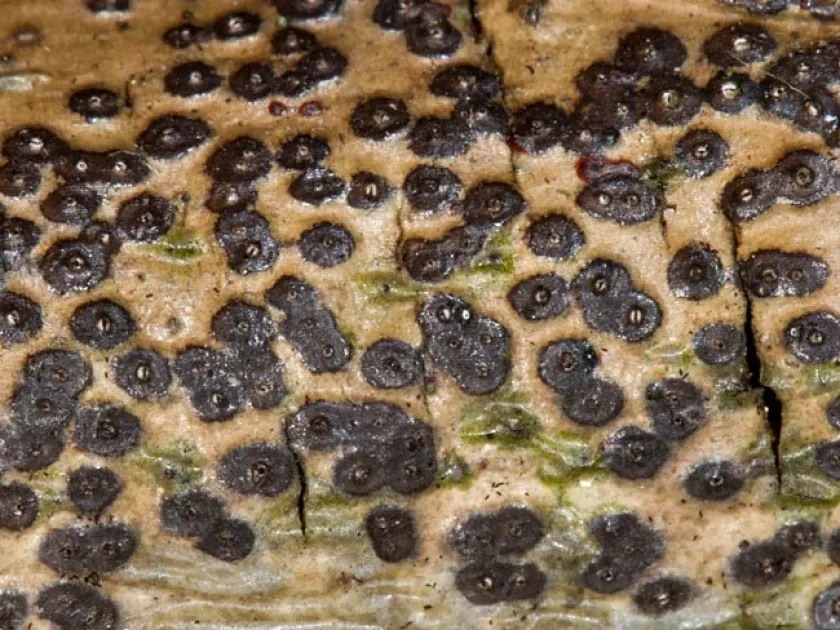
The most prominent symptom is the appearance of small, nipple-like bumps on the bark surface. These represent the emergent fruiting bodies of the fungus pushing through the epidermis.
As the infection progresses, the bark in the affected areas becomes discolored and brittle. Cracks often develop, revealing dark structures and exposing the underlying wood to further decay.
The plant may exhibit signs of general decline, such as slowed growth rates and sparse foliage. Branches with severe infections often wither and die due to restricted nutrient circulation.
Visible black spots may appear on the bark surface, indicating where spores have been released. These spots are often circular or slightly irregular, providing a clear sign of active fungal growth.
In moist environments, the infected bark may produce viscous exudates containing spores. These sticky droplets help the spores adhere to surfaces and facilitate further infestation of the host plant.
Pathogen
The causal agent of this disease is the ascomycete fungus Clypeosphaeria mamillana. It belongs to the Sordariomycetes class and primarily acts as a saprotroph on dead woody tissues.
The fungus develops perithecia, which are small fruiting bodies formed beneath the bark of host plants. These structures serve to protect the fungal mycelium from harsh environmental conditions throughout the year.
Reproduction is carried out by ascospores that are released into the atmosphere during humid weather. These spores are efficiently dispersed by wind and rain splashes to colonize new susceptible sites.
This fungus is characterized by its ability to persist in dead branches and bark debris. Its biological strategy involves a gradual spread from dead wood to healthy, though weakened, plant parts.
Micromorphological studies indicate that the fungus forms distinct dark stromata that lift the bark slightly. This growth pattern is a diagnostic feature used to identify the presence of the pathogen.
Conditions for development
High humidity and consistent rainfall are the primary catalysts for the development and spread of Clypeosphaeria mamillana. Moist conditions trigger the maturation and discharge of spores.
Plants suffering from mechanical wounds or environmental stress, such as frost cracks or sunscald, are highly susceptible. The fungus exploits these openings to enter the woody tissues easily.
Optimal temperatures for fungal development range from 15°C to 22°C. Within this range, the pathogen can complete its life cycle and spread rapidly across the host canopy.
Poor orchard hygiene, particularly the accumulation of dead branches, provides a breeding ground for the fungus. These remnants serve as a constant source of infection for the entire planting.
Lack of proper pruning and canopy management leads to stagnant air and high local humidity. This microclimate is perfect for spore germination and the successful establishment of the fungus.
Why it matters
The fungus causes significant harm by degrading the bark and cambium, which are essential for nutrient transport. This leads to the eventual death of branches and potential limb loss.
Damage to the bark lowers the tree's overall stress tolerance. Infected plants are less capable of surviving severe winter conditions and are more prone to secondary pest infestations.
In fruit-bearing trees, the infection can reduce overall yield and fruit quality. The energy the tree would normally put into fruit production is diverted to fighting the pathogen.
The disease reduces the long-term aesthetic and commercial value of ornamental and orchard trees. Extensive infections may necessitate the removal of entire trees, leading to economic losses.
If left unmanaged, the fungus can quickly spread within a plantation. The mortality rate of seedlings can be high, jeopardizing the success of young orchards.
Protection
Sanitary pruning is the most critical control measure. All infected wood must be removed immediately and burned or discarded outside the growing area to minimize spore load.
Regular disinfection of pruning tools is essential to prevent the mechanical transmission of spores between plants. Use alcohol or bleach solutions to sanitize blades between cuts.
Applying copper-based fungicides during the dormant season and early spring can protect the bark. These treatments create a chemical barrier that prevents spore germination.
Maintaining tree vigor through proper fertilization and irrigation helps the plant build natural resistance. Stronger trees are better able to wall off and limit fungal growth.
Whitewashing tree trunks in early spring helps prevent sunscald and bark cracking. By maintaining the integrity of the bark, you reduce the entry points for the fungus.
Discussion
No discussions yet — be the first.