
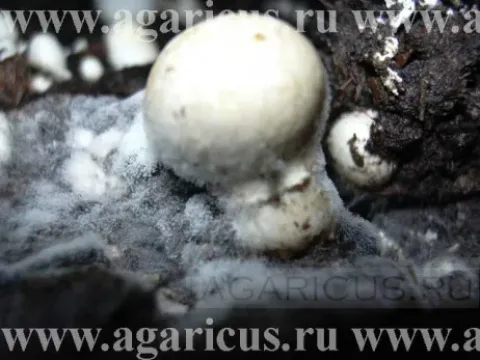
Cobweb mold
Cladobotryum
The causal agent of cobweb mold is the mycoparasitic fungus Cladobotryum dendroides, which poses a severe threat to commercial mushroom production facilities worldwide.
What the section contains
Cobweb mold
This pathogen belongs to a group of fungi that specialize in attacking cultivated mushrooms, primarily targeting the mycelium and the developing fruiting bodies of Agaricus bisporus.
The life cycle involves the rapid production of conidia, which are light, airborne spores capable of traveling significant distances through ventilation systems within a farm.
The pathogen can persist in a dormant state within soil particles, contaminated equipment, or old compost, making it extremely difficult to eradicate from affected facilities.
Biological resilience of Cladobotryum is high, as it has developed mechanisms to tolerate various environmental conditions often found in professional mushroom growing rooms.
Initial symptoms include the appearance of a thin, white, fluffy, cobweb-like mycelium growing across the surface of the casing soil and mushroom caps.
As the disease progresses, the colony often turns a characteristic pinkish or yellowish color, which indicates the onset of heavy sporulation by the fungal pathogen.
Infected mushrooms exhibit symptoms of decay, becoming distorted, soft, and eventually turning into a wet, rotting mass under the pressure of the invading mycelium.
The mold spreads rapidly in patches, covering mushroom clusters and preventing them from reaching maturity, which results in significant yield loss in the affected area.
A noticeable musty odor is often present in the growing room, which serves as a secondary indicator that the disease has progressed to an advanced stage.
High relative humidity levels, typically exceeding 90%, combined with poor airflow and stagnation in the growing room, create ideal conditions for Cladobotryum.
Optimal temperatures for the development of the mold fall between 18 and 25 degrees Celsius, which overlaps directly with the preferred temperature for growing mushrooms.
Sanitation failures, such as leftover debris on the floor, contaminated picking tools, or poor hygiene among personnel, are primary drivers for the introduction of the pathogen.
Frequent watering can spread the spores physically through water droplets, moving the infection from one tray or bed to another across the entire facility.
The use of improperly pasteurized casing material is a major risk factor, as it acts as the primary medium for the introduction of the fungus into the growth environment.
The primary economic impact of cobweb mold is the complete destruction of the mushroom crop in the infected areas, leading to direct loss of marketable produce.
Because the fungus is a parasite, it rapidly consumes the tissues of the fruiting bodies, making them unmarketable and dangerous to consume due to decay.
The persistence of spores in the growing environment requires intensive and costly disinfection procedures, often necessitating complete room shutdowns to prevent further spread.
Contamination of healthy mushrooms during the harvest process remains a constant threat, as pickers can easily transfer the spores on their gloves or equipment.
Persistent outbreaks can tarnish a farm's reputation and lead to long-term quality control issues, forcing strict quarantine measures within the production facility.
Management of cobweb mold relies on strict hygiene protocols, including the thorough disinfection of tools, footwear, and surfaces using approved antimicrobial agents.
Upon detection of a localized outbreak, it is essential to immediately cover the affected spot with a damp cloth or salt to stop spore release, then carefully remove the infected material.
Managing the microclimate by reducing humidity and increasing ventilation after irrigation is critical to drying the mushroom surfaces and slowing fungal growth.
- Use of specialized fungicides permitted for mushroom cultivation.
- Implementation of footbaths and hygiene stations at all entrances.
- Ensuring proper air circulation to keep surfaces dry.
- Rigorous post-harvest cleaning and disinfection of growing rooms.
A proactive strategy focusing on hygiene, early detection, and environmental management is necessary to maintain profitable mushroom production.