
Teratosphaeria leaf blight of eucalyptus
Teratosphaeria gauchensis
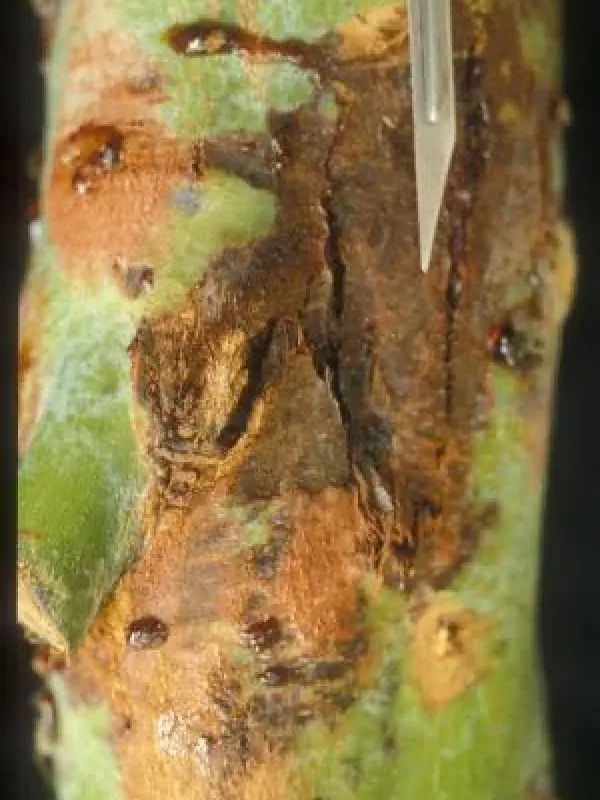
Description
Symptoms
The primary symptom of this leaf blight is the appearance of small chlorotic spots on the leaf blades, which over time turn dark brown or almost black.
A characteristic necrotic halo often forms around the spots, indicating the death of plant tissue at the sites of fungal mycelium penetration.
As the infection develops, the affected areas merge, covering a significant portion of the leaf, which leads to deformation and curling of the leaf blade.
Under high humidity, fungal sporulation may appear on the underside of the leaf or in the center of necrotic spots as a faint coating.
A typical sign of an advanced stage is massive leaf drop (defoliation), which can lead to branch exposure and a general slowdown in tree growth.
Pathogen
The causative agent of this disease is the ascomycete fungus Teratosphaeria gauchensis, belonging to the order Capnodiales. This pathogen is specialized in infecting various eucalyptus species, causing severe pathological changes in plant tissues.
The disease belongs to the group of eucalyptus leaf spots that cause premature defoliation. The fungus mycelium actively penetrates the leaf mesophyll, disrupting photosynthesis and the overall metabolism of the tree.
The pathogen's life cycle includes the formation of conidial spores, which ensure the rapid spread of infection within the plantation. Ascospores, produced in fruiting bodies, facilitate the dissemination of the fungus over long distances by wind.
Identification of the pathogen often requires laboratory methods, including morphological analysis of conidia and molecular-genetic testing to accurately determine the species.
The fungus is characterized by high aggressiveness towards young seedlings, making it a dangerous concern for forest nurseries and young eucalyptus plantations worldwide.
Conditions for development
Development of Teratosphaeria gauchensis is favored by high relative humidity and frequent rainfall, which create an optimal microclimate for spore germination.
Warm temperatures combined with excessive foliage moisture are critical factors that promote mass infection of young stands.
Dense planting and poor crown aeration hinder rapid drying of leaves after rain, which significantly increases the risk of epiphytotic disease development.
The infection spreads most intensively during periods of active eucalyptus growth, when young, most susceptible leaves are present.
Windy weather facilitates the transport of spores from infected trees to healthy ones, ensuring rapid coverage of new areas within the plantation.
Why it matters
The harmfulness of this disease lies primarily in the reduction of the tree's photosynthetic surface area due to mass defoliation.
Constant loss of leaves leads to a significant reduction in biomass growth, which is critical for industrial eucalyptus plantations.
Trees weakened by the disease become more vulnerable to other pests and unfavorable environmental factors.
Systematic infection of stands leads to growth suppression and, in severe cases, the drying of young trees, resulting in significant economic losses.
Economic damage is also associated with the costs of implementing quarantine measures and restrictions on the export of plant material from affected regions.
Protection
The primary method of protection is the use of genetically resistant eucalyptus varieties and hybrids that possess natural immunity to the pathogen.
Compliance with agrotechnical practices plays an important role, including selecting optimal planting density to ensure good crown ventilation.
Timely sanitary logging and the removal of heavily infected trees help to reduce the overall infection pressure in forest stands and nurseries.
Chemical protection using fungicides is possible in nurseries, although it requires strict adherence to treatment schedules based on eucalyptus growth stages.
It is important to conduct regular monitoring of plantation health for early detection of blight symptoms and rapid implementation of containment measures.
Discussion
No discussions yet — be the first.