
Tan spot
Pyrenophora
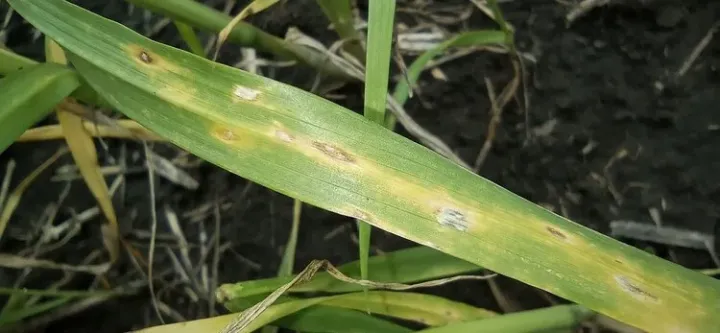
Description
Symptoms
Initial symptoms appear as small, tan-brown spots that expand and are typically surrounded by a prominent chlorotic or yellow-colored halo.
These spots often coalesce, forming large irregular lesions that can cause extensive necrosis of the leaf blades and significantly reduce leaf area.
Under humid conditions, the lesions may develop a dark, soot-like appearance due to the formation of conidia on the necrotic tissue.
The disease usually progresses from the lower leaves upwards, potentially infecting the flag leaf if environmental conditions remain favorable for the pathogen.
- Symptoms can sometimes be confused with other leaf spot diseases, necessitating proper identification for effective disease management.
Pathogen
Tan spot is caused by the fungus Pyrenophora tritici-repentis, which is an ascomycete known for its ability to persist in crop residues over winter.
The fungus survives on infected wheat stubble in the form of pseudothecia, which serve as the primary inoculum source for the following season's crop.
In spring, during wet conditions, ascospores are released from the stubble and dispersed by wind or rain splashes onto emerging wheat leaves.
The pathogen then undergoes asexual reproduction, producing conidia that allow for multiple secondary infection cycles throughout the growing season.
Genetic diversity within the fungal population can lead to the emergence of more aggressive strains, which poses a significant challenge for resistance breeding programs.
Conditions for development
Tan spot development is strongly favored by periods of high humidity, frequent rainfall, and moderate temperatures ranging from 18 to 25 degrees Celsius.
Leaf wetness duration is a critical factor for successful infection, requiring several hours of moisture for the fungal spores to germinate and penetrate the leaf epidermis.
Reduced tillage practices leave infected stubble on the soil surface, providing an ideal environment for the fungus to initiate early-season infections.
Dense crop canopies can create a microclimate that traps moisture, promoting the rapid spread of the disease within the field.
Cloudy weather and frequent light showers throughout the stem elongation phase significantly enhance the risk of widespread tan spot outbreaks.
Why it matters
The primary economic impact of tan spot is the loss of photosynthetic leaf area, which directly impairs grain filling and plant development.
Severe infestations during the grain-filling period can lead to shriveled grains, resulting in lower test weights and reduced milling quality.
Yield losses vary depending on the timing and severity of the outbreak, with early infection of the flag leaf causing the most dramatic reductions in yield.
Field studies have shown that uncontrolled tan spot can result in yield decreases ranging from 10% to 50% in highly susceptible varieties.
Secondary infections and weak plant stems can also contribute to lodging, further complicating harvesting operations and increasing field losses.
Protection
Crop rotation with non-host crops is a foundational strategy to break the pathogen's life cycle and reduce the volume of initial inoculum.
Deep plowing or incorporating stubble into the soil helps speed up the decomposition process and removes the pathogen's overwintering sites.
Utilizing resistant or moderately resistant wheat cultivars is the most sustainable and cost-effective long-term management strategy against tan spot.
Fungicide application should be based on field monitoring and risk assessments, targeting the critical stages of flag leaf emergence to protect yield.
Integrated nutrient management, ensuring adequate levels of potassium and micronutrients, can help improve the plant's overall defense mechanisms against fungal diseases.
Discussion
No discussions yet — be the first.