
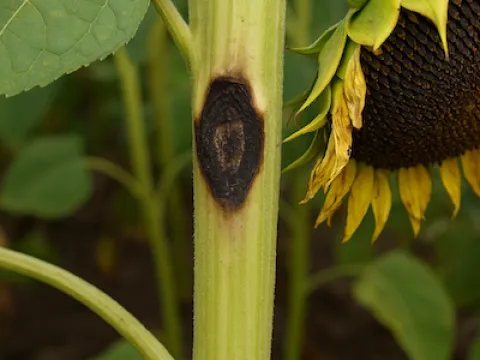
Phoma black stem
Subplenodomus drobnjacensis
The causal agent of Phoma black stem in sunflowers is the fungus Subplenodomus drobnjacensis (formerly classified as Phoma macdonaldii). This pathogen is widely distributed in major sunflower-growing regions worldwide.
What the section contains
Phoma black stem
The fungus survives in soil and infected plant debris as pycnidia. It can remain viable for several years, making it a persistent threat in agricultural fields where sunflower is frequently cultivated.
Primary infection starts in spring when spores are dispersed by rain splashes or wind onto developing sunflower plants. The pathogen has a broad host range within the Asteraceae family.
Within the plant, the fungus spreads through the intercellular spaces, producing toxins that degrade host tissue and hinder normal physiological functions.
The life cycle of the pathogen is closely synchronized with the growth stages of the sunflower, allowing it to colonize various tissues including leaves, stems, and heads.
The initial symptoms are often observed on lower leaves as dark brown lesions surrounded by a yellow halo. These lesions gradually expand and show distinct concentric rings.
The most diagnostic feature is the appearance of large, black, necrotic lesions on the stem, typically surrounding the leaf petiole attachment points.
As the disease progresses, the stem tissue becomes brittle and may show significant cracking. Numerous tiny black spots, known as pycnidia, appear on the surface of the lesions.
When the infection reaches the flower head, it causes browning on the back of the head, premature drying, and shriveled seeds that often fall out before harvest.
Severe infestations weaken the stem structure, causing the plants to lodge or break under wind stress, leading to significant yield losses in the field.
The development of Phoma black stem is highly dependent on environmental conditions, with warm and humid weather being the most favorable for the disease.
Temperatures ranging between 20 and 25 degrees Celsius, combined with frequent rainfall or high humidity, significantly accelerate the production and dispersal of fungal spores.
Excessive plant density creates a humid microclimate within the canopy, which allows the fungus to spread rapidly from lower leaves to the upper parts of the plant.
Inadequate crop rotation, where sunflower is grown on the same land too frequently, leads to an accumulation of inoculum in the soil, increasing disease pressure.
The presence of moisture on the plant surface is necessary for spore germination and successful infection through stomata or mechanical wounds on the epidermis.
The primary impact of Phoma black stem is the reduction of green leaf area, which limits photosynthesis and drastically affects the seed-filling process.
Vascular damage prevents the transport of water and nutrients, causing the plants to wither prematurely and produce seeds with low oil content and poor weight.
Stalk rot weakens the plant architecture, resulting in severe lodging. This makes mechanical harvesting difficult and increases losses during the threshing process.
Seeds from diseased heads often have poor germination rates and may carry fungal pathogens, affecting the quality of the next season's crop if saved as seeds.
In severe epidemics, yield reductions can range from 20 percent to over 50 percent, depending on the timing of the initial infection and the overall crop management.
Effective management begins with strict adherence to a long-term crop rotation, ensuring a gap of at least 5 to 7 years between sunflower crops on the same field.
The use of resistant or tolerant sunflower hybrids is currently the most reliable and environmentally friendly strategy for managing Phoma black stem.
Proper soil management, including deep tillage and the incorporation of crop residues, helps speed up the decomposition process and reduces the survival of pycnidia.
Fungicide applications are recommended during critical growth stages, particularly at the 4-6 leaf stage and during budding, to prevent the secondary spread of the disease.
- Utilize high-quality seed treatments to protect seedlings from soil-borne inoculum.
- Control volunteer sunflowers and weeds in the Asteraceae family that act as reservoirs.
- Maintain optimal plant spacing to promote airflow and reduce canopy humidity.