
Phoma blight of chickpea
Phoma matteucciicola
Description
Symptoms
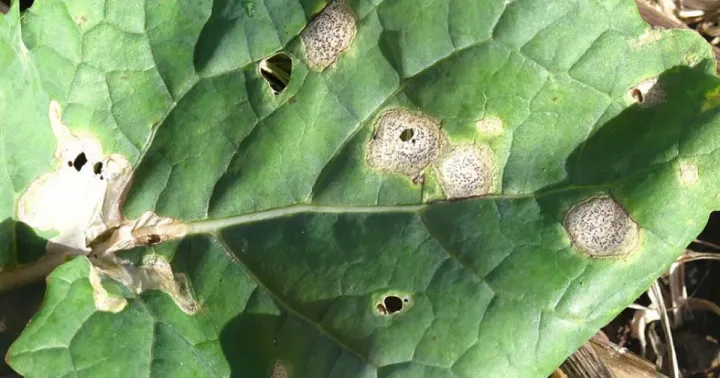
The hallmark of Phoma blight is the appearance of brown or dark necrotic lesions on stems, leaves, and pods. These spots are often circular to irregular in shape and may exhibit concentric rings, indicating the progression of fungal growth.
As the infection matures, tiny, dot-like black structures known as pycnidia emerge within the lesions. These are easily visible to the naked eye or under a hand lens and serve as a crucial diagnostic feature of the disease.
Stem infections are particularly destructive, often resulting in girdling lesions. When the lesion wraps around the stem, it cuts off the flow of nutrients and water, causing the portion of the plant above the lesion to wilt, turn brown, and eventually break.
Pod infection causes shriveling and discoloration of the seeds inside. Severely affected pods may fail to produce viable seeds altogether, leading to substantial yield losses at the harvest stage.
Because symptoms often overlap with Ascochyta blight, accurate diagnosis in a pathology laboratory is essential to identify Phoma matteucciicola specifically, as management priorities can differ based on the precise pathogen present.
Pathogen
The causal agent of Phoma blight in chickpea is the fungus Phoma matteucciicola, which belongs to the order Pleosporales. This pathogen is a significant threat to global chickpea production, particularly in humid or semi-arid regions with irregular rainfall patterns.
The fungus survives primarily in infected plant debris left in the field after harvest. It produces pycnidia — specialized fruiting bodies — within which conidia (spores) develop. During the growing season, these spores are released and dispersed by rain splash or wind currents to healthy plant tissues.
Phoma matteucciicola is known for its high survival capacity in the soil. Even in the absence of a host, the fungus can persist for several years, waiting for the return of favorable conditions or the planting of susceptible host crops.
Upon reaching a host plant, the fungus germinates and penetrates the host tissue through stomata or wounds. Once inside, it secretes enzymes and toxins that break down plant cell walls, leading to the formation of necrotic lesions typical of the disease.
The biological cycle is rapid, allowing the pathogen to complete multiple cycles within a single growing season. This rapid turnover of spores is the reason behind the potential for explosive epidemics under the right environmental triggers.
Conditions for development
High humidity and moderate temperatures are the most critical factors driving the development of Phoma blight. Specifically, periods with prolonged wetness (persistent dew or rain) are necessary for the infection process to occur.
Temperatures ranging between 18°C and 24°C are ideal for both the growth of the fungus and the successful infection of the host plant. These conditions often coincide with the flowering or pod-filling stages of chickpea growth.
Poor canopy management, such as planting at very high densities, leads to high humidity within the crop canopy. This environment prevents rapid drying of the foliage, allowing spores more time to germinate and penetrate the plant tissues.
Inadequate crop rotation is another major factor, as it allows the inoculum level in the soil to build up over consecutive years. Planting chickpea in fields where the crop was recently cultivated increases the risk of early and severe disease outbreaks.
Wind-driven rain is the primary mechanism for long-distance and short-distance dispersal of the pathogen. Even moderate weather events can carry inoculum from old crop residues to young, developing seedlings, initiating the disease cycle.
Why it matters
The harm caused by Phoma blight ranges from moderate to severe, depending on the timing of the infection. Early-season outbreaks can decimate seedlings, forcing farmers to replant and incurring significant financial losses.
Late-season infections primarily affect yield quality and quantity. The damage to pods and seeds leads to poor-quality harvests, which may be rejected for commercial or seed purposes due to their shriveled and discolored appearance.
Beyond direct yield loss, the disease increases the cost of production. Farmers must invest in multiple fungicide applications to suppress the pathogen, and in severe cases, these treatments might only provide partial control.
The presence of Phoma-infected seeds in the grain supply can lead to regulatory issues and reduced market value. Since the fungus is seed-borne, infected grains cannot be used for subsequent planting, as they act as the primary source of initial inoculum.
The overall impact on the agricultural economy is significant, as it creates an unpredictable farming environment where successful harvests depend heavily on rigorous disease management practices and favorable weather conditions.
Protection
The foundation of effective management is the use of high-quality, disease-free, and fungicide-treated seeds. Since the disease is seed-borne, starting with clean inputs is the first step in preventing field contamination.
Crop rotation remains the most effective cultural practice. A break of at least 3–4 years between chickpea crops, preferably using non-leguminous crops, helps to significantly reduce the fungal load in the field.
Sanitation practices, such as burying crop residues deeply through plowing, reduce the amount of inoculum available for the next season. Removing debris effectively eliminates the primary site where the fungus spends the winter.
Fungicide applications are crucial during periods of wet weather when infection risk is highest. Systemic fungicides are generally more effective, as they provide both protective and curative properties against the pathogen.
Integrated Disease Management (IDM) is highly recommended for sustainable control:
- Planting resistant or tolerant chickpea cultivars.
- Optimizing planting density to improve airflow.
- Monitoring weather patterns to time fungicide sprays.
- Balancing fertilizers to improve overall plant vigor.
- Controlling volunteer plants that can harbor the disease.
Discussion
No discussions yet — be the first.