
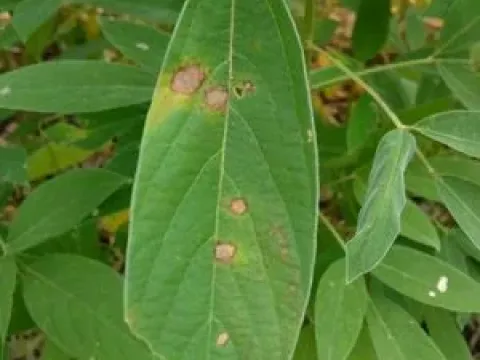
Phoma blight of pigeon pea
Phoma cajani
The causative agent of the disease is the fungus Phoma cajani, which belongs to the group of imperfect fungi.
What the section contains
Phoma blight of pigeon pea
The pathogen survives primarily in crop debris left in the soil, utilizing pycnidia as a survival mechanism during off-seasons.
The fungus is highly specific and is known to primarily affect Cajanus cajan, also known as pigeon pea.
Transmission occurs through the dispersal of pycnidiospores, which are spread by rain splashes and wind to healthy plant parts.
Once landed, the spores germinate under favorable moisture conditions, with the fungal hyphae penetrating the plant tissue through stomata.
Initial symptoms present as small chlorotic spots on leaves and stems, which gradually enlarge and turn dark brown or grey.
On stems, the infection manifests as elongated, sunken lesions that develop tiny black dots, known as pycnidia, across the surface.
As the disease progresses, these lesions can merge, leading to the collapse of plant tissue and severe stem girdling.
Leaves on infected branches often show yellowing and wilting, eventually dropping prematurely due to the disruption of water transport.
In high humidity, a greyish fungal mass may be visible on the surface of the lesions, representing the active spore production phase.
Phoma blight development is strongly favored by periods of high humidity and moderate temperatures common in tropical regions.
Frequent rainfall during the flowering and pod-filling stages drastically increases the severity and spread of the infection across the field.
Densely planted crops suffer more from the disease due to poor airflow and extended leaf wetness, which are ideal for fungal growth.
Poor soil drainage and stagnant water around the plant base exacerbate the development of stem-based infections.
Continuously cropping pigeon pea on the same land without rotation leads to a significant build-up of the pathogen in the soil.
The disease causes substantial yield losses by damaging the plant's vascular system and reducing its overall photosynthetic capacity.
Severe infection can lead to the wilting and death of entire branches or the whole plant, especially during the reproductive stage.
The quality of seeds is significantly compromised, resulting in lower grain weight and potential issues with seed germination.
In cases of high disease pressure, the crop may show reduced vigor, making it more susceptible to other pests and opportunistic pathogens.
Economic impact includes both the immediate loss of yield and the long-term cost associated with managing the infection in future seasons.
Implementing a crop rotation system where pigeon pea is rotated with non-host crops for at least 3 years is essential for management.
Deep plowing after harvest helps bury infected crop debris, accelerating decomposition and reducing the pathogen's primary inoculum.
Using certified, disease-free seed that has been treated with appropriate systemic fungicides is a standard preventative measure.
Maintaining proper plant spacing improves field ventilation, which helps to dry out the canopy and inhibit fungal proliferation.
- Foliar application of fungicides upon the appearance of initial symptoms
- Selection of resistant or tolerant pigeon pea varieties
- Strict weed control to prevent the persistence of the pathogen