
Phoma disease
Phoma piskorzii
Description
Symptoms
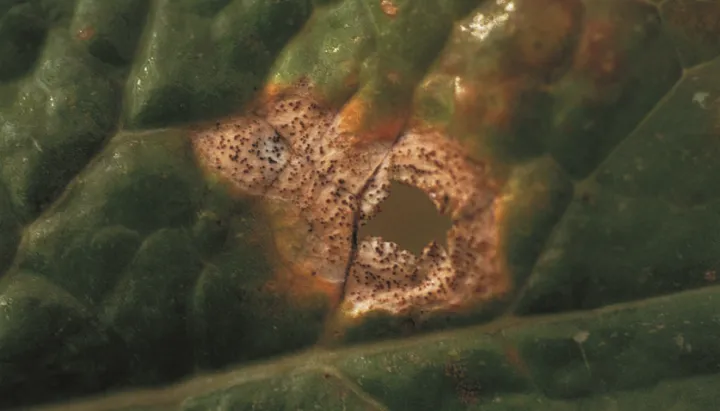
Infection typically begins with the appearance of localized chlorotic or necrotic spots on leaves, which gradually darken over time.
A hallmark diagnostic sign is the presence of numerous small, black, pin-prick-sized pycnidia scattered across the surface of the lesions.
Stem infections can manifest as elongated, discolored lesions that weaken the structural integrity of the plant, often leading to lodging.
Severe infestations result in leaf senescence, defoliation, and overall reduction in plant vigor, which limits yield potential.
Under humid conditions, the lesions may expand rapidly, merging to cover large portions of the stems and petioles, leading to premature wilting.
Pathogen
The causative agent of this disease is the fungus Phoma piskorzii, a member of the diverse genus Phoma, known for its significant impact on various botanical families.
The fungus survives primarily in crop residues and soil, where it maintains its viability through specialized fungal structures for long periods.
Reproduction is facilitated by the formation of pycnidia, which produce vast quantities of conidia that are easily dispersed by water splash and air movement.
As a facultative parasite, the pathogen can quickly transition from feeding on living host tissue to decomposing dead organic matter.
The lifecycle of Phoma piskorzii is well-adapted to surviving across seasons, making it a persistent challenge in agricultural environments.
Conditions for development
Development of Phoma piskorzii is strongly favored by periods of high humidity and rainfall, which facilitate spore dispersal and germination.
Moderate temperatures during the growing season provide the ideal environment for the fungus to colonize host tissues efficiently.
High planting densities create a microclimate that traps moisture within the canopy, fostering rapid spread of the disease between plants.
Mechanical damage from agricultural equipment or insects provides entry points that significantly increase the probability of successful infection.
Poor drainage and low airflow in fields exacerbate the spread of the pathogen, leading to localized hotspots of infection.
Why it matters
The economic impact of Phoma disease includes significant yield losses through reduction in seed weight and overall plant productivity.
Disruption of vascular tissue due to stem infections limits the movement of nutrients and water, resulting in stunted and underdeveloped plants.
Heavy disease pressure can cause premature plant death, leading to significant harvest losses and difficulty in machinery operation.
The quality of harvested products is often compromised, with potential contamination and aesthetic damage rendering crops less marketable.
Chronic infestation of the soil with Phoma piskorzii makes subsequent cultivation of susceptible crops increasingly difficult and costly.
Protection
Crop rotation remains the most effective foundational strategy to break the life cycle of the pathogen and reduce soil-borne inoculum levels.
Implementing deep tillage practices helps to bury crop debris, accelerating the biological breakdown of the infected material.
Seed treatment with systemic fungicides is essential to provide early-season protection and ensure a healthy stand establishment.
Regular field scouting allows for timely application of foliar fungicides, which can curb disease progression when weather conditions are favorable for infection.
- Management of weeds that act as alternative hosts.
- Optimizing nitrogen and potassium fertilization for plant health.
- Using resistant or tolerant varieties where available.
Discussion
No discussions yet — be the first.