
Ergot
Claviceps purpurea
The disease is caused by the ascomycete fungus Claviceps purpurea, which specifically targets the ovaries of grasses and cereal crops during the flowering stage.
What the section contains
Ergot
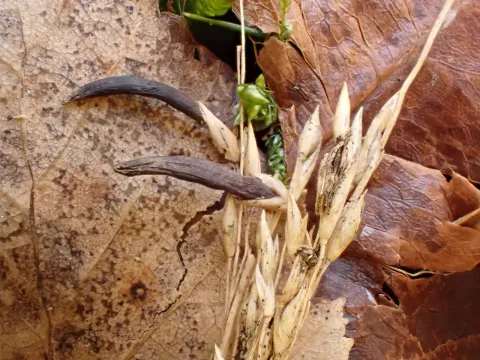
The fungus overwinters as dark, hard masses of mycelium known as sclerotia (ergots), which can remain in the soil or be harvested along with the grain.
A wide variety of crops are susceptible, including rye, winter wheat, winter barley, oats, sorghum, maize, and wild grasses such as Zizania (wild rice).
During the spring, the sclerotia germinate to produce spores, which are wind-dispersed to the open florets of host plants, starting a new infection cycle.
The fungus replaces the healthy grain with a fungal body, effectively hijacking the plant's reproductive resources to ensure its own propagation.
The first indicator of infection is often "honeydew," a sticky, sugary substance exuded from the infected florets, which attracts insects and helps spread spores.
As the grain matures, the honeydew disappears and is replaced by visible, protruding dark purple or black sclerotia that grow in the place where kernels should be.
The size and shape of these ergots depend on the host plant, ranging from thin, curved structures to large, robust bodies that mimic the shape of the grain they replace.
When inspecting fields, one can see deformed heads where kernels are missing, with hard fungal structures clearly visible between the glumes of the spikelet.
The presence of these bodies is the definitive sign of the disease, making visual identification relatively easy during the harvest preparation phase.
The development of ergot is heavily influenced by weather; cool, wet conditions during the flowering stage extend the period during which florets remain open.
Extended flowering windows increase the probability of spores landing on receptive ovaries, significantly raising infection rates in the field.
High humidity facilitates the germination of sclerotia left over from previous seasons, leading to more aggressive spore production and release.
Poor agricultural practices, such as allowing grassy weeds to grow near crop margins, maintain a persistent reservoir of inoculum year after year.
Rotation strategies that do not account for host susceptibility contribute to the accumulation of sclerotia in the soil profile.
Ergot reduces yield directly by preventing the formation of healthy grain, leading to lower weight and lower overall volume of the harvested crop.
The most severe impact is the presence of toxic alkaloids within the sclerotia, which are poisonous to both humans and livestock if ingested.
Grain contaminated with ergot must often be processed through specialized cleaning equipment to remove the sclerotia, which increases costs significantly.
In many regions, strict regulatory limits on the percentage of ergot bodies in grain shipments result in heavy economic losses or complete rejection of batches.
Livestock consumption of contaminated feed can lead to ergotism, causing severe health issues, including restricted blood flow and neurological damage.
The primary control measure is the use of high-quality, certified seeds that have been thoroughly cleaned to remove any trace of ergot sclerotia.
Effective crop rotation, moving away from susceptible cereal hosts, helps deplete the population of sclerotia present in the soil over time.
Deep tillage or plowing before planting can bury sclerotia to a depth where they cannot germinate effectively, thus breaking the infection cycle.
Rigorous management of grassy weeds in and around fields is essential to eliminate natural reservoirs of the fungus.
- Utilize advanced optical sorting technology for grain cleaning.
- Ensure uniform and rapid crop development to minimize the flowering window.
- Adopt deep plowing practices to bury fungal inoculum.