
Eriopezia caesia
Eriopezia caesia
Description
Symptoms
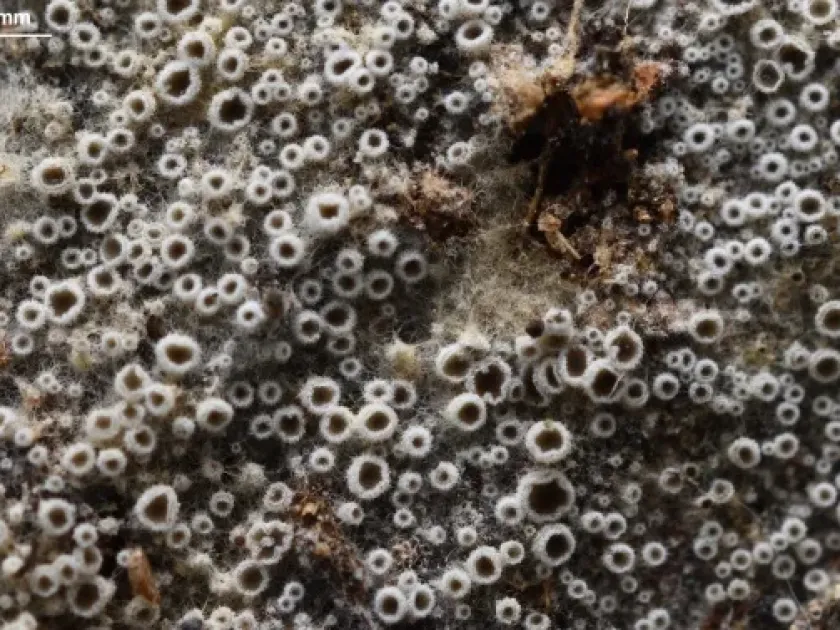
The most distinctive symptom is the presence of small, grey or greyish-brown, saucer-like apothecia that appear on the surface of the bark.
These fruiting bodies are often found in clusters, particularly where the bark has cracked or sustained prior injury or environmental stress.
Infected bark may show discoloration or a noticeable softening in the areas where the fungus has established its mycelial network.
Advanced stages of colonization can lead to the peeling or flaking of the outer bark layer as the fungus breaks down underlying dead tissue.
Observing the bark texture changes is crucial, as the small apothecia can be easily overlooked without close inspection of the tree trunk and branches.
Pathogen
The causal agent is the fungus Eriopezia caesia, a member of the Ascomycota division. It functions primarily as a saprotroph, decomposing dead organic matter on trees.
While often found on decaying wood, it can behave as a facultative parasite, attacking weakened or stressed trees when environmental conditions allow.
The fungus reproduces via ascospores produced in small, disc-shaped apothecia. These structures are essential for the dispersal of the pathogen throughout the ecosystem.
Spore release is typically triggered by high moisture levels, allowing the pathogen to spread via wind and rain splash to nearby susceptible host plants.
The mycelium of Eriopezia caesia is robust, enabling the fungus to persist in bark crevices during less favorable environmental conditions.
Conditions for development
Development is heavily favored by cool temperatures and prolonged periods of high humidity or rainfall, which keep the bark surface damp.
Poor aeration in dense plantings creates a microclimate that prevents bark from drying out, significantly increasing the risk of fungal establishment.
Trees stressed by drought, insect damage, or mechanical wounds are significantly more susceptible to infection by this fungus.
Accumulation of dead woody debris in the vicinity serves as a primary reservoir for the pathogen, fueling its spread to healthy nearby trees.
The fungus thrives in areas where sunlight exposure is low, maintaining the moisture levels required for spore germination and growth.
Why it matters
The primary concern is the accelerated decay of bark and underlying woody tissue, which compromises the structural integrity of the affected plant.
By weakening the tree, the fungus provides an entry point for secondary pathogens, which can be more aggressive and lead to significant tree loss.
In forestry, the presence of this fungus reduces the quality of timber, making the affected trees less valuable for commercial or industrial use.
Aesthetic degradation is a major issue in landscape and ornamental settings, as the fungus creates unsightly patches on tree trunks.
Persistent infection disrupts normal physiological processes, leading to reduced vigor and potentially predisposing the tree to secondary pest attacks.
Protection
Sanitation is the most effective management strategy, involving the removal and destruction of dead wood and severely infected tree branches.
Proper pruning practices help increase airflow through the canopy, ensuring that branches dry out quickly and become less suitable for fungal growth.
Maintaining tree vigor through appropriate fertilization and water management helps plants mount a stronger defense against opportunistic pathogens.
Monitoring the health of trees regularly allows for early detection, enabling manual removal of small colonies before they become widespread.
Applying fungicides is generally not necessary but may be considered for high-value ornamental trees if conditions for infection remain consistently high.
Discussion
No discussions yet — be the first.