
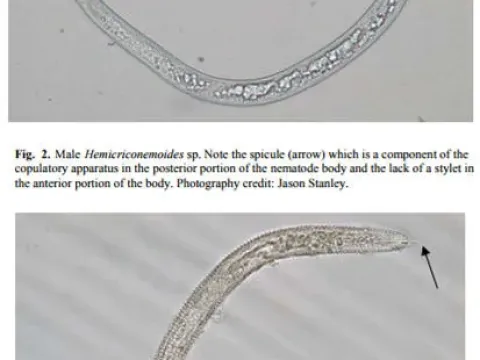
Mango ring nematode
Hemicriconemoides mangiferae
The mango ring nematode, scientifically known as Hemicriconemoides mangiferae, is a plant-parasitic nematode that specifically targets the root systems of various tropical woody plants, with a primary affinity for mango trees (Mangifera indica).
What the section contains
Mango ring nematode
These microscopic organisms are ectoparasites that feed on root epidermal cells by inserting their stylets. Their high density in the rhizosphere can cause significant physical and physiological damage to the host plant.
The lifecycle of this pathogen is strictly tied to the root activity of the mango tree. They are capable of surviving in the soil for extended periods, making them resilient to various environmental fluctuations.
Distribution across orchard sites is primarily mediated through the movement of infested soil attached to nursery stock, farm machinery, or contaminated runoff during heavy rainfall and irrigation.
Once established, the nematode populations remain relatively stable, provided the host plant continues to supply nourishment, creating a persistent challenge for orchard management.
The initial signs of infection are often subtle and manifest as general tree decline. Infected mango trees often exhibit signs of chlorosis, reduced leaf size, and a sparse canopy due to limited nutrient uptake.
The root system itself undergoes visible changes; as nematodes congregate and feed, they cause browning, necrosis, and premature root tip death, severely impairing the tree's ability to absorb water.
Stunted growth is a hallmark of significant infestation. The trees show reduced annual shoot elongation and a overall loss of vitality, which makes them appear older or more stressed than their chronological age.
Severe infestations often lead to a reduction in flowering and fruit set. The few fruits that reach maturity are typically underdeveloped, deformed, and of low commercial value.
- Yellowing and chlorosis of leaves.
- Significant stunting of new growth.
- Premature fruit drop.
- Root system decay and necrosis.
- Increased susceptibility to secondary pathogens.
These nematodes favor light-textured, sandy, or sandy-loam soils. Such soil types offer better aeration and mobility for the nematodes compared to heavy, compacted clay soils.
Climate is a critical factor for population growth. Hemicriconemoides mangiferae thrives in warm tropical regions, with optimal activity occurring at temperatures ranging from +25°C to +30°C.
Soil moisture levels must remain within a moderate range to support nematode activity. Excessively dry conditions can be detrimental to their survival, but standard irrigation practices in orchards provide the consistent moisture required for their development.
Monoculture planting, where mango trees are grown in the same spot for decades, promotes a continuous accumulation of the nematode population in the soil, leading to high-density infestations over time.
The overall health of the tree also matters; trees suffering from improper fertilization or other abiotic stresses are typically more vulnerable to the cumulative damage caused by nematode feeding.
The primary harm is the disruption of the tree's hydraulic and nutrient transport system. By damaging the fine feeder roots, the nematode effectively starves the tree, leading to chronic decline.
Increased vulnerability to secondary root rot pathogens is a major secondary impact. The wounds caused by the nematode stylets act as entry points for fungi and soil bacteria, accelerating tree decline and potential mortality.
Economic losses are driven by decreased yields and lower fruit quality. Commercial orchards affected by this nematode face higher costs for management and reduced profit margins per hectare.
Because the damage is cumulative, orchards that are infested for years often become non-viable, requiring expensive replanting efforts after the soil has been treated or fallowed.
Invasive spread from infested trees to neighboring healthy sections of an orchard can happen rapidly if sanitation protocols are neglected during seasonal maintenance.
Prevention through the use of certified nematode-free nursery stock is the most effective defense. Trees should be started in sterilized potting media to ensure they are clean before field transplanting.
Chemical control involving soil fumigation is possible but often challenging in established orchards due to the depth of the root zone and the high cost of implementation. It is usually reserved for pre-planting site preparation.
Biological control using antagonistic bacteria or predatory fungi is an emerging area of integrated pest management. Such approaches focus on suppressing nematode populations naturally within the rhizosphere.
Improving soil organic matter content via composting and mulching enhances beneficial soil microbial diversity. This "living soil" environment can naturally suppress nematode activity and improve tree resilience.
Rigorous orchard sanitation, including the regular cleaning of equipment used between different blocks, is essential to limit the transfer of nematodes throughout the farm.