
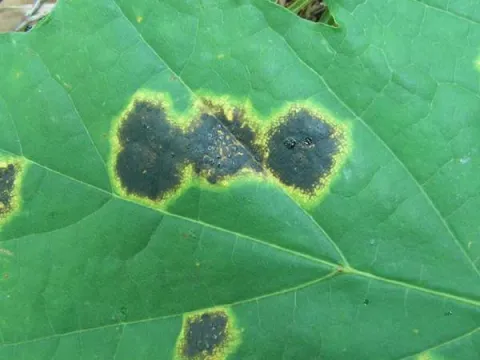
Maple asteromella leaf spot
Asteromella platanoidis
The primary symptom of this disease is the appearance of distinct spots on the leaf blades. These spots typically have a circular or angular shape, often surrounded by a light-colored halo.
What the section contains
Maple asteromella leaf spot
As the pathogen develops, small black dots appear in the center of the lesions. These are the pycnidia of the fungus, which act as asexual fruiting bodies visible to the naked eye.
Severe infestations lead to premature yellowing, drying, and leaf drop during the second half of the summer. The canopy may appear bare much earlier than in healthy trees.
The infection is most frequently observed in the lower parts of the canopy, where humidity levels are higher. In cases of dense foliage, individual spots may coalesce into larger necrotic zones.
Trees with lower vigor or those stressed by environmental conditions often display more severe symptoms, indicating a compromised immune response to the fungal attack.
The causative agent of this disease is the fungus Asteromella platanoidis, which belongs to the group of imperfect fungi (Deuteromycetes). It is the anamorph stage of Mycosphaerella platanoidis.
The fungal mycelium spreads within the leaf tissues, gradually destroying parenchyma cells. During its metabolic activity, the fungus secretes toxins that cause localized cell death.
Reproduction occurs via pycnidiospores, which are released from the pycnidia in slimy masses. These spores are disseminated to healthy tissue by wind, rain splashes, and insect vectors.
The fungus overwinters in fallen infected foliage. This leaf litter acts as the primary reservoir for the initial infection when spring weather conditions arrive.
The fungus can complete multiple life cycles within a single growing season, which explains the rapid progression of the disease in favorable climatic environments.
The development of the disease is highly favored by extended periods of high humidity and frequent rainfall. Rain is a critical factor in transporting spores throughout the tree crown.
Warm temperatures combined with excess moisture significantly accelerate the maturation of spores within the pycnidia. The peak risk for new infections occurs in late spring and early summer.
Dense planting schemes that limit airflow within the canopy are prone to higher levels of infection. Poor ventilation creates a microclimate that is ideal for spore germination.
Shaded areas with poor lighting also experience more frequent outbreaks, as the leaves remain wet for longer periods, facilitating the colonization of the fungus.
Years with heavy spring rains often see a significant increase in the incidence and severity of the disease, sometimes leading to localized outbreaks in maple populations.
The main impact of the disease is the reduction of the leaf surface area capable of photosynthesis, which results in stunted growth and a weakened plant structure over time.
Early leaf drop prevents the tree from accumulating sufficient nutrient reserves for winter survival. Consequently, affected trees are more likely to suffer from winter injury or frost damage.
The loss of foliage ruins the aesthetic appeal of the trees, making them unsuitable for parks, gardens, or urban landscapes where appearance is a primary concern.
Repeated yearly infections reduce the overall resistance of the maple tree, making it susceptible to secondary infestations by pests or other opportunistic pathogens.
In the long run, chronic infection can lead to branch dieback and, if left unmanaged, the gradual decline and eventual mortality of the infected tree.
The most crucial prophylactic measure is the thorough collection and disposal of fallen leaves in the autumn. This removes the primary source of the overwintering pathogen.
Regular sanitary pruning should be performed to remove dead or diseased branches, which improves air circulation and light penetration throughout the tree canopy.
Fungicidal sprays containing copper or modern systemic agents can be applied as a preventive measure during the bud-break and early leaf development stages.
Ensuring optimal growing conditions, such as adequate fertilization and proper irrigation, helps maintain tree vigor and enhances natural resistance to fungal diseases.
- Fall removal of infected leaf litter.
- Sanitary crown thinning and pruning.
- Application of protective fungicides.
- Monitoring and health maintenance of the trees.