
Maple leaf spot
Petrakia deviata
Description
Symptoms
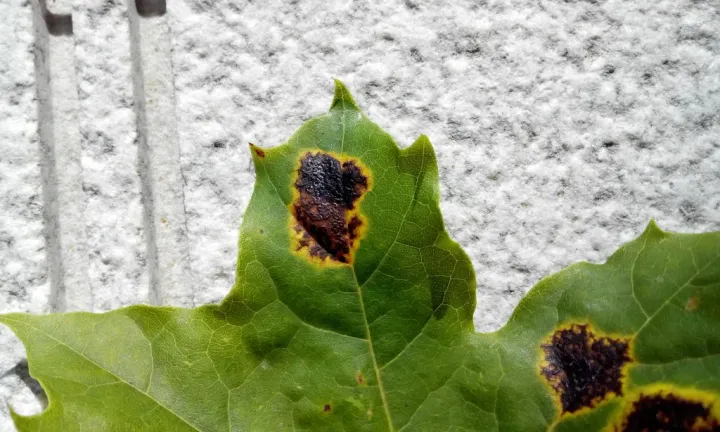
Initial symptoms are characterized by small, brown, or dark circular spots appearing on the leaves. These spots gradually expand as the infection progresses.
A dark, soot-like growth often appears on the lesion areas. This is the sporulation of the fungus, confirming the presence of the pathogen on the leaf surface.
As the disease advances, the necrotic tissues within the spots may dry out and crack, eventually falling out and leaving irregular holes in the leaf blades.
Affected leaves tend to yellow prematurely and drop early, leading to significant defoliation before the autumn season begins.
In humid conditions, the lesions can merge, covering large areas of the foliage and significantly diminishing the overall vitality of the canopy.
Pathogen
The disease is caused by the fungus Petrakia deviata, an imperfect fungus known for targeting various maple species. It acts as a specialized pathogen affecting leaf tissues.
The fungus overwinters in fallen leaves and plant debris. With the arrival of warm spring weather, it produces spores that act as primary inoculum for new infections.
Dissemination of the pathogen occurs primarily through rain splashes and wind currents, which carry spores to healthy foliage during the growing season.
Upon landing on a leaf, the fungal mycelium penetrates the epidermal layers, eventually disrupting the photosynthetic activity of the plant cells.
Petrakia deviata is highly adapted to the host, taking advantage of the biological cycles of maple trees to proliferate rapidly under favorable moisture conditions.
Conditions for development
High humidity and frequent rainfall are the primary drivers of this fungal disease. Wet foliage provides the perfect environment for spore germination.
Optimal temperatures for the development of Petrakia deviata range from 18 to 25 degrees Celsius, matching the active growth period of maple trees.
Poor airflow within the tree canopy, often caused by overly dense planting or lack of pruning, keeps the leaves wet for longer periods, promoting infection.
Poor sanitation, such as leaving infected leaves on the ground around the base of the tree, ensures a high level of inoculum for subsequent seasons.
Trees stressed by drought, poor soil quality, or lack of proper nutrients are significantly more susceptible to infection compared to healthy, vigorous specimens.
Why it matters
Premature leaf drop reduces the tree's ability to photosynthesize, which limits energy storage needed for winter survival and spring growth.
Chronic infections weaken the tree over time, making it less resilient to secondary pests and environmental stressors like extreme weather conditions.
The loss of foliage ruins the aesthetic appeal of the maple tree, which is particularly detrimental in landscape architecture, parks, and residential gardens.
In nurseries, an outbreak of this fungus can render young trees unsalable, causing significant financial losses for producers and distributors.
Repeated annual defoliation can lead to twig dieback and an overall decline in tree health, eventually threatening the long-term viability of the specimen.
Protection
The most effective management strategy is rigorous sanitation: raking and destroying all fallen leaves in autumn to remove the overwintering source of the pathogen.
Pruning to improve canopy ventilation is essential. Thinning out branches reduces humidity inside the crown, making it harder for the fungus to establish.
Fungicidal treatments, particularly those containing copper, should be applied during the early leaf-out stage to protect new growth from primary infections.
- Apply systemic fungicides as directed by local agronomists.
- Maintain soil health with balanced fertilizers to boost tree immunity.
- Ensure adequate spacing when planting to improve natural air circulation.
Monitoring for early signs of spots is critical. If spotted early, localized treatment can often stop the spread of the disease before it becomes systemic.
Discussion
No discussions yet — be the first.