
Dry rot fungus
Serpula lacrymans
The causal agent is Serpula lacrymans, a highly aggressive basidiomycete fungus known for causing catastrophic brown cubical rot in timber.
What the section contains
Dry rot fungus
This pathogen effectively degrades cellulose and hemicellulose in wood, resulting in rapid loss of structural integrity and massive material degradation.
It produces specialized, thick mycelial cords (rhizomorphs) that act as channels, transporting water and nutrients over long distances through non-nutritive materials.
The biological success of the fungus relies on its ability to produce metabolic water, enabling it to colonize dry areas far from the initial moisture source.
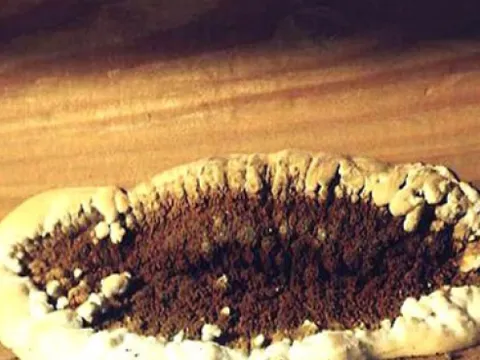
Fruiting bodies are distinctive, featuring rusty-brown, fleshy surfaces often covered in droplets of moisture, which is the origin of the name 'lacrymans' (weeping).
Early colonization is indicated by a white, cotton-like mycelium that spreads across timber surfaces, often accompanied by a damp, mushroom-like scent.
As the infection advances, large, pancake-shaped fruiting bodies emerge with thick white margins, indicating a mature and well-established colony.
Wood decay becomes visually evident through dark brown discoloration and the subsequent cracking of timber along and across the grain.
A classic symptom of advanced rot is the formation of brittle, cube-shaped blocks of wood that crumble easily under light finger pressure.
Structural elements may show gray, strand-like mycelial cords that penetrate deep into brickwork, plaster, and mortar joints of the building structure.
The fungus thrives in environments with high moisture content in timber, typically between 30% and 50%, which is common in damp or poorly ventilated basements.
Optimal growth temperatures range from 20°C to 25°C, although the fungus demonstrates high resilience to varying environmental conditions.
Poor ventilation, stagnant air, and high relative humidity are primary catalysts for the germination of fungal spores in residential and commercial buildings.
Direct contact between timber and damp masonry or wet ground often serves as the entry point for the fungus to establish its initial mycelial network.
The pathogen prefers dark, undisturbed environments, making subfloors, voids behind paneling, and wall cavities common high-risk areas for development.
Dry rot is arguably the most destructive fungus affecting buildings, capable of rendering floor joists, beams, and roof structures dangerously unstable.
The economic impact is massive, as the organism can silently travel through walls and masonry to destroy structural integrity in multiple rooms.
Beyond structural timber, the fungus can attack wood-based products, textiles, and occasionally paper, spreading spores throughout the building's air system.
Once a building is infested, restoration costs are usually very high due to the necessity of removing large sections of affected structural material.
The presence of active dry rot poses significant safety hazards, including the potential for sudden structural collapse of floor or ceiling elements.
The most effective strategy involves eliminating the source of moisture, such as leaking pipes, rising damp, or inadequate building ventilation systems.
All infected wood must be physically cut out, with a significant safety margin of clean, non-affected timber removed to ensure complete eradication.
Application of specialized fungicidal timber treatments is essential to sterilize the area and provide long-term protection against recurring infections.
Improving air circulation through subfloor vents and basement modifications is critical to keeping wood moisture levels below the threshold for germination.
Routine inspections of hidden structural spaces are necessary to detect signs of early growth before the rot causes irreversible building damage.