
Dry rot of gladiolus
Stromatinia gladioli
Description
Symptoms
Initial symptoms are characterized by the yellowing and subsequent browning of leaves, which often leads to the premature dieback of the entire foliage before the blooming cycle is completed.
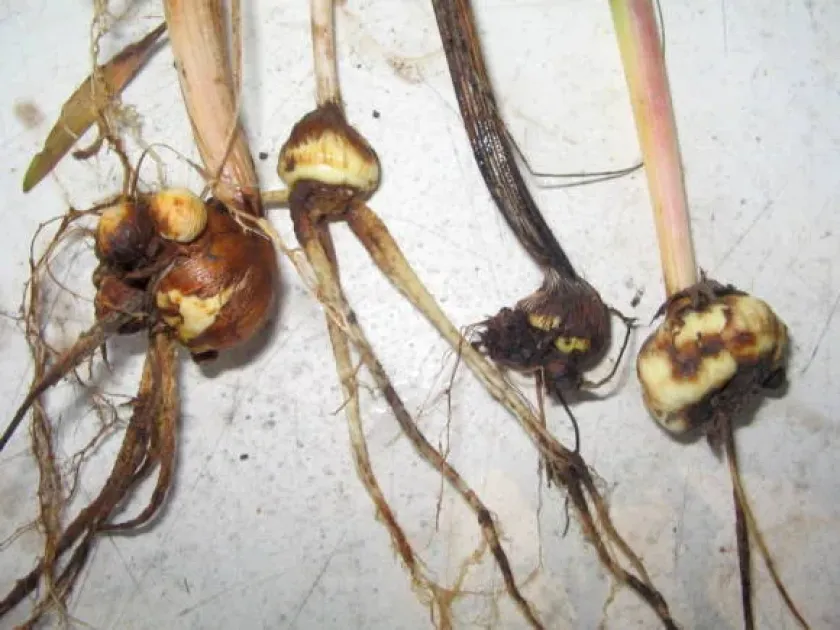
The corms exhibit clear, small brown or black spots that expand into deep, sunken lesions over time. These lesions often have a distinctive reddish-brown or black rim and result in dry, hard rot.
When infected corms are cut open, the internal tissue appears woody, dry, and blackened. This specific mummified appearance is the definitive symptom that distinguishes dry rot from other bacterial or fungal rots.
Small, pinhead-sized black sclerotia are often visible on the surface of the corm or within the scales. These act as the primary survival structure for the fungus and are vital for field identification.
Stunted plant growth is a common observation. Affected plants may fail to flower entirely, or they may produce twisted, weak flower spikes that dry out shortly after the buds appear.
Pathogen
The causal agent of this disease is the fungus Stromatinia gladioli. It is a soil-borne pathogen that persists in the environment by forming small, black sclerotia that remain viable in the soil for many years.
This pathogen primarily infects Gladiolus species. It attacks the roots, corms, and the lower stem area, causing tissue decay and leading to the eventual collapse of the plant during the growing season.
The fungus can survive in the soil for up to 10 years without a host plant, making it an extremely persistent and difficult pathogen to eradicate once it has established itself in a garden plot.
Infection cycles begin when sclerotia germinate in response to soil moisture and temperatures, releasing mycelia that infiltrate the plant's vascular system, eventually leading to the death of the bulb tissue.
The pathogen spreads through contaminated planting material, moving soil particles attached to gardening tools, and the movement of surface water during heavy rain, which transports fungal spores across fields.
Conditions for development
Cool and moist soil conditions are the primary drivers for Stromatinia gladioli development. High humidity levels in the root zone facilitate the rapid germination of the fungus.
Acidic soil conditions significantly enhance the pathogen's activity. Soils with a low pH value are much more conducive to the spread of dry rot than neutral or slightly alkaline environments.
Dense, overcrowded plantings that restrict airflow increase the risk of disease. Poor ventilation allows for prolonged moisture retention at the base of the plant, favoring fungal colonization.
Continuous cropping of gladiolus on the same site for several consecutive years leads to an accumulation of inoculum, which inevitably increases the infection pressure on the crop.
Inadequate soil drainage prevents proper aeration, creating anaerobic pockets that stress the plants and make them significantly more susceptible to infection by the soil-borne fungus.
Why it matters
Dry rot is considered one of the most destructive diseases in gladiolus cultivation. It impacts both the ornamental value of the flowers and the viability of the bulbs for future propagation.
The damage is particularly severe during storage. Corms that appear relatively healthy at the time of harvest can completely decay into black, mummified residues while in storage, leading to total stock loss.
Because the pathogen can persist in the soil for years, an outbreak often means that the infected area must be excluded from gladiolus production for a long period, which is highly disruptive to gardening plans.
Financial losses for commercial growers are substantial due to the high costs associated with soil sanitation and the inability to use land that has become heavily infested with sclerotia.
The disease effectively reduces the quality of the planting stock, leading to weakened populations that are less resistant to other environmental stressors, creating a cycle of decline in the garden.
Protection
Crop rotation is the most critical management practice. A break of at least 5 years without gladiolus or closely related crops is necessary to reduce the population of sclerotia in the soil.
Treating corms with appropriate systemic fungicides before planting is a vital step in reducing the initial infection rate and protecting the plant during its most vulnerable growth phase.
Modifying the soil pH is an effective cultural control; liming the soil to achieve a neutral pH level makes the environment less favorable for the survival and spread of the fungus.
- Carefully rogue out and destroy (burn) any plants displaying early symptoms to minimize the spread of the pathogen.
- Ensure adequate spacing between plants to improve airflow and allow the soil surface to dry out quickly after rain.
- Use clean, disease-free planting stock sourced from reputable growers.
- Disinfect all gardening tools thoroughly after working in areas where the disease has been confirmed.
Proper curing and storage are essential. Keep the storage environment dry, cool, and well-ventilated to prevent any latent infections from advancing into a full-scale rot during the winter season.
Discussion
No discussions yet — be the first.