
Septoria leaf spot of chrysanthemum
Septoria chrysanthemella
Description
Symptoms
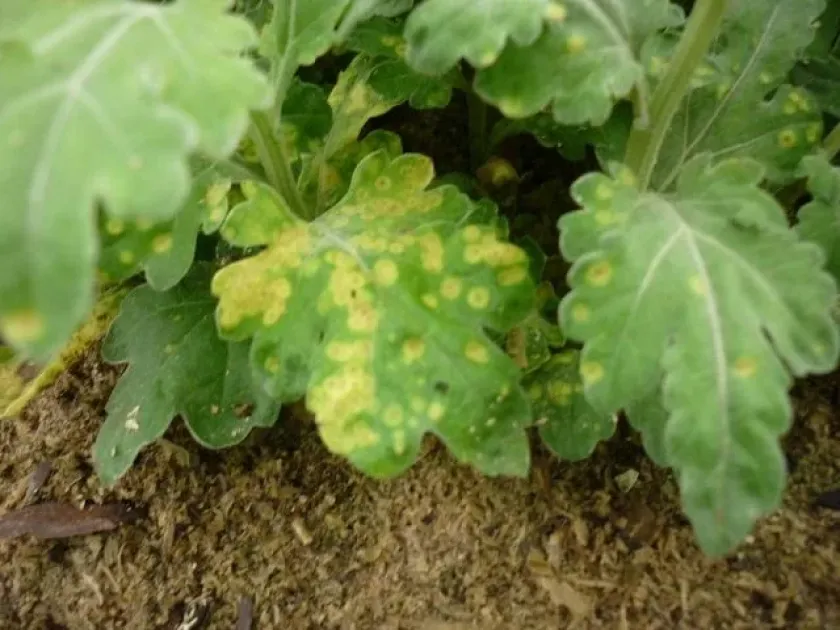
The first symptoms of Septoria leaf spot appear on the lower, older leaves of the plant. The disease manifests as small, dark brown or blackish spots that are often circular or irregular in shape.
As the pathogen advances, these spots enlarge significantly and may coalesce, creating large necrotic areas on the leaf blade. The center of these spots often turns greyish or light brown as the plant tissue dies.
Tiny black dots, known as pycnidia, become clearly visible within the spots on the upper surface of the leaves. These are the fruiting bodies of the fungus, which contain the spores used for dispersal.
In severe cases, the infected leaves turn yellow, wilt, and eventually drop off. This foliage loss typically progresses from the bottom of the stem upwards, severely impacting the aesthetic appeal of the chrysanthemum.
Under high humidity, a faint greyish fungal growth may appear on the necrotic spots, indicating active sporulation of the pathogen on the leaf surface.
Pathogen
The disease is caused by the imperfect fungus Septoria chrysanthemella. It belongs to the class of deuteromycetes and is highly specialized to infect the genus Chrysanthemum.
The fungus survives the winter as pycnidia or mycelium in plant debris, fallen leaves, and soil. It can also persist on perennial chrysanthemum varieties throughout the year in greenhouse conditions.
Secondary infections occur through conidia, which are asexual spores. They are easily spread by water splashes from rain or overhead irrigation, as well as by wind and garden equipment.
The pathogen is highly efficient at reproducing under favorable conditions, allowing the infection to quickly spread across entire flower beds or greenhouse facilities.
The mycelium enters the plant tissue through stomata or mechanical wounds. Once inside, it colonizes the leaf cells, causing cell death and the characteristic spotting associated with the disease.
Conditions for development
The primary factor for the development of Septoria leaf spot is high humidity. The fungus thrives and spreads rapidly when air moisture levels exceed 80-90% for prolonged periods.
The optimal temperature range for spore germination and fungal growth is between 18 and 25 degrees Celsius. In this range, the incubation period can be as short as a few days.
Poor ventilation in overcrowded plantings contributes to moisture accumulation on leaf surfaces, creating the perfect environment for Septoria chrysanthemella to colonize the host.
Overhead watering methods are risky because water droplets on leaves facilitate the movement of spores, significantly increasing the likelihood of an outbreak.
Lack of sunlight, rainy weather, and stagnant air inside poorly ventilated greenhouses are critical factors that accelerate the spread of this fungal disease.
Why it matters
Septoria leaf spot severely damages the ornamental value of chrysanthemums. Affected plants lose their marketability due to unsightly foliage and premature leaf drop.
The reduction in healthy leaf surface area hampers the plant's ability to perform photosynthesis, which weakens the plant and stunts its overall growth.
In cases of heavy infestation, flowering can be severely reduced or halted entirely. Flower buds may fail to develop properly, which is detrimental to the commercial flower industry.
The disease can cause significant losses in plant stock if left unchecked. Weakened plants are also more susceptible to secondary infections and pest infestations.
Economic losses arise from reduced product quality, the cost of fungicides, and the labor required to manage and sanitize infected areas.
Protection
Effective management begins with good cultural practices. It is essential to avoid overcrowding plants and to provide adequate spacing to ensure good air circulation.
Removing and destroying all fallen leaves and plant debris is crucial, as this material acts as the primary reservoir for the fungus during the off-season.
Watering should be performed at the base of the plant to keep the foliage dry. Drip irrigation is highly recommended for chrysanthemum cultivation.
Chemical control involves the use of broad-spectrum fungicides. Copper-based products, as well as systemic fungicides like triazoles and strobilurins, are highly effective when applied correctly.
- Regular inspection of crops for early detection of leaf spots.
- Maintaining optimal humidity levels in greenhouse environments.
- Using disease-free planting material to prevent initial infection.
- Applying preventative fungicide sprays during the active growing season.
Discussion
No discussions yet — be the first.