
Saccothecium
Saccothecium
The causative agent of the disease is the fungus Saccothecium, which belongs to the class of Ascomycetes. It is a specialized pathogen that affects both vegetative and reproductive plant organs in a variety of agricultural crops.
What the section contains
Saccothecium
The life cycle of the pathogen is closely associated with plant debris, where the fungus overwinters in the form of pseudothecia. These structures serve as the primary reservoir for spores that initiate infections at the start of the growing season.
Biologically, the fungus thrives in humid environments. It gains entry into the host plant through natural openings like stomata or through physical micro-injuries in the epidermis, after which it colonizes the intercellular space.
Once inside, the fungus secretes specialized hydrolytic enzymes that break down plant cell walls. This enzymatic activity leads to localized necrosis and disrupts essential plant processes such as photosynthesis and transpiration.
The dissemination of conidia is facilitated by wind currents, splashing rain, or mechanical movement of agricultural machinery. The fungus's high reproductive potential allows it to spread rapidly across large fields under conducive conditions.
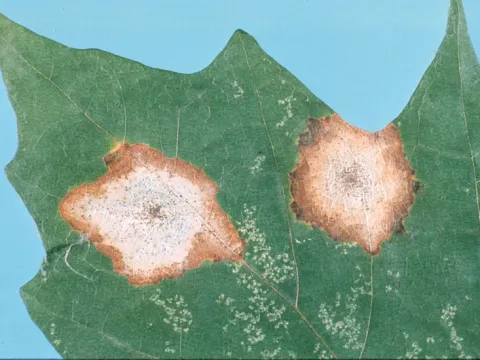
Initial symptoms of Saccothecium infection appear as small, chlorotic spots on leaves. Over time, these spots expand, often developing a distinct dark border, which represents a defensive response by the host plant against the pathogen.
A definitive diagnostic sign is the appearance of tiny black dots at the center of the necrotic lesions, which are the fruiting bodies of the fungus. These structures are often visible to the naked eye under humid weather conditions.
As the disease progresses, the necrotic tissue may dry out and crack, a phenomenon often described as shot-hole symptoms. This leads to a significant loss of green surface area, impacting the plant's overall energy production.
If the infection spreads to stems or petioles, it manifests as elongated lesions or ulcers. These weaken the physical structure of the plant and disrupt the translocation of water and nutrients from roots to the canopy.
In advanced stages, severe infections cause premature yellowing and leaf senescence. This early defoliation stresses the plant, reducing its vigor and leaving it susceptible to further opportunistic infections.
The development of Saccothecium is highly dependent on environmental humidity, with extended periods of rainfall providing the necessary moisture for spore germination and active fungal colonization.
The temperature optimum for the fungus ranges between 18 and 25 degrees Celsius. However, the pathogen remains resilient and capable of slow growth across a wider temperature spectrum, making it a persistent threat in many climates.
Dense crop canopies that lack sufficient airflow create a microclimate with high relative humidity. This humidity allows moisture to persist on leaf surfaces for longer periods, providing the fungus with ample time to penetrate plant tissues.
Failure to implement crop rotation and the practice of leaving crop residues on the field surface significantly increase the inoculum load. This provides the pathogen with a continuous supply of material to survive the winter.
Imbalanced nutrient management, particularly excessive nitrogen fertilization, can promote lush, succulent growth that is more easily invaded by the Saccothecium mycelium, thereby increasing the severity of the disease.
The primary economic impact of Saccothecium is a significant reduction in yield. By compromising the foliage, the disease restricts the plant's capacity to synthesize the carbohydrates needed for optimal grain or fruit development.
Product quality is often severely degraded; harvested produce may be small, malformed, or of inferior taste. This leads to diminished marketability and direct financial losses for the grower.
Chronic infections weaken the overall systemic health of the plant, making it more vulnerable to secondary pests and drought stress. This can necessitate increased pesticide use, further adding to production costs.
The loss of foliage can also prevent the plant from accumulating sufficient carbohydrate reserves for the following season, affecting growth in subsequent years for perennial crops.
In severe outbreaks, the disease can lead to plant death, resulting in patchiness in the field that reduces total harvest efficiency and increases labor costs for field management.
The cornerstone of Saccothecium management is an effective crop rotation strategy, ideally allowing a 3-4 year interval between susceptible crops to starve the pathogen of its host.
Sanitation practices are critical, including the thorough burial or removal of crop debris after harvest to destroy the overwintering sites of the fungus. This drastically lowers the primary inoculum for the next cycle.
Chemical control using fungicides is an effective intervention strategy when applied at the onset of symptoms. Products based on copper, triazoles, or strobilurins are commonly used to inhibit fungal growth and spread.
Monitoring fields closely allows for the early detection of the pathogen, which is vital for timing fungicide applications effectively. Integrated Pest Management (IPM) practices should be employed to minimize unnecessary chemical usage.
Utilizing resistant or tolerant crop varieties is the most sustainable long-term solution. Furthermore, promoting plant health through balanced fertilization and optimal planting density helps maintain the natural defense mechanisms of the crop.