
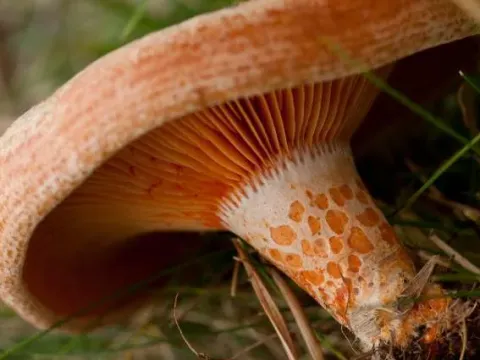
Saffron milk cap
Lactarius deliciosus
It is essential to clarify that Lactarius deliciosus (the Saffron milk cap) is not a plant pathogen or a disease-causing agent. It is an edible mushroom from the Russulaceae family that maintains a strictly symbiotic, not parasitic, lifestyle.
What the section contains
Saffron milk cap
Biologically, this species is defined as a mycorrhizal symbiont. It does not cause infections in plant tissues; rather, it enters into a mutually beneficial relationship with the root systems of conifers.
The fungus lacks the enzymes required to feed on living plant cells, which is the primary reason it cannot be classified as a plant disease. Its mycelium interacts with the roots in a way that supports the plant's physiological needs.
As a mycorrhizal fungus, it wraps around the root tips, forming a complex structure that facilitates the exchange of water and minerals for carbohydrates produced by the tree through photosynthesis.
Therefore, any labeling of this species as a plant disease is scientifically incorrect and contrary to mycological consensus regarding forest ecology.
The primary sign of the fungus's presence is the appearance of orange fruit bodies in the leaf litter, indicating that a healthy mycorrhizal connection has been established in the soil.
The root systems of host trees often display dense, branched structures covered by the fungal mycelium, which is a sign of successful symbiosis rather than pathological damage.
The mushroom itself features a distinct orange color, concentric rings on the cap, and an orange latex that turns greenish when exposed to air, which is a characteristic identification feature.
These mushrooms are commonly found in young pine plantations, where the soil conditions support the growth of the fungal mycelium alongside the young tree roots.
There are no symptoms of necrosis, chlorosis, or vascular wilt associated with this fungus, confirming its role as a supportive symbiont in the forest ecosystem.
The development of the Saffron milk cap requires the presence of host conifer trees, primarily those in the genus Pinus, which provide the necessary biological platform for the symbiosis.
Suitable growing conditions include well-aerated soils with an adequate layer of organic matter, which serves as a medium for the fungal mycelium to thrive.
The fungus prefers slightly acidic or neutral soil environments, which are common in stable forest ecosystems and pine groves.
Adequate moisture and moderate temperature ranges during the late summer and autumn are critical for the formation of fruit bodies and the maintenance of the fungal-root interaction.
Environmental disturbances, such as chemical runoff or significant disruption of the forest floor, can negatively impact the delicate balance required for the fungus to persist.
The Saffron milk cap does not cause any harm to crops or trees; instead, it is considered a beneficial organism that contributes to forest health.
By extending the reach of the root system, the fungus helps the host tree absorb more water and essential minerals, significantly boosting its survival rate during periods of environmental stress.
The symbiosis improves the overall vigor and growth rate of young trees, making them more resilient to adverse soil conditions or nutrient deficiencies.
There is no economic damage caused by this mushroom; in fact, it is often valued for its contribution to soil quality and its potential as a secondary forest product.
Consequently, this species should be protected and encouraged as a natural component of healthy woodland management rather than targeted for control.
There are no control measures required, as the Saffron milk cap is not a plant disease and does not threaten agricultural or forest yields.
To ensure the health of the beneficial mycorrhizal network, it is recommended to avoid the excessive use of harsh pesticides or fungicides that could inadvertently harm the soil mycelium.
Maintaining the natural structure of the forest floor and minimizing soil compaction are the best strategies to promote the presence of this symbiotic fungus.
In silviculture, the presence of these fungi is often used as an indicator of a well-functioning, healthy soil ecosystem that supports reforestation efforts.
No specific intervention is necessary, as the fungus exists in a stable, natural balance with its host plant, providing benefits that outweigh any human interference.