
Saffron ringless amanita
Amanita crocea
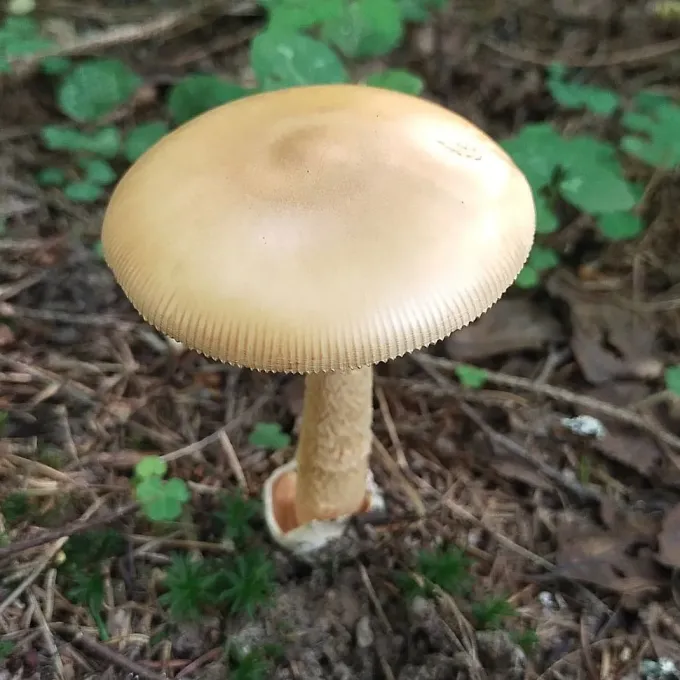
Description
Pathogen
The Saffron ringless amanita (Amanita crocea) is a fungus of the Amanitaceae family, widely distributed in forest ecosystems, and is not a plant pathogen.
It forms mycorrhizal associations with trees, contributing to forest health by exchanging nutrients and water with its host trees.
There is no evidence that this mushroom causes any physiological diseases in agricultural crops or forest plantations.
The organism is a saprotroph and mycorrhizal symbiont, which distinguishes it clearly from parasitic fungi responsible for plant infections.
In an agricultural or botanical context, the presence of this mushroom should not be considered a sign of crop infestation or plant disease.
Conditions for development
The development of the fruiting bodies of Amanita crocea is highly dependent on humidity levels and soil composition, particularly in forest areas.
The fungus thrives in acidic soils where organic matter is abundant and there is significant moisture retention provided by leaf litter.
Typical growing conditions include cooler temperatures and frequent rainfall, which trigger the appearance of its distinctive saffron-colored caps.
The association with trees requires specific environmental conditions to maintain the balance between the fungal mycelium and host roots.
Spore dispersal depends on favorable wind conditions during the peak fruiting season, which usually occurs from mid-summer through autumn.
Discussion
No discussions yet — be the first.