
Ochrolechiaceae
Ochrolechiaceae
Ochrolechiaceae is a taxonomically defined family of lichenized fungi, not a plant disease in the phytopathological sense.
What the section contains
Ochrolechiaceae
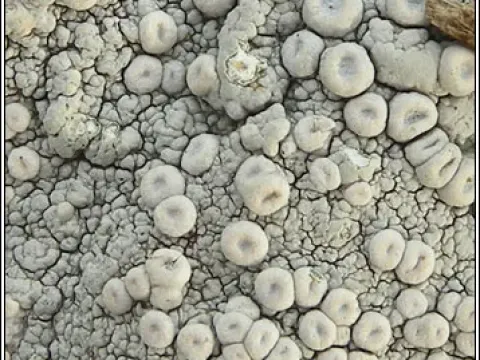
These organisms appear as crust-like, granular, or warted patches on the bark of trees, rocks, or soil, demonstrating a complex symbiotic structure.
A distinctive feature of the family is the presence of apothecia, which are the reproductive structures of the fungal component, often appearing as disk-like yellow or brownish cups.
The color of the thallus varies from whitish and grey to yellowish hues, depending on the specific species and the chemical compounds present.
These organisms remain strictly superficial, forming a physical attachment to the bark without penetrating or damaging the internal cambium layers.
Ochrolechiaceae are not plant pathogens. They are symbioses between a fungus (the mycobiont) and an alga (the photobiont).
The fungus provides the architectural structure and protection from environmental stress, while the alga supplies nutrients through photosynthesis.
As autotrophic organisms, they generate their own energy and do not derive nutrients from the host plant, thus causing no parasitic harm.
They do not produce specialized enzymes or toxins that interfere with plant physiology, making them biologically distinct from diseases like rusts or blights.
Their presence on plants is purely epiphytic; they use the plant only as a physical substrate for anchoring and spatial orientation.
These lichens thrive in environments with high air quality, as they are notoriously sensitive to atmospheric sulfur dioxide and other pollutants.
They require adequate moisture and indirect sunlight, typically colonizing the northern or shaded sides of mature tree trunks.
The stability of the substrate is critical; therefore, they are most common on older, slower-growing trees with rough, textured bark.
High humidity levels facilitate their development, often leading to larger colonies in unmanaged or overgrown orchard environments.
Seasonal environmental factors, including temperature and precipitation, dictate their rate of colonization and overall coverage on woody surfaces.
There is no significant harm caused by Ochrolechiaceae to the health, vigor, or yield of agricultural crops or fruit trees.
While they are not parasites, dense lichen cover can occasionally provide a refuge for overwintering pests, such as scale insects or mite eggs.
In extremely rare cases, heavy encrustation might interfere slightly with bark gas exchange, but this only occurs on trees already in severe decline.
Generally, their presence should be interpreted as an indicator of a stable, long-term environmental situation rather than a sign of pathological distress.
No agricultural economic losses are attributed to these organisms, as they do not invade or kill plant tissues.
As they are not a disease, no fungicidal treatment is required, and the use of chemical pesticides against them is not recommended.
Mechanical removal using soft brushes during wet weather is the standard approach if aesthetics are a concern in a managed orchard.
Preventative cultural practices, such as proper pruning, improve air circulation and light exposure, which naturally deters lichen colonization.
Whitewashing tree trunks serves as a traditional and effective deterrent, creating an inhospitable surface for lichen spores to attach.
Maintaining tree vigor through balanced fertilization and hydration helps the plant stay healthy, preventing the aged appearance that makes it attractive to lichens.