
Primula ramularia leaf spot
Ramularia primulae
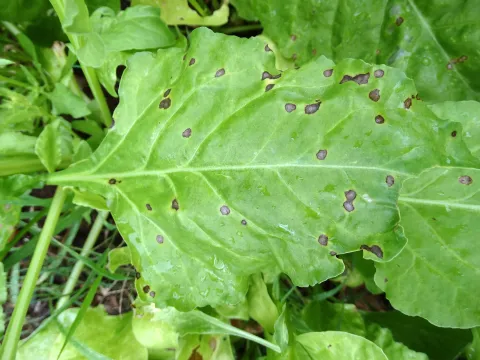
The initial symptoms of this disease appear on primrose leaves as small, circular, light brown or yellowish spots often surrounded by a darker margin.
What the section contains
Primula ramularia leaf spot
As the infection progresses, a characteristic white or grayish fuzzy coating forms in the center of the spots, which represents the fungus's sporulation.
Affected leaves begin to yellow, curl, and wither prematurely, which significantly diminishes the plant's decorative value.
In conditions of high humidity, the spots may coalesce, covering large sections of the leaf blade and leading to extensive tissue necrosis.
The infection typically starts on the lower, older leaves of the plant and gradually spreads upwards to the younger foliage and stems.
The causative agent of this disease is the fungus Ramularia primulae, which belongs to the group of hyphomycetes.
The pathogen survives the winter in the soil and on infected plant debris in the form of mycelium or sclerotia, ensuring persistence in the environment.
The fungus reproduces through conidia, which are easily dispersed by wind, rain splashes, or contaminated irrigation water to healthy leaves.
It is a host-specific fungus that primarily attacks various species and hybrids within the Primula genus, both in gardens and greenhouses.
The fungus colonizes the leaf tissue, consuming nutrients and causing cell death, which manifests as visible spotting on the surface of the host plant.
The most favorable conditions for the development of Ramularia primulae are moderate air temperatures combined with high humidity levels.
Frequent rainfall, heavy dew, and high ambient humidity provide the necessary moisture for the conidia to germinate and penetrate the host tissue.
Overcrowded plantings hinder air circulation around the plants, leading to a moist microclimate that accelerates the spread of fungal spores.
Inadequate light and improper watering techniques, such as overhead irrigation that wets the leaves, significantly increase the infection risk.
Stressed or nutrient-deficient plants are more susceptible to the infection, highlighting the importance of proper overall plant maintenance.
This fungal disease significantly reduces the visual appeal of primroses, making them unsuitable for borders, flower beds, or commercial sale.
Severe defoliation weakens the plant, limiting its ability to perform photosynthesis and reducing its overall vigor and growth rate.
Infected plants often exhibit reduced cold hardiness, making them more likely to die during winter if the infection has weakened their root system.
The production of flowers is negatively impacted as the plant diverts energy to combat the pathogen rather than developing blooms.
In horticultural settings, an outbreak can result in the loss of entire batches of plants, leading to significant economic consequences.
The primary control measure is good sanitation, which includes the prompt removal and destruction of all infected plant materials to prevent further spread.
Planting primroses with sufficient spacing is essential to ensure adequate airflow and reduce the humidity around the foliage.
Always water at the base of the plant to keep the leaves dry, and ensure that the planting site has well-draining soil.
Chemical control involving fungicides, such as copper-based products or systemic triazole fungicides, may be necessary in case of severe outbreaks.
- Regularly monitor the plants for early symptoms of leaf spot.
- Avoid overhead irrigation to keep the foliage dry.
- Provide balanced fertilization to boost the plant's natural immune system.