
Proso millet smut
Ustilago crameri
Description
Symptoms
Symptoms of proso millet smut become visible during the panicle emergence stage, as the disease transforms the plant's reproductive structures.
Instead of healthy grain development, the panicles exhibit stunted growth and are replaced by black, dusty masses of fungal spores.
The infected panicles often appear compact, deformed, and partially covered by glumes that may rupture prematurely, releasing spores into the field.
In severe cases, the entire panicle is affected, leading to a total loss of grain production in the individual infected plant.
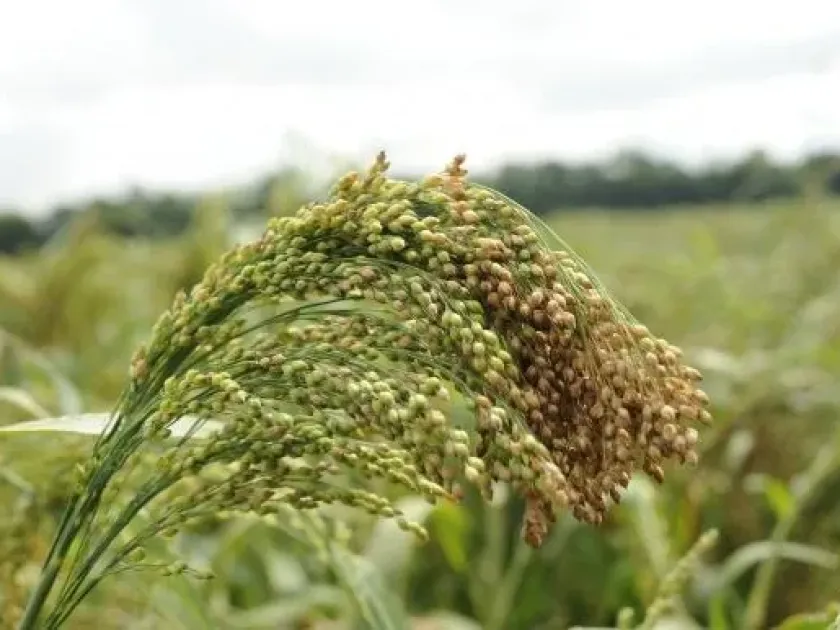
Visually, affected plants can be distinguished by their darkened, irregular appearance, standing in contrast to the healthy, golden millet panicles.
Pathogen
The disease is caused by the fungus Ustilago crameri, a specialized pathogen that affects exclusively proso millet (Panicum miliaceum) crops.
The fungus belongs to the smut group and is primarily seed-borne, meaning the spores adhere to the surface of the seeds during harvest and storage.
The infection process occurs in the seedling stage, specifically when the germinating seed is exposed to fungal spores during the delicate emergence period.
Once the fungal hyphae penetrate the plant tissues, the pathogen develops systemically throughout the plant, remaining dormant until the flowering phase.
The life cycle concludes when the plant produces panicles, where the pathogen replaces healthy grains with masses of dark fungal spores.
Conditions for development
The development of the disease is heavily influenced by soil moisture and temperature during the early weeks of the crop's development.
Temperatures ranging from 15 to 25 degrees Celsius are ideal for spore germination and successful penetration into the young millet coleoptile.
Delayed emergence, often caused by cold or excessively dry weather, significantly increases the likelihood of severe infection within the field.
Soil conditions that promote slow seedling growth allow the fungus more time to infect the plant, as the young tissue is susceptible for only a brief period.
The density of the initial inoculum on the seeds is a crucial factor, and even low levels of seed contamination can lead to significant outbreaks if environmental conditions are favorable.
Why it matters
The primary economic harm caused by millet smut is the direct loss of grain yield, as infected plants produce no marketable product.
Fields with high infection rates may suffer yield losses of up to 50% or more, depending on the efficacy of seed treatment and environmental factors.
Smut spores contaminate healthy grain during the harvesting process, which reduces the quality of the harvested batch and makes it unsuitable for sowing.
Such contamination creates a cycle of infection, where each successive generation of seeds carries a higher burden of spores if not treated properly.
Beyond crop loss, the cost of managing the disease includes the purchase of effective fungicides and the logistical effort of processing and treating the seeds annually.
Protection
The most effective strategy for managing proso millet smut is the application of fungicide seed treatments to eliminate spores present on the seed surface.
Choosing resistant or tolerant millet varieties helps minimize the risk of infection and provides a more sustainable approach to crop management.
Implementing proper agronomic practices, such as ensuring optimal planting depth and timing, helps the crop establish quickly and escape the infection window.
- Regular cleaning of seed batches to remove debris and dust.
- Calibration of seeders to ensure even distribution and rapid emergence.
- Continuous monitoring for signs of infection in the vegetative and flowering stages.
Finally, practicing crop rotation and using certified, disease-free seed are essential steps to maintain a healthy and productive millet field.
Discussion
No discussions yet — be the first.