
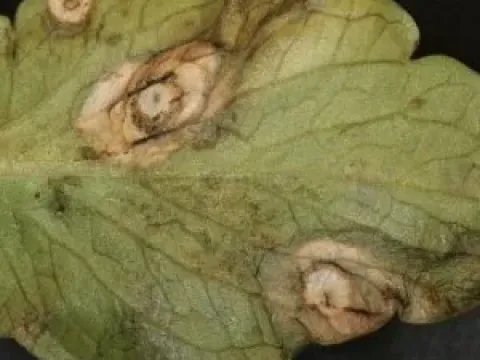
Ramularia leaf spot of safflower
Ramularia carthami
The disease is caused by the imperfect fungus Ramularia carthami. This pathogen belongs to the Ramularia genus, which includes various species that parasitize different crops and wild plants.
What the section contains
Ramularia leaf spot of safflower
The fungus acts as a parasite, deriving nutrients from the host plant's tissues. During its life cycle, it produces conidial sporulation, which serves as the primary source for infection spreading throughout the field.
The pathogen can survive in the soil on infected plant debris for extended periods. Furthermore, the disease can be transmitted via contaminated seeds, making seed quality crucial.
The mycelium of the fungus penetrates deep into the tissues, disrupting normal physiological processes of the plant. As the infection progresses, it produces new spores that are dispersed by wind and rain droplets.
Studying the biology of Ramularia carthami is essential for developing integrated pest management strategies, given the pathogen's high plasticity to environmental changes.
The first symptoms of the disease appear on the lower leaves as small chlorotic spots. Gradually, these spots take on an irregular shape and develop a brown hue.
A light, whitish powder or felt-like coating, representing the fungus's conidia and conidiophores, often forms in the center of the affected areas. When the disease is severe, the spots merge, covering large parts of the leaf blade.
Dark brown or almost black necrotic spots can also appear on stems and branches. The tissues at the infection sites gradually dry out and die off.
Extensive damage leads to premature yellowing and leaf drop, starting from the lower canopy. This significantly reduces the photosynthetic surface area of the plant.
- Yellowing of lower leaves
- Brown necrotic spotting
- White powdery fungal growth
- Desiccation and early leaf drop
- General stunting of the plant
The development of Ramularia leaf spot is favored by high humidity and moderately warm temperatures. Rainfall during the growing season is a key factor that triggers outbreaks.
Dense crop stands create a specific microclimate in the lower canopy where moisture is trapped, which significantly accelerates spore germination and infection.
Fog and heavy morning dew facilitate the active spread of spores from diseased to healthy plants. Optimal temperatures for mycelial growth are in the range of +18°C to +24°C.
Violating crop rotation practices, such as planting safflower too soon on the same field, leads to the accumulation of inoculum in the soil.
Reduced plant resistance due to nutrient deficiencies or herbicide stress can make safflower crops more susceptible to Ramularia carthami infection.
The damage caused by the disease manifests in a sharp reduction in safflower yield. Loss of leaves disrupts normal photosynthesis, leading to poor development of flower heads.
The fungus affects seed filling, resulting in lower thousand-kernel weight and decreased quality. Infected seeds often show lower oil content and poorer nutritional profiles.
The active growing period is shortened, leading to uneven maturation of the crop. In cases of epiphytotic development, yield losses can be severe and economically devastating.
The disease also affects seed vigor, leading to reduced germination rates. Infected seeds serve as the primary source of infection for subsequent planting cycles.
Farmers face direct economic losses not only from yield reduction but also from the increased costs associated with applying fungicides and lower market demand for poor-quality produce.
The primary control method is strict adherence to crop rotation, with at least a 3-4 year interval before planting safflower again. This disrupts the fungal life cycle.
Thorough tillage to incorporate plant debris into the soil promotes faster decomposition and helps eliminate overwintering mycelium, reducing the inoculum load.
Using resistant cultivars and hybrids is the most effective and environmentally sustainable way to manage Ramularia leaf spot under field conditions.
Seed treatment with fungicides prior to planting helps to eliminate surface-borne infections and protects young seedlings during the critical early growth stages.
If necessary, foliar application of systemic fungicides should be carried out upon the first signs of the disease to stop further spread and protect the potential yield.