
Ramulariopsis
Ramulariopsis
Description
Symptoms
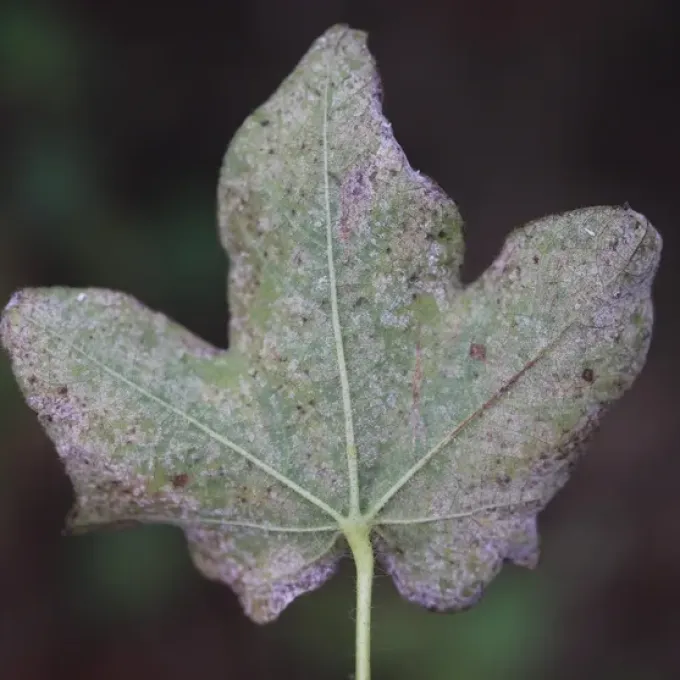
The hallmark of a Ramulariopsis infection is the appearance of distinct spots on the foliage. These spots are initially small and yellowish, later transitioning into dark brown or greyish necrotic lesions.
Often, a halo of chlorotic tissue surrounds the spot, indicating the plant's response to the invading fungus. As the infection progresses, the center of the spot may turn brittle and eventually fall out, creating a "shot-hole" appearance.
Microscopic examination of the undersides of the leaves typically reveals fine, powdery fungal growth, which represents the conidiophores of the pathogen. This sign is instrumental for confirming the diagnosis in the field.
In cases of severe infestation, spots may coalesce, resulting in massive necrosis of the leaf blades. This leads to premature senescence of the lower leaves, while the upper leaves may show symptoms as the disease moves upward.
Stems and petioles can also be affected, displaying elongated lesions that disrupt nutrient transport. If left untreated, the plant exhibits stunted growth, wilting, and a generally sickly appearance that prevents proper development.
Pathogen
Ramulariopsis is a genus of fungi responsible for causing various plant diseases, typically manifesting as leaf spot infections. This pathogen belongs to the group of imperfect fungi and is known for its ability to persist in soil and crop debris.
The disease cycle begins when conidia, the asexual spores of the fungus, are dispersed by splashing rain or wind currents. Upon landing on a suitable host, these spores germinate and penetrate the leaf surface to establish an infection.
Inside the plant tissue, the fungal mycelium grows and secretes enzymes that break down cellular structures. This process leads to the formation of necrotic spots, which gradually expand as the fungus consumes the plant's nutrients.
Environmental conditions play a crucial role in the survival of the pathogen. The fungus overwinters in infected plant residue, ensuring that it remains present in the field for the next growing season if the debris is not properly managed.
The pathogenicity of Ramulariopsis is often linked to the specific species of the plant host. While some strains have a narrow host range, others can affect several related crops, making cross-contamination a significant concern in agricultural systems.
Conditions for development
High humidity and moderate temperatures are the most critical factors driving the development of Ramulariopsis. The fungus thrives when relative humidity levels remain consistently above 80%, especially during overcast conditions.
Frequent rainfall or persistent heavy dew provides the essential moisture required for spore germination. Without these moisture layers on the leaf surface, the spores struggle to infect the host plant.
Plant density is another major influence; overcrowded fields restrict airflow, which keeps the leaf canopy moist for longer periods. Poor ventilation is a major contributor to the rapid spread of the disease within a field.
Temperature range optimal for the fungus is between 15°C and 22°C. While extreme heat may suppress fungal activity, the pathogen can quickly resume growth once conditions return to a more favorable, cool and moist state.
Poor field sanitation, such as leaving large amounts of infected crop residue from the previous season, creates an ideal environment for the pathogen to thrive. High nitrogen fertilization can also make plants more susceptible by encouraging lush, soft tissue growth.
Why it matters
The primary impact of Ramulariopsis is the significant reduction in photosynthetic capacity due to the loss of leaf surface area. This inevitably results in a lower overall biomass and decreased crop yield.
In addition to volume loss, the quality of the harvested produce is often compromised. For instance, grain crops may exhibit lower test weights, and fruits or vegetables might show reduced sugar content and poor storage shelf life.
The economic harm extends to the cost of fungicide applications and the potential need for premature harvesting to save the crop. In severe cases, the entire harvest may be deemed unmarketable due to the extent of the lesions.
Secondary infections often follow a Ramulariopsis outbreak, as the necrotic lesions provide entry points for bacteria and other opportunistic fungi. This compounded stress significantly weakens the plant's natural defense systems.
Premature leaf drop shortens the growth cycle, preventing the plant from reaching full maturity. This is particularly problematic for crops requiring a long maturation period to achieve their full genetic yield potential.
Protection
- Practice crop rotation by avoiding susceptible hosts for at least 3 years.
- Incorporate deep plowing to bury infected crop residues and accelerate decomposition.
- Select resistant cultivars that are bred for tolerance against fungal pathogens.
- Monitor fields closely and apply systemic fungicides at the onset of symptoms.
- Improve field management by ensuring proper plant spacing and balanced nutrient application.
Discussion
No discussions yet — be the first.