
Ramularia leaf spot of violet
Ramularia agrestis
Description
Symptoms
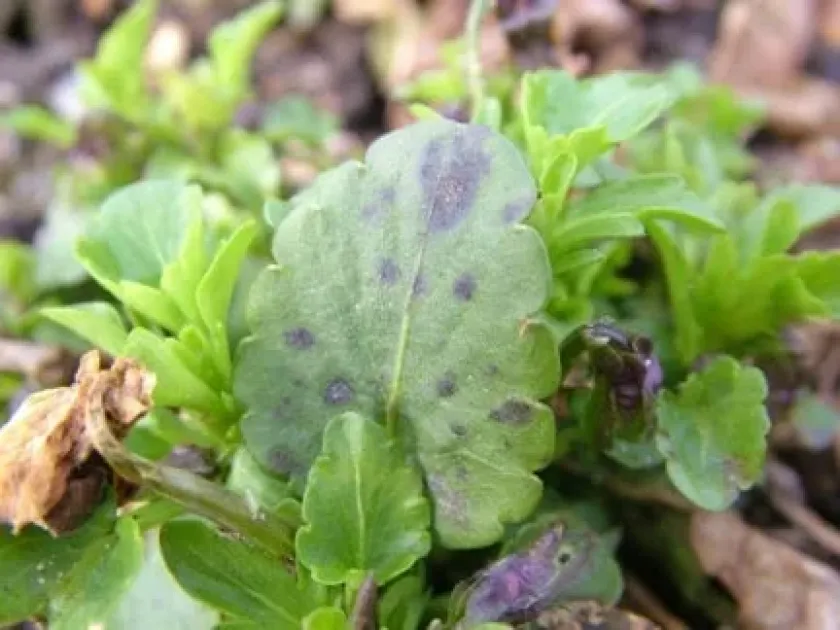
The first clinical signs of Ramularia infection are small, round, or angular spots appearing on the leaves, usually starting at the lower levels of the plant.
As the lesion progresses, the center of the spot typically becomes light brown or grey, often surrounded by a distinct darker margin or a chlorotic halo.
Under humid conditions, a characteristic white, powdery, or downy fungal growth appears directly on the lesions on the underside of the leaf surface.
If the infection remains unchecked, these spots coalesce, leading to severe chlorosis, leaf curl, and eventual necrosis of the entire leaf structure.
- Round or irregular spots on leaves.
- White fungal spores visible on the underside.
- Darkening and necrosis of leaf tissue.
- Stunted growth and distorted rosette shape.
- Premature leaf drop and tissue death.
Pathogen
The causative agent of this disease is the fungus Ramularia agrestis, an anamorphic fungus that acts as a parasite on the foliage of various ornamental plants, including Saintpaulia.
The pathogen thrives by colonizing the leaf tissue, where it develops a vegetative mycelium that penetrates the intercellular spaces, disrupting cellular integrity.
It reproduces via conidia, which are produced in small clusters on the underside of leaves, giving the spots a whitish, fuzzy appearance during high-humidity periods.
These conidia are highly resilient and serve as the primary inoculum for secondary infections, spreading easily via splashing water, air currents, or contaminated gardening tools.
The fungus is known for its ability to persist in plant debris or the upper layer of soil, acting as a recurring source of infection for new growth throughout the season.
Conditions for development
High relative humidity, typically exceeding 75%, combined with poor air circulation, creates an optimal environment for the proliferation of Ramularia agrestis.
The temperature range of +18°C to +23°C is perfectly suited for the metabolic activity and rapid colonization of the fungus on the host plant's foliage.
Crowded planting conditions prevent adequate drying of leaf surfaces, allowing conidia to germinate successfully upon contact with the moist plant tissue.
Excessive irrigation practices that wet the leaves rather than the soil directly contribute significantly to the rapid spread of the pathogen within the collection.
Weakened plant immunity, caused by insufficient light or poor nutrient management, makes the violets significantly more susceptible to successful fungal penetration.
Why it matters
The primary damage is aesthetic, as the spotting ruins the foliage, making the plant unsightly and unsuitable for displays or competitive exhibiting.
By consuming leaf resources and killing host cells, the fungus reduces the plant's photosynthetic capacity, leading to a decline in vigor and overall health.
Persistent infections prevent the plant from producing healthy blooms, as the energy is redirected towards trying to recover from the fungal damage.
Without intervention, the pathogen can kill the entire violet collection, especially in greenhouse or nursery environments where conditions are difficult to control.
The disease often opens the door to secondary opportunistic pathogens, such as soft rot bacteria, which can destroy the crown and root system of the violet.
Protection
Cultural control is the most effective starting point: improve ventilation, avoid overhead watering, and ensure adequate spacing between individual plants.
Sanitation is crucial; all leaves showing signs of spotting must be promptly removed and disposed of to reduce the density of airborne spores.
For severe outbreaks, systemic fungicides, particularly those containing triazoles or copper-based compounds, can be applied to stop the progression of the mycelium.
Biological fungicides based on Bacillus subtilis can be used as a preventative measure to inhibit spore germination on the leaf surfaces.
Always disinfect pots and gardening equipment using a 70% alcohol solution or other effective disinfectants to prevent cross-contamination between plants.
Discussion
No discussions yet — be the first.