
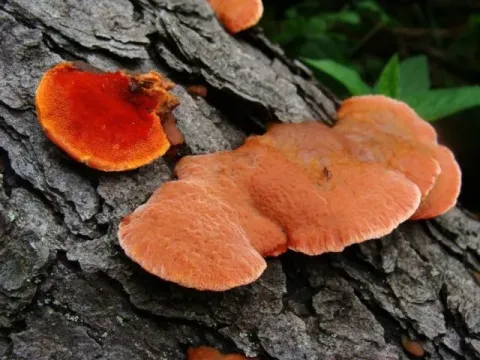
Pycnoporus cinnabarinus
Pycnoporus cinnabarinus
Pycnoporus cinnabarinus is a saprobic wood-decay fungus belonging to the Polyporaceae family, primarily responsible for white rot in hardwood species.
What the section contains
Pycnoporus cinnabarinus
While typically acting as a saprotroph, it can exhibit opportunistic parasitic behavior on weakened or physiologically stressed trees.
The fungus is easily recognized by its vibrant cinnabar-red to orange-red fruiting bodies that appear on the surface of decayed wood.
It produces specialized enzymes that break down lignin and cellulose, effectively softening the woody structure over time.
The life cycle involves spore dispersal through pores on the underside of the fruiting body, allowing the fungus to colonize new substrates through wind or insects.
The most distinctive symptom is the emergence of bright red, leathery fruit bodies on trunks, stumps, or dead branches of deciduous trees.
Internal wood tissue becomes bleached, fibrous, and soft to the touch, which is a classic manifestation of white rot caused by lignin degradation.
As the decay progresses, the structural integrity of the tree is compromised, often leading to longitudinal cracking of the bark.
Visual signs inside the tree might be subtle initially but become evident as the mycelial network consumes more cellulose and lignin.
- Bright cinnabar-red fruiting bodies
- Bleached, stringy white rot within the wood
- Loss of structural mechanical strength
- Bark cracking and localized tissue damage
Pycnoporus cinnabarinus thrives in conditions with high humidity and moderate temperatures, which are essential for spore germination.
It preferentially colonizes dead or dying hardwood trees such as beech, birch, and various orchard species that have sustained injury.
The development of the fungus is most rapid during the warm months, especially after prolonged periods of rainfall and stagnant air.
Lack of proper pruning and the presence of decaying organic debris on the forest floor provide a steady inoculum source for new infections.
High moisture levels in the wood tissue, often caused by stagnant sap or environmental water logging, create the perfect microclimate for the pathogen.
The primary damage is the rapid degradation of structural wood fibers, which significantly shortens the lifespan of the affected tree.
Affected trees become highly susceptible to windthrow or branch breakage, posing significant safety risks in public areas or managed forests.
The quality of timber is severely degraded, rendering the wood useless for structural or carpentry purposes due to rot and loss of density.
Persistent infection disrupts the tree’s water and nutrient transport, leading to stunted growth and reduced fruit or seed yield.
The creation of fungal cavities promotes further decay and provides entry points for wood-boring insects and other secondary pathogens.
Sanitary pruning and the removal of infected wood or dead standing timber are crucial steps to minimize the spread of fungal spores.
All harvested fruiting bodies should be collected and destroyed, preferably by burning, to prevent further spore production and dispersal.
Wounds on tree trunks should be treated promptly with fungicides or wound-healing sealants to prevent fungal colonization after mechanical damage.
Promoting tree health through appropriate fertilization and regular inspection ensures trees maintain the resilience needed to resist infection.
Applying copper-based fungicidal sprays to exposed wood surfaces can act as a protective barrier against new spore settlements.