
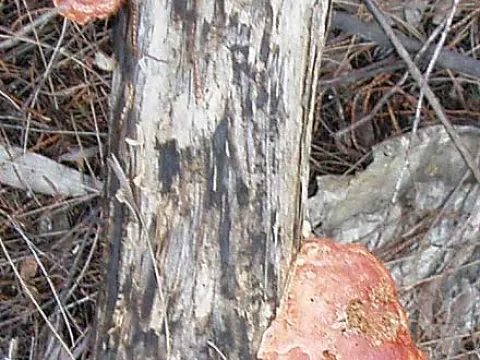
Pycnoporus coccineus
Pycnoporus coccineus
Pycnoporus coccineus is a conspicuous wood-decay fungus belonging to the Polyporaceae family, known for its vibrant red-orange sporocarps.
What the section contains
Pycnoporus coccineus
While it predominantly acts as a saprotroph breaking down dead organic matter, it can aggressively colonize stressed or damaged living trees.
The fungus functions by producing enzymes that degrade lignin and cellulose, effectively compromising the structural integrity of the wood.
Its mycelium penetrates deep into the heartwood, slowly but surely turning the internal structure of the tree into a mass of decayed material.
The characteristic vivid color of the fruiting bodies makes this fungus easily identifiable, though by the time they appear, the internal infection is often advanced.
The most prominent sign is the presence of bright, cinnabar-red shelf-like fruiting bodies growing on the bark of trunks or stumps.
Internally, the infected wood exhibits distinct signs of white rot, becoming soft, brittle, and eventually fibrous in consistency.
Leaves on infected branches may show signs of premature yellowing or wilting, indicating that the vascular system is being impacted.
Cracks in the bark and areas of stunted growth are frequently observed in the immediate vicinity of the fungal infestation.
Severe infections eventually lead to tree failure, where the trunk loses its ability to bear weight and may snap under heavy wind or pressure.
High humidity and mild temperatures are the primary environmental conditions that favor the germination of spores and growth of the mycelium.
Physical wounds such as frost cracks, pruning cuts that were not sealed, or insect-damaged bark provide ideal entry points for the fungus.
Poorly ventilated areas in a dense garden or forest canopy keep moisture levels high, sustaining the fungal development throughout the season.
Stressed trees, particularly those suffering from drought or nutrient deficiencies, are significantly more susceptible to successful colonization.
The presence of decomposing logs or decaying stumps nearby provides a constant source of inoculum, increasing the risk to healthy plants.
The primary damage caused by Pycnoporus coccineus is severe wood decay, which significantly weakens the tree's structural stability.
By interfering with the tree's nutrient transport pathways, the fungus leads to overall decline, leaf loss, and stunted fruit production.
Infected trees often become liabilities, as the rot may remain internal until the tree becomes hollow and prone to sudden collapse.
The fungus can quickly spread to neighboring susceptible trees via airborne spores, potentially affecting the health of an entire orchard.
Once internal colonization is deep, the tree is usually beyond repair and may need to be removed for safety reasons.
Effective management focuses on prevention, primarily by maintaining tree vigor and treating all wounds or pruning cuts with specialized sealants.
If fruiting bodies are discovered, they should be removed and destroyed by burning to reduce the overall spore load in the immediate environment.
Regular sanitation of the garden is crucial, which includes the removal of deadwood, old logs, and stumps that serve as fungal habitats.
Applying white latex or lime-based paint to the trunks helps prevent sunscald and frost cracks, thereby closing potential entry points for the pathogen.
- Monitor trees regularly for signs of bark decay.
- Sterilize pruning tools between cuts to prevent spread.
- Support tree health with balanced fertilization and adequate hydration.