
Pycnoporus sanguineus
Pycnoporus sanguineus
Description
Symptoms
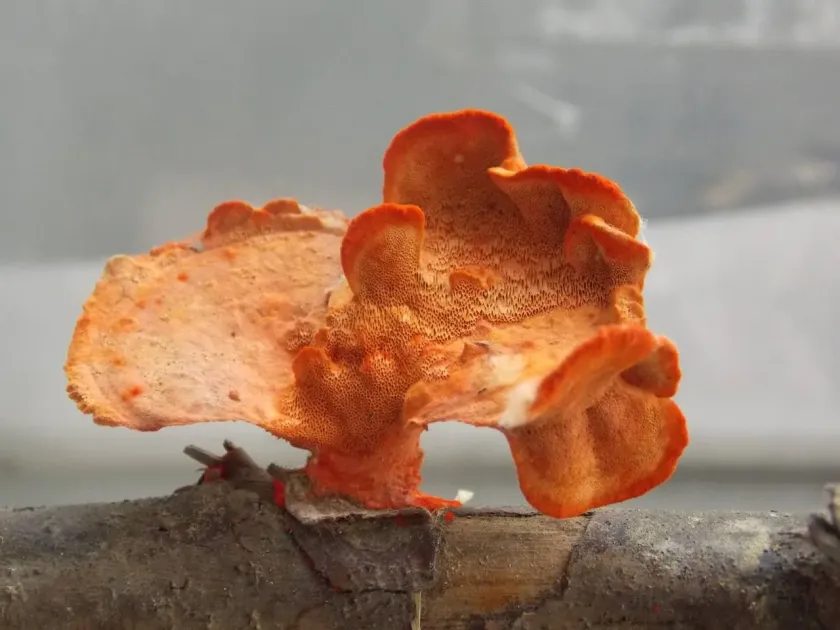
The most distinct sign of infection is the presence of bright cinnabar-red fungal brackets protruding from the bark of infected trees or logs.
Wood decay caused by this pathogen leaves the affected material soft, fibrous, and bleached, as the darker lignin components are removed by the fungus.
In advanced stages, the bark may crack or peel away, revealing dense patches of white mycelium beneath the surface, confirming the internal colonization.
Infected trees exhibit canopy dieback, yellowing of leaves, and a general decline in vigor, which is indicative of compromised water and nutrient transport systems.
Structural failure, such as stem snapping or windthrow, becomes highly likely in later stages of decay, posing significant safety hazards.
Pathogen
The pathogen Pycnoporus sanguineus is a basidiomycetous fungus belonging to the family Polyporaceae. It is a well-known white rot fungus that effectively decomposes lignin and cellulose in woody tissues.
The fungus is easily recognized by its vibrant orange-red fruit bodies, which are leathery and often shelf-like in appearance, developing on the trunks or stumps of infected host trees.
Biologically, it functions primarily as a saprotroph, but it frequently transitions to a parasitic mode of life when it encounters weakened or wounded living trees.
The mycelium of the fungus penetrates deep into the xylem, causing enzymatic degradation of the wood structure, which leads to the characteristic white rot appearance.
Spore production is prolific, with basidiospores being disseminated via wind and water, allowing the fungus to colonize new substrates efficiently across diverse environments.
Conditions for development
Pycnoporus sanguineus thrives in warm and humid climates, where moisture levels on wood surfaces remain consistently high for extended periods.
Mechanical injuries, such as broken branches, pruning cuts, or insect-driven damage, provide primary entry points for the fungal spores to establish infection.
High planting density, which restricts air circulation and keeps the bark surface damp, significantly increases the risk of successful fungal colonization.
Trees stressed by drought, poor soil fertility, or other environmental factors are significantly more susceptible to successful invasion by this pathogen.
Periods of high rainfall followed by moderate temperatures create the ideal environment for the activation of spores and rapid expansion of the fungus through woody biomass.
Why it matters
The pathogen causes significant damage to forestry and orchard operations by reducing the structural integrity and economic value of the affected timber.
Affected trees lose their ability to support themselves, leading to premature death and the loss of long-term production in plantation settings.
The spread of the fungus to surrounding trees via airborne spores makes it a serious threat to the overall health and safety of forest stands.
Reduced vigor in infected trees makes them more attractive and susceptible to secondary attacks by wood-boring insects, further accelerating tree decline.
The cost of managing infected sites, including tree removal and disposal, represents a substantial financial burden for landowners and forest managers.
Protection
Sanitation is the most critical control strategy, involving the prompt removal and proper destruction of infected trees to eliminate sources of fungal spores.
All pruning activities must be conducted with clean tools, and any resulting wounds should be treated with appropriate fungicidal sealants to prevent infection.
Maintaining optimal tree health through balanced fertilization and appropriate irrigation helps improve the plant's natural resistance to fungal pathogens.
Proper forest management, including thinning and spacing, ensures adequate sunlight and airflow, which discourages the development of high-humidity microclimates on tree trunks.
- Regular monitoring of tree trunks for fruit body emergence.
- Sterilization of pruning equipment between trees.
- Strategic site selection to avoid high-moisture stress areas.
- Use of systemic fungicides as a preventative measure in high-value stands.
Discussion
No discussions yet — be the first.