
Millet rust
Puccinia substriata
The causal agent of millet rust is the fungal pathogen Puccinia substriata. It is an obligate parasite that requires living host tissue to complete its life cycle and thrive.
What the section contains
Millet rust
The fungus is characterized by a complex life cycle, which often involves alternate hosts. Species from the Oxalis genus frequently serve as alternate hosts where initial infection stages occur.
During the growing season, the pathogen produces urediniospores that are easily disseminated by wind currents. This allows the disease to spread rapidly across large fields and even between distant areas.
The fungus penetrates the plant tissues via stomata and colonizes the intercellular space. By extracting nutrients directly from the host cells, it depletes the plant's energy reserves.
As the season progresses, the pathogen develops teliospores, which are the resting stage of the fungus. This stage is crucial for survival over adverse periods and for overwintering on crop debris.
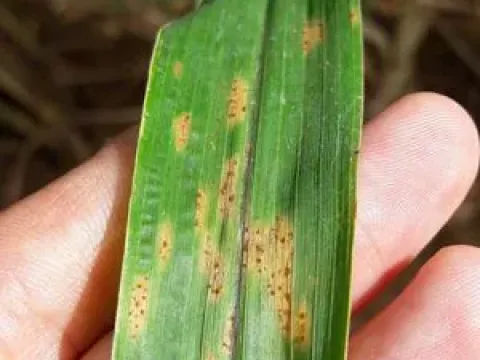
The initial symptoms of millet rust appear as small, yellowish flecks on the leaf blades. As the infection progresses, these develop into characteristic rust-colored pustules.
These pustules are typically arranged in linear rows parallel to the leaf veins. When mature, the pustules rupture the plant epidermis to release clouds of powdery, rusty-brown spores.
Heavily infected leaves show severe chlorosis and tend to curl and wither prematurely. This significant loss of green surface area severely restricts the plant's photosynthetic capacity.
Towards the end of the life cycle, the pustules turn dark brown or black. This transition indicates the production of teliospores, marking the shift toward the dormant phase of the fungus.
- Appearance of small yellow chlorotic spots
- Linear rows of rust-colored pustules on leaves
- Premature leaf yellowing and senescence
- Development of black spore masses on late-stage tissues
- Overall stunted plant growth and reduced vigor
Millet rust thrives under conditions of high humidity and moderate temperatures. Dew formation, fog, and light rain are essential to provide the moisture needed for spore germination.
Temperatures ranging from +18°C to +25°C are optimal for the pathogen. In these conditions, the incubation period is shortened, leading to explosive increases in disease severity.
High planting densities create a dense canopy that traps moisture. This humid microclimate within the crop stand is perfect for infection and facilitates the rapid spread of the disease.
The presence of susceptible alternate hosts, such as wild Oxalis near the field boundaries, acts as a primary inoculum source and significantly increases the risk of early infection.
Extended periods of overcast and rainy weather provide a continuous environment that favors spore survival and infection of healthy millet plants throughout the summer.
The economic impact of millet rust is primarily due to significant yield loss. By reducing the photosynthetic surface, the pathogen starves the developing grain of vital nutrients.
Grain from heavily infected crops is often shriveled, lighter in weight, and has poor germination rates. This directly affects the quality and marketability of the millet yield.
In addition to yield reduction, the stress caused by the infection makes the millet crop more susceptible to secondary pathogens and environmental stresses like lodging.
In extreme cases of epiphytotics, yield losses can range from 15% to 30%, which poses a serious financial threat to producers, necessitating costly fungicide interventions.
The degradation of the plant biomass also lowers the quality of the straw if it is intended for livestock feed, representing an additional loss for agricultural operations.
The use of resistant or tolerant millet varieties is the most effective long-term management strategy. Breeding for resistance minimizes the need for chemical intervention.
Cultural practices play a key role; crop rotation helps interrupt the pathogen's life cycle. Maintaining field hygiene and removing alternative hosts near the production area is vital.
Fungicide applications are recommended when disease thresholds are met or early symptoms are observed. Proper timing is critical to protecting the crop during its vulnerable stages.
Managing planting density and ensuring proper field aeration can create a drier microclimate, which naturally inhibits the germination and growth of the rust fungus.
Deep plowing and incorporation of infected crop residues into the soil after harvest help reduce the primary inoculum load for the following season, limiting initial disease pressure.