

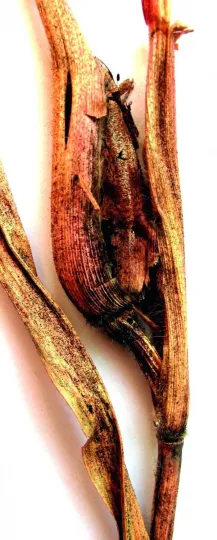
Description
Symptoms
Visible symptoms are typically restricted to the panicle emergence stage. Infected plants are often characterized by stunted growth and excessive tillering compared to healthy specimens.
The most distinctive symptom is the transformation of the panicle into a smut sac, covered by a delicate membrane. As the fungus matures, this membrane ruptures to release clouds of dark, dusty spores.
The entire panicle is usually destroyed, rendering the plant completely sterile. No grain production occurs in affected heads, leading to a total loss of potential yield for those specific plants.
While partial panicle infection can occur, it is common for the entire head to be replaced by the fungal mass. This makes the disease relatively easy to identify in the field during the heading phase.
Field scouting during the panicle emergence period is essential for accurate diagnosis and for assessing the severity of the infection within the crop stand.
Pathogen
The causal agent of this disease is the fungus Anthracocystis destruens, a member of the smut fungi family. This pathogen is highly specialized and targets millet crops, causing a systemic infection.
The fungus survives primarily as teliospores in the soil, where they can remain viable for several years. Additionally, spores can be disseminated through contaminated seeds during harvest and storage.
The infection process begins during seed germination. The pathogen forms an infectious hypha that penetrates the seedling before it emerges from the soil surface, marking the start of the systemic invasion.
Once inside, the fungus grows along with the plant's developing tissues, remaining invisible throughout the vegetative stage of growth. The host plant appears normal until it reaches the reproductive phase.
During the flowering stage, the mycelium migrates to the ovaries, where it undergoes massive sporulation, effectively replacing the grains with a dark, powdery mass of spores.
Conditions for development
The development of millet smut is heavily influenced by soil moisture and temperature during the germination period. Optimal conditions for infection involve moderate moisture and temperatures between 15°C and 20°C.
High-density planting creates a microclimate that traps moisture and facilitates the buildup of soil-borne inoculum over successive growing seasons.
Continuous cropping of millet on the same land significantly increases the fungal load in the soil. Without crop rotation, the level of spores builds up to levels that make frequent outbreaks inevitable.
Cold and delayed spring weather slows down seedling development, which keeps the crop in the susceptible growth stage for a longer duration, thereby increasing the likelihood of successful infection.
The use of untreated or contaminated seed lots remains the primary pathway for introducing the pathogen into clean fields, negating other protective efforts.
Why it matters
The economic impact of millet smut is primarily due to direct yield loss. Every infected plant represents a complete loss in grain production, reducing the total harvest weight.
In severe cases, yield losses can range from 20% to over 50%. Such significant reductions in output can jeopardize the economic viability of the entire crop production cycle.
Grain quality is severely compromised when smut spores are present. Contaminated grain fails to meet safety and quality standards, making it unsuitable for human or animal consumption.
Spore dissemination during harvest contaminates machinery, storage facilities, and transport vehicles, necessitating costly cleaning and disinfection to prevent further spread.
The presence of the disease necessitates increased expenditures on fungicides and soil management, raising the overall production cost per ton of grain.
Protection
Seed treatment is the most effective preventative measure against millet smut. Using systemic fungicides on seeds creates a protective zone that kills the fungus during the critical seedling stage.
Adhering to a strict crop rotation schedule is vital. By avoiding millet on the same field for at least 3 to 4 years, growers allow the soil's natural microbial activity to reduce the fungal spore population.
Selecting resistant cultivars is a key component of integrated disease management. Genetic resistance provides a robust defense layer that remains effective throughout the season.
Agronomic practices, such as choosing optimal planting dates, ensure that seedlings emerge rapidly, thereby shortening the window of vulnerability to the pathogen.
- Systemic seed dressing with appropriate fungicides;
- Implementation of at least a 3-year crop rotation;
- Use of certified, disease-free seed stocks;
- Thorough sanitation of all harvesting and handling equipment.
Content graph
Connections · Millet smut
Most often together:
Marketplace
Products · 1
Community
Discussion
No discussions yet — be the first.