
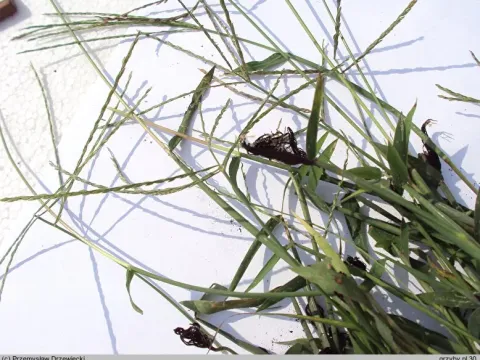
Millet smut
Ustilago syntherismae
The causal agent of the disease is the basidiomycete fungus Ustilago syntherismae, which belongs to the smut fungi group. It is an obligate parasite specialized in infecting various grass species.
What the section contains
Millet smut
The infection spreads via teliospores that persist in the soil or on the seed surface. During germination, the fungus penetrates the seedling and develops systemically throughout the host plant's tissues.
The life cycle of the pathogen is closely synchronized with the host plant's development. The mycelium travels towards the growing point, remaining invisible until the plant begins to form its reproductive organs.
During the heading phase, the fungus colonizes the spikelets or panicles, replacing plant tissues with a mass of dark, powdery spores. This allows the pathogen to complete its reproduction cycle.
The biology of Ustilago syntherismae is adapted to survive diverse environmental conditions. Its teliospores exhibit high resistance to temperature fluctuations and soil moisture variations.
The primary symptom is the transformation of the inflorescence into a dark, dusty mass of teliospores. The infected parts appear deformed, stunted, and structurally compromised.
Instead of healthy seeds, the plant produces sori, which are structures covered by a thin membrane filled with spores. Once this membrane ruptures, the spores are released into the air.
Infected plants often appear stunted compared to healthy ones. Some may exhibit premature tillering or irregular development of the stem and leaves.
Diagnostic identification is difficult during the vegetative stage because the fungus is internal. Only at the time of flowering do the clear signs of the disease become apparent to an observer.
Fields affected by the disease can be easily identified by the presence of «smutted» plants that stand out due to their blackened, deformed inflorescences.
High soil moisture during the germination period provides ideal conditions for fungal infection. Moderate temperatures are typically required for the spores to germinate and invade the seedling.
Crowded planting conditions promote disease spread by facilitating the movement of spores between plants through wind or splashing rain. High planting density increases the risk of an epidemic.
A significant initial inoculum in the soil is a major factor driving infection. Failure to practice crop rotation contributes to the accumulation of spores in the field over several seasons.
The physiological condition of the grass also plays a role in susceptibility. Plants weakened by environmental stress are generally more prone to rapid colonization by the fungus.
Early spring weather is a critical period, as the initial infection must occur before the seedling's first leaves emerge from the soil to ensure successful systemic colonization.
The major harm caused by the disease is the total loss of seed yield. Infected plants become sterile, as the fungus destroys all reproductive tissues necessary for grain development.
The overall biomass of the crop is reduced, impacting the economic value of the forage or harvest. The forage quality may also be compromised by the presence of fungal spores.
Widespread infection can lead to the necessity of abandoning fields for grain production. This results in significant financial losses for agricultural producers.
The persistent nature of the spores creates long-term challenges, as the field remains a reservoir for the disease, affecting future planting cycles of susceptible crops.
The economic impact is also linked to the costs associated with implementing intensive protection measures or finding alternative uses for infected plant material.
Using certified, disease-free seed material is the most fundamental step in preventing millet smut. Seed inspection is mandatory before the sowing season begins.
Seed treatment with systemic fungicides is the primary defense against initial infection. Applying appropriate chemical protectants ensures that seedlings remain protected during the critical early growth phase.
Implementing a proper crop rotation strategy is essential to break the life cycle of the pathogen and reduce spore populations in the soil.
Agronomic practices aimed at promoting rapid seedling emergence and vigorous early growth can help plants outpace the potential infection window.
- Removal and destruction of infected plants before spore dispersal occurs.
- Selecting resistant or tolerant cultivars and hybrids.
- Deep tillage to bury spores and reduce their viability in the topsoil layer.
- Maintaining optimal sowing dates to minimize the overlap between fungal activity and seedling vulnerability.