
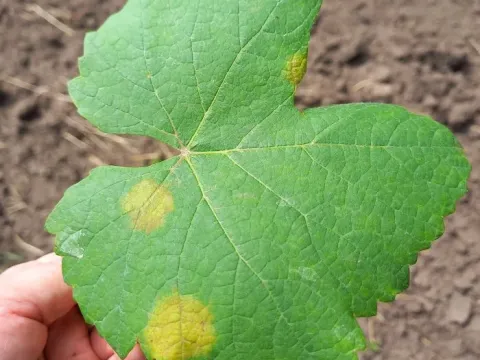
Miltidea venusta
Miltidea venusta
Miltidea venusta is a fungal pathogen responsible for causing specific disease symptoms in various plant species. As a parasite, it targets the plant's surface tissues, eventually invading the epidermal and parenchymal cells to extract essential nutrients for its own reproduction.
What the section contains
Miltidea venusta
The biological cycle of the fungus is characterized by the production of conidia, which act as the primary dispersal units. These microscopic spores are highly efficient at spreading across agricultural fields via wind, water splashes, and human activity such as tool usage or handling.
Once the spores land on a susceptible host, they germinate and penetrate the tissue, forming a mycelial network. This network disrupts the plant's internal cellular communication and metabolism, leading to the localized tissue death that is characteristic of this pathogen.
Research into the genetics of Miltidea venusta indicates a high level of phenotypic plasticity, allowing it to adapt to different host genotypes. This adaptability poses a challenge for crop breeders, as resistance traits can be bypassed by the evolving fungal strains over time.
Laboratory identification of the pathogen involves analyzing the structure of its fruiting bodies under a microscope. Distinguishing it from other similar fungal infections is crucial for ensuring the correct application of treatments and maintaining the overall integrity of the crop protection strategy.
The initial manifestation of Miltidea venusta infection is the appearance of small, chlorotic spots on the foliage. These spots eventually transition into necrotic lesions as the plant tissue dies off, which is a clear sign of advanced fungal colonization.
In humid conditions, a fine, powdery fungal layer may become visible on the undersides of the leaves. This layer is an accumulation of spores, indicating that the fungus is actively reproducing and preparing to spread further throughout the plant population.
If left unmanaged, the infection spreads to stems and petioles, causing visible deformities and twisting. This damage inhibits the plant's structural integrity, often resulting in premature leaf drop and a significant reduction in the plant's overall vigor.
The disease often presents with distinct necrotic zones that may feature concentric rings, a classic indicator of fungal activity. Observing the specific coloration and texture of these rings is essential for accurate field diagnosis by an agronomist.
- Appearance of chlorotic leaf spots.
- Development of dark necrotic tissue lesions.
- Visible spore growth during high humidity.
- Stunting and deformation of stems and shoots.
- Early leaf abscission and loss of crop yield.
The development of Miltidea venusta is heavily dependent on specific climatic factors, primarily high relative humidity. Humidity levels above 80% create a film of moisture on plant surfaces, providing the ideal medium for spore germination and infection.
Temperature plays an equally important role, with an optimal range between +18°C and +24°C being most favorable for mycelial growth. In these conditions, the fungal colony can expand rapidly, turning minor infections into severe outbreaks within just a few days.
Poor aeration in dense crop plantings significantly increases the risk of the disease. When plants are spaced too closely, or when greenhouses lack proper ventilation, stagnant air creates a humid microclimate that acts as a breeding ground for the pathogen.
Nutritional status of the host plant also influences susceptibility. Over-application of nitrogen, which stimulates succulent vegetative growth, makes the tissues more prone to fungal invasion. A balanced fertilization strategy is essential to keep plant defenses strong.
Regular rainfall and persistent morning dew are major risk factors. These natural moisture sources facilitate the attachment of Miltidea venusta spores to the leaves, meaning that rainy seasons often correlate with higher incidences of the disease.
The economic harm caused by Miltidea venusta is primarily due to the reduction of photosynthetic capacity. By destroying leaf area, the fungus limits the plant's ability to produce energy, resulting in stunted growth and diminished final yields for the farmer.
When the pathogen infects fruit or vegetable crops, it can directly spoil the produce, rendering it unfit for market. This leads to substantial financial losses through direct crop destruction and increased costs associated with post-harvest sorting and disposal.
Chronic infection weakens perennial plants by depleting their metabolic reserves. This reduces their winter hardiness and general resilience, making them more vulnerable to subsequent environmental stresses or secondary infections throughout the year.
The impact on plant physiology also involves the impairment of water transport systems. As the fungus causes necrotic lesions on stems, the plant struggles to maintain proper hydration, which can lead to wilting and reduced survival rates during dry spells.
Widespread outbreaks can be devastating for commercial growers, often requiring large-scale eradication efforts and the disposal of entire plant lots. Proactive management is required to prevent such catastrophic impacts on agricultural output.
Effective control of Miltidea venusta relies on an integrated pest management (IPM) approach. This combines sound cultural practices with timely preventative measures to minimize the reliance on chemical inputs while maintaining crop safety.
Chemical control involving the use of targeted, systemic fungicides can be highly effective when applied at the first sign of symptoms. It is vital to rotate different chemical classes to avoid selecting for fungicide-resistant strains of the pathogen.
Biological control agents, such as beneficial microbes or antagonistic fungi, offer a sustainable alternative. Applying these to the plant surface can create a protective barrier that outcompetes Miltidea venusta for resources and space.
Cultural practices, such as removing and destroying infected plant debris, are fundamental for breaking the disease cycle. Ensuring proper plant spacing and maintaining good greenhouse ventilation will significantly reduce the humidity levels that the fungus requires.
Continuous monitoring of crop health is essential for early detection. By identifying and removing infected leaves promptly, farmers can isolate small outbreaks before they have the chance to spread, thereby protecting the overall harvest quality.