
Comb brittlegill
Russula pectinata
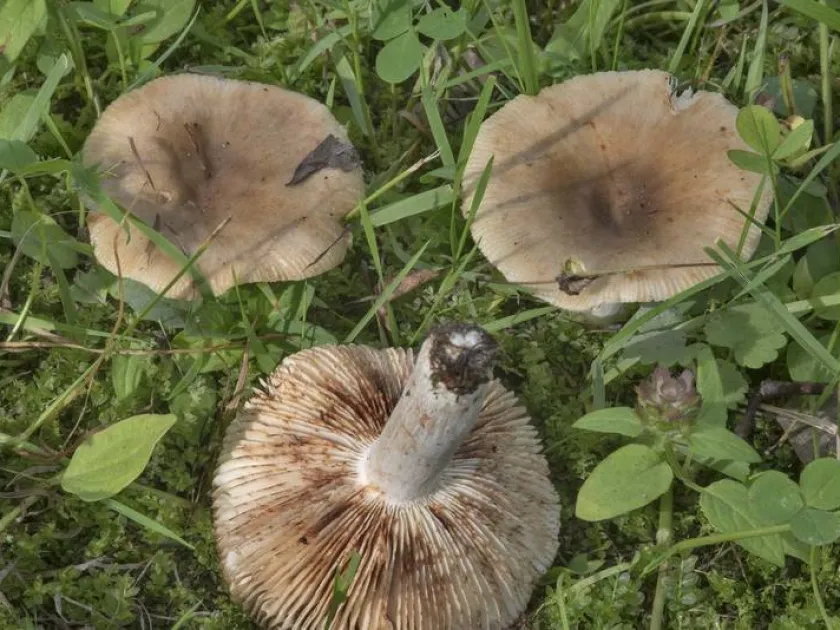
Description
Pathogen
The comb brittlegill, known scientifically as Russula pectinata, is not a plant disease or an agricultural pathogen. It is a fungus that belongs to the Russulaceae family and is commonly found in forest soils as a saprotrophic and mycorrhizal organism.
There is no evidence to suggest that this species causes harm to agricultural or ornamental crops. It is not capable of penetrating living plant tissues to cause necrosis, rot, or any other disease condition, distinguishing it from true phytopathogenic fungi.
In fact, this mushroom acts as a beneficial symbiont by forming ectomycorrhiza with tree roots. This symbiotic association is crucial for the survival and health of various tree species, aiding in the absorption of nutrients and minerals from the soil.
The fungus plays an essential role in decomposing forest litter, contributing to the carbon and nitrogen cycles. By breaking down organic matter, it promotes soil fertility in forest ecosystems, which indirectly benefits the surrounding plant life.
In an agricultural setting, the presence of such fungi is often a sign of good soil health and high organic content. There is absolutely no need to apply fungicides or control measures against Russula pectinata as it poses no threat to crops.
Conditions for development
The development of Russula pectinata fruiting bodies is largely dependent on the presence of host trees, primarily within the Fagaceae family, such as oak and beech. The soil must be sufficiently moist and undisturbed to support its growth.
Optimal environmental conditions usually occur in late summer and autumn when rainfall is sufficient to maintain the humidity levels required for mushroom development. High temperatures and prolonged drought usually inhibit the growth of fruiting bodies.
The fungus thrives in environments with a thick layer of organic litter, which provides both nutrients and protection for the fungal mycelium throughout the year. It does not tolerate heavy compaction of the soil.
Spore dissemination is carried out mainly by air currents, which carry the microscopic reproductive units to new, suitable locations near host trees. The mycelium can persist in the soil for extended periods, remaining dormant until conditions are favorable.
Human intervention, such as the use of persistent chemicals, can harm the delicate mycorrhizal balance. Maintaining natural forest areas and limiting soil disturbance are the best conditions to ensure the continued presence of this species.
Discussion
No discussions yet — be the first.