
Common earthball
Scleroderma citrinum
Description
Symptoms
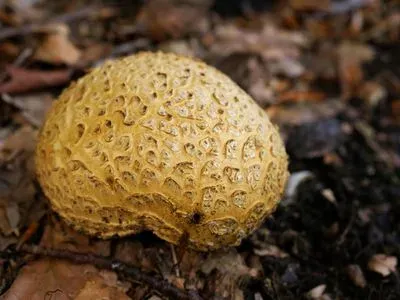
The fruit bodies of the common earthball are tuberous or spherical in shape, typically reaching a diameter of 2 to 10 centimeters. The surface is firm, tough, and often covered in scales or cracks, appearing in shades of yellow-brown or ocher.
The internal part, known as the gleba, is firm and white in young specimens but turns dark purple or nearly black with light-colored veins as it matures. Upon ripening, the outer shell ruptures, releasing a mass of brown, powdery spores.
This fungus often forms clusters on the soil surface or within forest litter. Its presence is marked by hard, rigid fruit bodies that lack a distinct stalk, attaching instead to the substrate via mycelial cords.
Visual inspection of affected areas often reveals extensive mycelial development within the rhizosphere of tree species. Unlike traditional cap mushrooms, the fruit bodies remain hard and leathery throughout their development.
Mature specimens emit a distinct, pungent, and unpleasant odor, often described as musty or rubber-like, which aids in field identification without the need for sophisticated laboratory equipment.
Pathogen
The causative agent is the fungus Scleroderma citrinum, belonging to the order Boletales. In forestry and agronomy, this fungus is classified as a mycorrhizal symbiont that can transition into an undesirable competitor under certain environmental conditions.
The disease type involves the disruption of root nutrition in woody plants due to intense competition with beneficial native mycorrhizal fungi. This is a para-pathogenic process that limits the seedling's access to vital soil nutrients.
The fungus biology includes the development of an extensive underground mycelial network that dominates the tree rhizosphere. Dispersal occurs primarily via spores, which are disseminated over long distances by wind, water, or soil-dwelling fauna.
The fungus is capable of persisting in the soil as mycelium for several years, surviving adverse conditions. Its lifecycle is strictly tied to the presence of living tree roots, from which it extracts carbohydrates to fuel its growth.
At the genetic level, Scleroderma citrinum is highly adapted to a wide range of soil types, making it resilient to changes in agronomic practices and enabling it to rapidly colonize new nursery plots.
Conditions for development
The common earthball prefers acidic, sandy, or loamy soils rich in organic debris. It thrives in high-humidity conditions, particularly following periods of heavy rainfall combined with moderate ambient temperatures.
The presence of host trees, such as birch, oak, pine, or spruce, facilitates fungal development as their roots provide essential metabolites. In nurseries, the risk increases when soil aeration is poor and drainage is inadequate.
High planting density in forestry programs creates an ideal microclimate for fungal proliferation. Poor soil management and waterlogged root zones serve as primary triggers for active mycelial expansion.
Spore dissemination intensifies at the end of the summer season during the maturation of fruit bodies. Optimal growth temperatures for the mycelium range from 15 to 22 degrees Celsius.
Anthropogenic factors, including the excessive application of nitrogen fertilizers, can alter soil microbial communities, creating a niche imbalance that favors the rapid spread of Scleroderma citrinum.
Why it matters
The primary concern is the suppression of seedling growth in forest nurseries. By competing with essential mycorrhizal symbionts, the earthball depletes the root system's resources, leading to stunted development in young trees.
Damage to the root system reduces the overall vigor of seedlings, making them more susceptible to secondary soil-borne pathogens. In severe cases, chlorosis of leaves or needles occurs due to nutrient deficiency.
Economic losses arise from the degradation of planting material and the subsequent costs of restoring soil biological health in nurseries. Substandard seedlings are frequently discarded due to compromised root development.
In ornamental landscaping, the presence of this fungus diminishes the aesthetic value of the site. Furthermore, its fruit bodies are inedible and potentially toxic to pets, requiring manual removal.
While the fungus is not a primary parasite that kills trees outright, its large-scale colonization of the rhizosphere creates systemic stress that lowers the overall survival rate of forest cultures during outplanting.
Protection
Key management strategies involve strict adherence to nursery agronomy standards, including the provision of effective drainage to prevent waterlogging. Avoiding soil compaction is essential to maintaining root health.
Mechanical removal of fruit bodies prior to spore maturation and release significantly reduces the inoculum pressure within a site. Collected fruit bodies should be disposed of by burning or burying far from production areas.
The application of biological fungicides based on antagonistic fungi, such as Trichoderma species, helps suppress Scleroderma citrinum mycelial growth by colonizing the rhizosphere and outcompeting the pathogen.
Regular monitoring of seedling root health during transplanting periods is recommended. Plants exhibiting signs of stunted growth should be culled to prevent the further spread of spores to other sections of the nursery.
Balanced fertilization combined with soil pH control allows for the creation of conditions less favorable to this fungal species. Liming acidic soils can serve as an effective preventative measure against widespread colonization.
Discussion
No discussions yet — be the first.