
Peanut rust
Puccinia arachidis
The causal agent of peanut rust is an obligate parasite, the fungus Puccinia arachidis. It is a highly specialized basidiomycete that exclusively targets the Arachis genus.
What the section contains
Peanut rust
The life cycle of the fungus is characterized by the production of urediniospores and teliospores. Urediniospores are responsible for the rapid spread of the disease during the growing season by colonizing fresh leaf tissues.
The fungus absorbs nutrients from the host plant via haustoria, which penetrate the plant cell walls without killing the cells immediately. This parasitic relationship allows the fungus to sustain itself throughout the host's development.
Dissemination occurs via wind, which can carry spores over long distances, potentially infecting entire regions. The fungus cannot survive indefinitely without a living host but may persist as spores on plant debris.
Because it is an obligate parasite, Puccinia arachidis relies entirely on the physiological status of the peanut plant to complete its reproductive cycle and ensure its survival for future seasons.
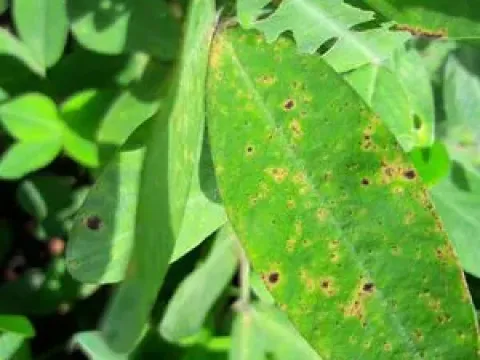
The initial symptoms are small, inconspicuous chlorotic spots on the lower leaf surface. Shortly thereafter, these spots develop into pustules that rupture the epidermis.
A distinctive feature of peanut rust is the appearance of reddish-brown or "rust-colored" pustules, which are massed with urediniospores. These are most commonly found on the abaxial (lower) side of the leaves.
As the infection progresses, the leaves turn yellow, become necrotic, and curl, eventually leading to premature abscission. This significantly reduces the canopy's photosynthetic capacity.
In severe outbreaks, the rust can spread to petioles and stems. The presence of the powdery, rust-colored spore mass is the primary indicator used for field diagnosis and scouting.
The disease can progress rapidly through the crop canopy, turning a lush green field into a dry, withered landscape within a few weeks if environmental conditions are favorable.
Peanut rust thrives under conditions of high relative humidity and moderate temperatures. The optimal range for spore germination and infection is between 20°C and 25°C.
Free water on the leaf surface, such as dew or rain, is essential for the germination of urediniospores. Without a film of moisture, the infection process is severely hindered.
Dense crop stands create a humid microclimate within the canopy, which is conducive to fungal development. Poor ventilation in such stands allows moisture to persist longer, favoring pathogen spread.
Excessive nitrogen fertilization can lead to vigorous but soft tissue growth that is more susceptible to infection and creates a more humid environment, exacerbating the disease pressure.
Prolonged periods of overcast skies, mist, or frequent light rainfall provide the necessary humidity levels to trigger explosive epidemics of peanut rust in susceptible peanut varieties.
Peanut rust is a devastating disease that can cause yield losses ranging from 50% to 70% under favorable epidemic conditions. Reduced leaf area limits pod filling and overall kernel development.
The quality of the harvest is significantly impaired, as rust-infected plants produce smaller, shriveled kernels with reduced oil content, affecting the market value of the crop.
In addition to yield loss, the infection leaves the plant vulnerable to other opportunistic pathogens, further weakening the crop and reducing its overall resilience to stress.
Management costs increase substantially due to the need for repeated fungicide applications to protect the crop, impacting the profitability of peanut production.
If the peanut haulms are intended for livestock fodder, rust infection can reduce their nutritional value and palatability, sometimes rendering the biomass unsuitable for animal consumption.
The use of resistant or tolerant cultivars is the most sustainable and cost-effective management strategy for controlling peanut rust in commercial farming operations.
Crop rotation is crucial to break the infection cycle. Avoiding peanuts in the same field for at least 3 years reduces the risk of carry-over inoculum from crop residues.
Deep plowing or incorporating crop debris into the soil immediately after harvest accelerates decomposition and reduces the viability of any remaining spores.
Chemical control involving systemic fungicides (such as triazoles or strobilurins) should be implemented as soon as the first pustules are observed to prevent widespread epidemic spread.
- Planting high-quality, certified disease-free seeds.
- Managing weed hosts that may serve as alternative reservoirs for the fungus.
- Optimizing plant spacing to ensure better air circulation.
- Scouting fields regularly during the vegetative growth phase.