
Peanut smut
Thecaphora frezii
Peanut smut is a fungal disease caused by the soil-borne pathogen Thecaphora frezii. It is a highly specialized fungus that exclusively affects peanut crops.
What the section contains
Peanut smut
The pathogen persists in the soil primarily as teliospores, which remain viable for several years. These spores serve as the primary source of inoculum for subsequent seasons.
Infection typically occurs when the fungus penetrates the developing peanut pods underground. The pathogen's life cycle is strictly synchronized with the development of the peanut plant.
Because the fungus lives in the soil, it is extremely difficult to eradicate once a field becomes infested. It can be easily spread through the movement of contaminated soil on farm machinery.
The research into Thecaphora frezii has intensified recently due to its emergence as a major limiting factor in peanut production, especially in South American agricultural regions.
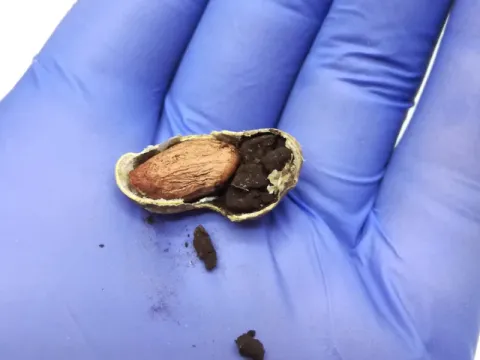
The primary symptom of peanut smut is the transformation of the seed-bearing pods. Healthy seeds are replaced by a dark, powdery mass consisting of fungal spores.
Visually, the affected pods may appear deformed or hypertrophied. Growers often notice the problem only during harvest when the pods are opened to reveal the smutted interior.
The pod walls often become brittle and break apart easily during harvest, releasing millions of spores back into the soil and contaminating the equipment used.
There are very few visible signs of the disease on the above-ground parts of the plant, making early detection extremely difficult for farmers.
Confirmation of the disease requires laboratory analysis or careful inspection of the pods during the late growth stages or at harvest time.
Environmental conditions during the pod-filling stage are critical for the development of peanut smut. Moderate temperatures are conducive to spore germination.
High soil moisture levels significantly enhance the risk of infection. The fungus thrives in moist environments that favor the contact between spores and peanut pegs.
Agricultural practices, such as continuous monocropping of peanuts, facilitate the build-up of the pathogen population in the soil to dangerous levels.
Soil type can also influence the persistence of the disease, as certain textures may better protect the spores from environmental degradation.
The introduction of contaminated seeds into new geographical areas is a primary driver of the long-distance dispersal of this fungal pathogen.
Peanut smut causes significant economic losses by directly destroying the grain yield of the peanut crop, rendering it unsalable.
In severely infested fields, the yield loss can be so substantial that it leads to complete abandonment of the area for peanut cultivation.
The disease degrades the overall quality of the harvest, as spores from infested pods can contaminate healthy ones during the mechanical harvesting process.
The presence of peanut smut is a major trade barrier, as it is a strictly regulated quarantine pest in many countries globally.
The long-term impact on soil health and the necessity for rigorous, multi-year rotations represent significant challenges for sustainable agriculture.
The most effective strategy for managing peanut smut is the implementation of long-term crop rotation to reduce the spore load in the soil.
Strict phytosanitary controls, including the cleaning of machinery and the use of certified, smut-free seeds, are essential to prevent further spread.
Ongoing research is focused on identifying genetic resistance in peanut germplasm, which remains the most promising long-term solution.
Chemical seed treatments offer limited protection against early-season infection but are insufficient as a standalone control measure for soil-borne spores.
Field monitoring and rapid diagnostic tools are necessary for identifying new outbreaks and containing the pathogen before it spreads to adjacent areas.