
Pear alternaria spot
Alternaria gaisen
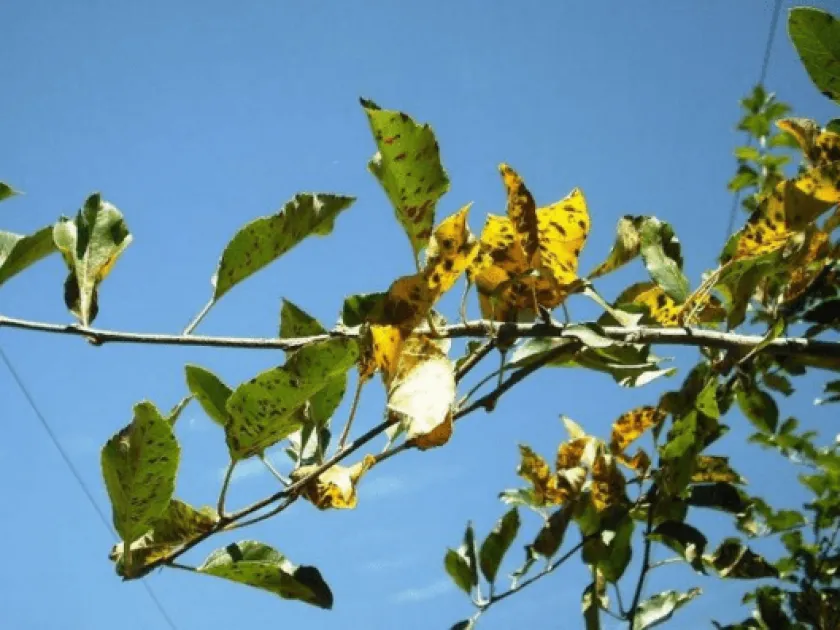
Description
Symptoms
Early symptoms appear on young leaves as small, circular, dark brown spots. As the infection progresses, these spots expand and often develop a light-colored halo, which is a diagnostic feature that helps distinguish it from other leaf spotting diseases.
Fruit symptoms are particularly destructive, appearing as sunken, dark-colored lesions that spread across the surface. As the disease advances, the skin may crack, and the underlying flesh may start to rot, resulting in a bitter, unpalatable product.
Under conditions of high humidity, a characteristic velvety, olive-to-black fungal growth appears on the surface of the lesions. This growth consists of masses of conidia, which serve as the inoculum for spreading the disease further.
Heavy infection leads to premature leaf drop, which weakens the overall health of the tree. This defoliation disrupts the photosynthetic capacity, preventing the tree from accumulating sufficient energy reserves for the following season.
Necrotic lesions can also occur on young shoots and twigs, leading to dieback. This loss of productive wood reduces the canopy's overall health and significantly diminishes the tree's ability to bear fruit in future seasons.
Pathogen
The causal agent of this disease is the fungus Alternaria gaisen (often referred to as Alternaria kikuchiana), a member of the Hypomycetes class. It is a highly specialized pathogen that affects pear orchards, showing particular virulence towards susceptible cultivars.
The pathogen overwinters as mycelium or conidia in fallen leaves, infected fruit mummies, and crevices of the bark on tree trunks. With the onset of spring and the return of moisture, the fungus resumes its biological activity, producing a new generation of spores.
The life cycle of the pathogen is closely synchronized with the phenological development of the pear tree. Infection can occur throughout the growing season, provided that environmental conditions allow for the germination of fungal conidia on plant tissues.
Spore dissemination occurs primarily via wind currents and rain splashes. Once the initial infection takes hold in the orchard, secondary cycles of infection can occur frequently throughout the summer, significantly increasing the pressure on the plantation.
The fungus produces specific phytotoxins that degrade plant cell walls, leading to rapid tissue necrosis. Understanding the pathogen's ability to survive in various plant debris is crucial for establishing effective orchard management practices.
Conditions for development
The development of pear alternaria spot is favored by warm and humid conditions, with optimal temperatures for infection ranging between 20°C and 25°C. Prolonged wet periods are essential for the germination of fungal spores.
Rainy weather, heavy dew, and high humidity in the orchard environment are the primary drivers of severe outbreaks. If moisture persists on the foliage for an extended period, the likelihood of successful infection by the fungus increases substantially.
Orchards with dense, poorly managed canopies suffer the most. A lack of airflow prevents foliage from drying out quickly after rain or irrigation, providing the pathogen with the necessary conditions to penetrate the plant tissues.
Cultivar resistance is a critical factor in the disease's prevalence. Some pear varieties are inherently more susceptible to Alternaria gaisen, requiring more intensive management to maintain a healthy and productive crop throughout the season.
Cultural practices that promote overly succulent growth, such as excessive nitrogen fertilization, can make the trees more vulnerable to infection. Proper nutrition, emphasizing calcium and potassium, can help harden tissues and increase natural defenses.
Why it matters
The economic impact of this disease is severe, as it directly reduces marketable yield. Infected fruit is aesthetically unappealing, lacks flavor, and is highly susceptible to post-harvest decay during storage and transport.
Premature leaf loss causes trees to enter the winter in a weakened state, significantly reducing their cold hardiness. This can result in winter injury or the death of younger trees during particularly harsh weather conditions.
Cumulative damage over several years leads to a steady decline in tree vigor. Orchards affected by chronic alternaria spot show reduced growth rates and lower fruit set, making them less profitable and harder to maintain.
The cost of intensive fungicide application programs required to suppress the disease adds significant expense to pear production. This increase in production costs, combined with lower yields, directly undermines the economic viability of the orchard.
Failure to manage the disease leads to an accumulation of inoculum, which makes future control efforts more challenging. Long-term neglect can result in total crop failure and the eventual need to replace the entire orchard block.
Protection
Sanitation is the most important cultural control measure. Growers must meticulously collect and destroy all fallen leaves and infected fruit from the orchard floor after harvest to reduce the overwintering population of the fungus.
Proper pruning is essential to improve canopy airflow and light penetration. This speeds up the drying of foliage after rain, which prevents the moisture-dependent spores of the fungus from successfully establishing an infection.
Chemical control is often necessary and should focus on a preventative program. Using a rotation of systemic and contact fungicides is crucial for effectively managing the disease while minimizing the risk of the pathogen developing resistance.
Fungicides from the strobilurin and triazole classes are frequently employed for their efficacy against Alternaria species. Applying these treatments according to a schedule linked to infection periods provides the best results.
- Strict post-harvest sanitation in the orchard.
- Pruning for optimal air circulation.
- Preventative fungicide application schedules.
- Monitoring weather patterns for high-risk periods.
- Balanced nutrient management to strengthen trees.
Discussion
No discussions yet — be the first.