
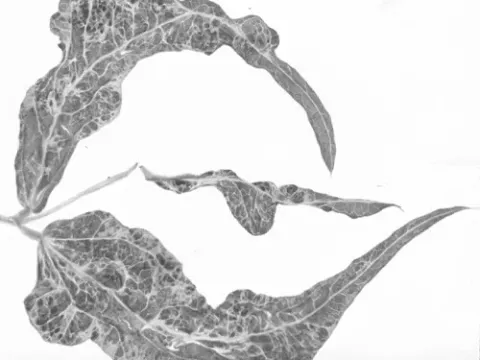
Peanut stunt virus
Peanut stunt
The causative agent is the Peanut stunt virus (PSV), a member of the Cucumovirus genus. It is a systemic pathogen capable of infecting a wide range of dicotyledonous plants, representing a significant threat to global agriculture.
What the section contains
Peanut stunt virus
The virus exhibits high genetic diversity, complicating the breeding of resistant plant varieties. It persists in perennial weeds and wild host plants, serving as a reservoir for annual crop infections.
It is primarily transmitted by aphids, such as Aphis craccivora, in a non-persistent manner. This means that aphids can acquire the virus after a brief probe on an infected plant and immediately transmit it to healthy ones.
Secondary transmission can occur through mechanical wounding, contact between infected and healthy plants, and occasionally via infected seeds, which is crucial for long-distance dissemination.
Key hosts include peanuts, soybeans, tobacco, and common beans, all of which exhibit systemic symptoms that severely impede normal plant development and physiological health.
The disease is characterized by severe stunting, where internodes become drastically shortened, resulting in a bushy, rosetted appearance of the infected plants.
Leaves often become small, chlorotic, and exhibit mosaic patterns, ranging from light green to yellow speckling. Deformations like curling or crinkling are also common.
In peanuts, pod formation is severely impacted. Pods often appear shriveled or malformed, and the seeds within them are frequently underdeveloped and of poor quality.
Tobacco plants show distinct necrotic mosaic symptoms, which significantly degrade the quality of the leaves, making them unsuitable for commercial processing.
Soybeans and common beans infected with PSV display systemic yellowing, reduced pod counts, and often premature flower abortion, which leads to significant yield losses.
The spread of the virus is closely tied to the migration patterns and activity levels of aphid populations. Outbreaks often correlate with high aphid activity during the early vegetative stages of the crop.
The presence of wild reservoir hosts in nearby hedgerows, ditches, or fallow fields acts as a constant source of primary inoculum for new plantings.
Environmental factors such as temperatures between 20°C and 28°C provide optimal conditions for the virus to replicate within the host and for vectors to thrive.
Favorable weather that promotes lush weed growth ensures that aphid populations can build up early in the season before moving into commercial crop fields.
Lack of spatial isolation between different age cohorts of the same crop can lead to rapid secondary spread throughout the growing season.
The economic impact of the Peanut stunt virus is profound, as it directly affects the marketable weight and quality of the final harvest.
Yield losses can range from minor to total failure, depending on the timing of initial infection relative to the crop's development cycle.
Seed quality suffers significantly, with reduced oil and protein content in legumes, making the grain less valuable for both industrial and food applications.
Infected crops are generally weaker, making them more susceptible to secondary environmental stresses or opportunistic pathogen infections.
The costs associated with insecticidal control programs and yield loss mitigation strategies place a heavy financial burden on agricultural producers.
Using certified, virus-free seed is the first and most critical line of defense in preventing early-season outbreaks.
Proactive management of weeds in and around fields is essential to eliminate the natural reservoirs that maintain the virus in the environment.
Systematic monitoring for aphid vectors allows for timely application of insecticides, helping to disrupt the transmission chain during vulnerable growth phases.
Implementing spatial and temporal isolation between susceptible crops helps reduce the incidence of primary infection from neighboring fields.
- Planting resistant cultivars.
- Applying reflective mulches to deter aphids.
- Good crop rotation practices.