
Pear Alternaria
Alternaria yali-inficiens
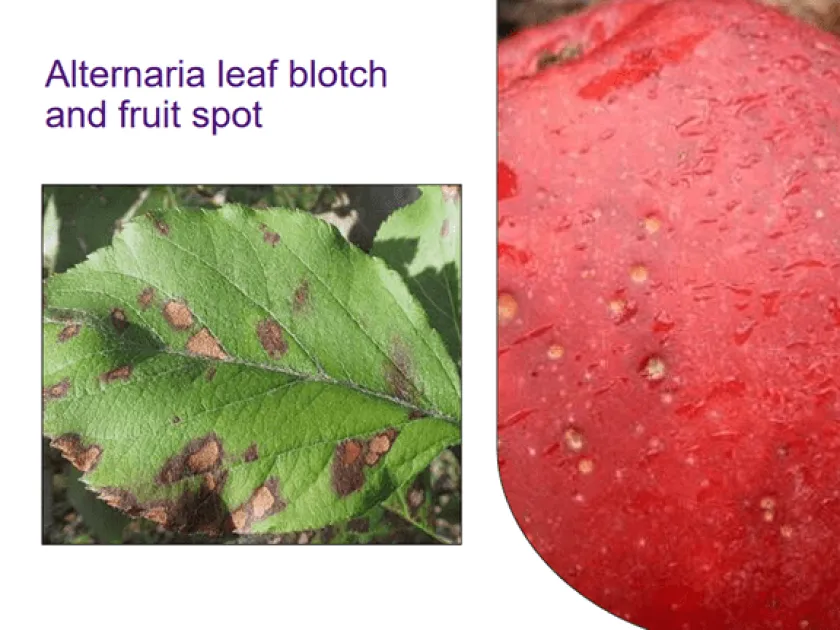
Description
Symptoms
Initial symptoms of the disease appear on leaves as small, round spots that gradually darken. These spots often develop a distinct dark border, a hallmark feature frequently observed in this type of fungal infection.
On fruits, Alternaria manifests as sunken lesions that expand rapidly across the surface. These infected areas eventually become covered in a characteristic olive-black, velvety layer, which consists of the pathogen's mass of spore production.
Severe infection leads to fruit deformation and premature dropping. The overall quality and market value of the crop drop significantly, and infected fruits are highly susceptible to secondary rot during storage, rendering them unsaleable.
On shoots, the disease may present as bark ulcers, weakening the tree's overall structure. In critical cases, this can lead to the dieback of specific branches and a substantial reduction in the orchard's yield capacity.
Premature leaf drop caused by the infection disrupts the natural process of photosynthesis. This negatively impacts the tree's development and its ability to build up energy reserves necessary for surviving the cold winter months.
Pathogen
The causal agent of this disease is the fungus Alternaria yali-inficiens, a member of the imperfect fungi group. This pathogen is highly specialized and primarily affects species within the Rosaceae family, notably Chinese pears and their hybrid varieties.
The fungus survives the winter season in infected plant debris, fallen leaves, and mummified fruits left on the trees. As temperatures rise in the spring, the pathogen activates, preparing to release spores and infect healthy plant tissues.
Initial infection occurs through conidia, which are dispersed by wind, rain splashes, or insects. Once these spores land on leaf or fruit surfaces, they germinate and penetrate the host tissue by secreting enzymes that break down plant cell walls.
The life cycle of the fungus includes multiple generations of spore production throughout the growing season, allowing for rapid disease spread within an orchard. The pathogen targets the host at various stages of development, from the initial flowering to fruit ripening.
The biological traits of Alternaria yali-inficiens require continuous monitoring by agronomists. Its high reproductive capacity makes it a serious threat to the productivity and health of intensive pear orchards.
Conditions for development
The development of Pear Alternaria is highly favored by warm and humid weather conditions. An optimal temperature range between +20°C and +28°C facilitates rapid spore germination and mycelial growth of the fungus.
The presence of free moisture on the leaf surface for several hours is a critical factor for infection. Frequent rainfall or heavy dew creates the necessary environment for the pathogen to thrive and establish itself within the plant tissue.
Overcrowded orchards with poor air circulation create a microclimate that promotes disease spread. Limited airflow prevents rapid drying of the foliage, allowing the pathogen to thrive unchecked between trees.
Trees that are weakened or deficient in essential nutrients are significantly more susceptible to infection. Furthermore, the genetic resistance of specific pear varieties plays a vital role in determining how severely an orchard is affected.
Failure to follow good agricultural practices, such as neglecting the removal of fallen leaves, provides the fungus with an ideal environment to survive the winter. This results in an increasing accumulation of infectious spores year after year.
Why it matters
The primary economic impact of Alternaria is the significant loss of marketable yield. Damaged fruits lose their aesthetic and nutritional quality, making them completely unsuitable for fresh market sales.
Chronic infection of the foliage leads to the gradual suppression of tree growth. When photosynthesis is hindered, the tree fails to accumulate the nutrients required for both winter hardening and successful future fruiting.
Reduced cold tolerance due to premature leaf senescence can lead to shoot dieback during harsh winters. This forces growers to implement costly remedial measures to rehabilitate the affected orchard.
Economic losses are compounded by the need for regular fungicide applications. The cost of labor and specialized chemicals significantly increases the overall production budget for pear farming.
If left unmanaged, the disease can become endemic in the orchard. This creates a persistent, long-term threat to the productivity and sustainability of all pear trees located within the affected area.
Protection
A rigorous sanitary program is the foundation of effective control. It is essential to collect and dispose of all infected plant debris, which effectively removes the primary source of inoculum for the next growing season.
Agricultural management should prioritize regular pruning to improve canopy airflow. By ensuring better ventilation, the humidity level is lowered, which makes the environment less hospitable for fungal spore germination.
The use of fungicides is a necessary component of an integrated pest management (IPM) strategy. Applications should be scheduled carefully, rotating different chemical classes to prevent the development of fungal resistance.
- Regular removal and burning of fallen leaves.
- Pruning for optimal air circulation.
- Selecting disease-resistant pear varieties.
- Optimizing nutrition to boost tree immunity.
Integrating pest control is equally important, as insects often damage fruit skins, creating entry points for fungal pathogens. A holistic approach that addresses both pest and disease management consistently delivers the best results.
Discussion
No discussions yet — be the first.