
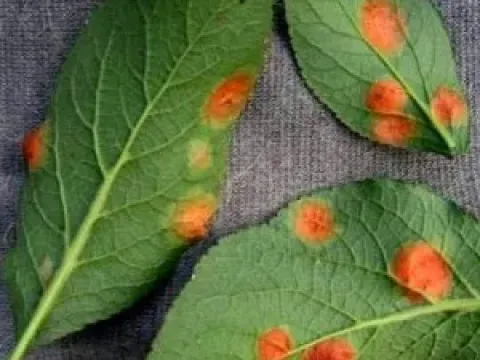
Plum red leaf spot
Polystigma rubrum
The disease is caused by the ascomycete fungus Polystigma rubrum. This is a host-specific pathogen that targets mainly the leaves of plum trees.
What the section contains
Plum red leaf spot
The fungus overwinters in fallen infected leaves, where it develops its sexual fruiting bodies, known as perithecia.
In spring, when the plum tree starts to bloom, the matured ascospores are released and carried by the wind to infect the newly emerging leaves.
During the growing season, the fungus spreads further through conidia, which are asexual spores that can be splashed by raindrops onto other parts of the canopy.
The mycelium grows within the leaf tissue, gradually taking over the cellular structure and preparing for its next seasonal cycle.
Early signs include small, yellow, circular spots on the upper side of the leaves during the early summer months.
As the disease progresses, these spots expand, turn bright red or orange, and become thickened and fleshy in appearance.
Small black dots, known as pycnidia, appear on the underside of the leaves, marking the sites where conidia are produced for further infection.
Late in the season, the affected tissue may become brittle, dry out, and drop off, leaving irregular holes in the leaves.
In cases of heavy infestation, the foliage appears mottled and reddish, significantly reducing the overall health and vigor of the tree.
High humidity and mild temperatures during the spring season are the most critical factors for the development of this fungus.
Frequent rainfall and persistent morning dew create the perfect environment for spores to germinate and penetrate the leaf tissue.
Poor orchard sanitation, such as leaving leaf litter on the ground, provides a continuous reservoir of infection for the upcoming spring.
Dense, unpruned canopies prevent proper airflow, trapping moisture and allowing the pathogen to thrive throughout the tree crown.
Dry and hot summer weather may slow down the secondary spread of the disease, though the primary infection is usually already established by then.
The primary impact of this disease is premature defoliation, which prevents the tree from storing sufficient energy for winter dormancy.
Reduced photosynthetic capacity leads to stunted fruit growth and a lower number of flower buds being set for the next year.
The fruit on infected trees is often smaller, less flavorful, and prone to premature drop before it reaches full maturity.
Chronic infection weakens the tree's immune system, making it more susceptible to frost damage and various secondary pest attacks.
In nurseries, Plum red leaf spot can lead to significant losses, as it stunts the growth of young trees and renders them unsellable.
Rigorous orchard hygiene is the first line of defense; raking and removing all fallen leaves in autumn is crucial to prevent overwintering.
Tilling the soil under the tree canopy in late autumn or early spring can bury remaining debris and inhibit spore dispersal.
Chemical control involving copper-based fungicides is recommended at the green bud stage and again immediately after flowering.
Proper pruning practices are essential to ensure good light penetration and air circulation throughout the tree crown.
- Collect and destroy all fallen infected foliage.
- Apply fungicide sprays as part of a scheduled orchard program.
- Maintain tree health through proper fertilization and watering.