
Pluteus
Pluteus
Pluteus is a genus of gilled mushrooms belonging to the Pluteaceae family. It is important to clarify that in agricultural and botanical terms, Pluteus is not a plant pathogen; it does not cause diseases in living plants.
What the section contains
Pluteus
Biologically, these mushrooms are classified as wood-decaying saprotrophs. They feed exclusively on dead organic matter, specifically decaying wood, stumps, or fallen logs, rather than attacking living plant tissue.
The mycelium of Pluteus secretes specialized enzymes that break down lignin and cellulose in dead wood. This process is essential for the natural decomposition cycle, facilitating the recycling of nutrients back into the ecosystem.
Because these fungi lack the ability to infect healthy, immunocompetent plant tissues, they are completely harmless to agricultural crops, orchards, and healthy trees.
Labeling Pluteus as a "plant disease" is a scientific misconception. It is a beneficial reducer that helps clear natural habitats and managed lands of accumulated dead organic debris.
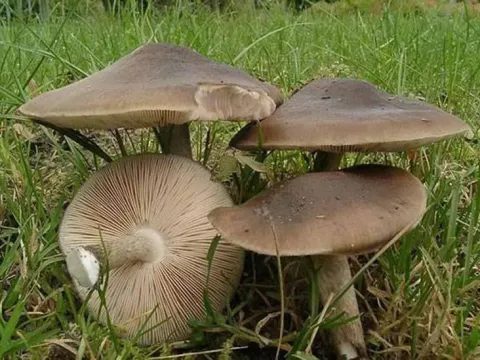
The primary visual sign of Pluteus presence is the development of fruit bodies (mushrooms) on the surface of decaying wood. These typically appear as individual or clustered caps supported by a stalk.
The caps exhibit various colors, ranging from white and gray to brown, often featuring a velvet-like or fibrous surface texture. The gills on the underside are free from the stalk and often turn pinkish with maturity due to spore color.
Wood colonized by the mycelium often shows advanced stages of decay, becoming soft, brittle, and darker in color, often easily crumbling when handled or pressed.
A web of white or yellowish fungal threads can sometimes be seen beneath the bark or inside the cracks of the wood, accompanied by a faint, earthy mushroom odor.
- Presence of mushroom caps on stumps and logs.
- Significant structural degradation of wood.
- Pinkish spore prints under the cap.
Pluteus mushrooms require high moisture levels in their substrate to thrive. They predominantly inhabit decaying deciduous wood, which serves as their primary source of energy.
Optimal environmental conditions for fruit body production include warm temperatures and high relative humidity, which is why these mushrooms are most frequently observed following periods of rain.
Infection and colonization by spores occur primarily through wounds or cracks in dead or dying timber. As long as the wood is dead and sufficiently moist, the environment is ideal for their development.
The prevalence of Pluteus is directly linked to the amount of coarse woody debris present in a specific area. Areas with stagnant water or unmanaged wood piles are highly susceptible to colonization.
There are no specific requirements for the host plant since Pluteus does not require a living host; the mushroom relies entirely on the state of decay of the wood it occupies.
Pluteus poses no harm to agricultural production, vegetable crops, or fruit-bearing trees. It does not negatively impact crop yields or plant health in any significant way.
In industrial or commercial forestry, the only potential concern is the degradation of stacked lumber that is left outdoors in damp, unventilated conditions, which may lead to unwanted wood decay.
Because the fungus is a saprotroph, it does not cause systemic infections or forest epidemics. It does not threaten biodiversity and, in many cases, is beneficial for forest soil fertilization.
The use of chemical fungicides against Pluteus is unnecessary and ecologically counterproductive, as it disrupts beneficial soil microbial communities without providing any agricultural benefit.
Ultimately, there is no economic damage caused by this mushroom. It functions as a natural waste management system for dead organic material.
There are no standardized protection measures against Pluteus, as it is not a pathogen. No intervention is required for the management of agricultural or horticultural plots.
Good housekeeping practices, such as removing old, decaying stumps and clearing piles of debris from agricultural fields, can minimize the presence of substrate for these fungi.
For timber stored in warehouses or yards, proper ventilation, dry storage conditions, and avoiding direct contact with the ground are sufficient to prevent any fungal development.
In orchard management, standard sanitation measures—such as pruning dead branches and removing woody refuse—naturally limit the environmental niche for saprotrophic growth.
Since the fungus only attacks dead tissue, maintaining plant health and vigor through proper agronomic practices is the best prevention against the underlying reasons that might lead to wood decay.