
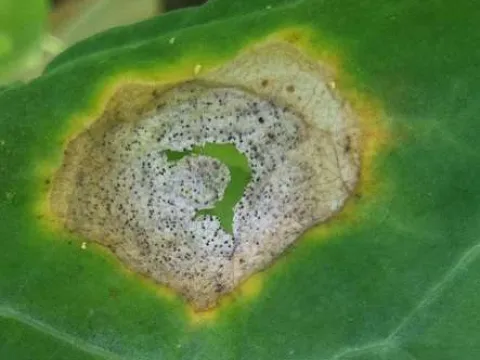
Phoma stem canker
Plenodomus enteroleucus
Phoma stem canker is a serious fungal disease primarily affecting oilseed rape and other cruciferous crops, caused by the pathogen Plenodomus enteroleucus (anamorph of Leptosphaeria maculans). This pathogen is known for its high virulence and ability to cause significant yield losses globally.
What the section contains
Phoma stem canker
The fungus produces pycnidia, small black reproductive structures, on infected stubble and plant debris. These structures release conidia, which serve as the primary source of infection in the field, often transported by splashing rain and wind currents.
The life cycle is complex; the pathogen can survive in the soil for several years on decaying plant material, making long-term rotation essential for management. Furthermore, it can be seed-borne, allowing for its spread into previously unaffected areas.
Upon infection, the fungus colonizes the leaf tissue and travels down the petiole into the stem. This movement towards the stem base is a critical stage in the infection process, leading to the formation of characteristic stem cankers.
The fungus is highly adaptable to various environmental conditions, though it favors cool to moderate temperatures and moisture. Its ability to undergo both sexual and asexual reproduction ensures significant genetic diversity, challenging chemical control strategies.
Early symptoms appear on cotyledons and lower leaves as light-grey or white circular lesions. A diagnostic feature is the presence of small black pycnidia scattered across the surface of these necrotic spots.
The most damaging symptom is the stem canker, appearing as a dark, sunken lesion at the base of the plant near the root collar. As the disease progresses, this area becomes necrotic and may cause the stem to girdle, severely restricting water and nutrient flow.
Plants affected by severe stem cankers often display premature yellowing and ripening. In later stages, the weakened stem structure may collapse, leading to lodging, which complicates harvesting and reduces crop quality.
On pods, the disease manifests as depressed, greyish lesions often accompanied by the characteristic black dots of the fungal pycnidia. This leads to pod splitting and significant seed loss before the harvest is completed.
Root system damage can also occur, where the fungus causes decay of the taproot. This impacts the plant's overall vigor and can contribute to premature wilting during dry periods or moisture stress.
The development of Plenodomus enteroleucus is heavily influenced by high humidity and moderate rainfall. Splash dispersal of spores is most efficient during wet weather, which promotes secondary infections throughout the growing season.
Cooler temperatures, typically between 15°C and 20°C, are optimal for spore germination and colonization of host tissues. Extended periods of leaf wetness significantly increase the infection rate in a crop canopy.
Poor crop rotation practices provide a continuous supply of inoculum from previous seasons' stubble. In areas where oilseed rape is grown too frequently, the pathogen population density in the soil reaches critical levels.
Any injury to the plant, caused by mechanical cultivation or insect feeding, provides an entry point for the fungus. Controlling pests that damage plant stems is essential to limiting the infection window.
Dense canopies create a microclimate that retains moisture for longer periods, facilitating disease spread. Proper spacing and nitrogen management are vital to ensuring that the canopy dries out quickly after rain.
The disease poses a major threat to yield, with potential losses ranging from 20% up to 50% in severe epidemics. The primary impact is on the number of seeds per pod and individual seed weight, significantly reducing profitability.
Lodging caused by stem girdling results in significant losses as combines cannot pick up the fallen plants. Furthermore, damaged stems contribute to poor moisture transport, resulting in shriveled and low-oil-content seeds.
Seed-borne infection reduces germination rates and vigor, leading to uneven emergence and weak stands. This often requires farmers to incur the cost of reseeding fields, which delays the planting schedule.
Infected crops are also more susceptible to secondary pathogens and physiological stress, which can lead to further yield decline. The reduced competitiveness of the crop against weeds is another indirect consequence.
The presence of certain fungal metabolites associated with Phoma species can lead to quality concerns for processed oilseed products, potentially affecting market prices and utilization for livestock feed.
Long crop rotations of at least 3 to 4 years are the most effective cultural control method. This allows the primary inoculum source—the infected stubble—to decompose naturally before the next host crop is planted.
Deep plowing after harvest helps bury crop residues, which accelerates decomposition and reduces the release of spores. This remains a cornerstone of integrated pest management for Phoma.
Sourcing clean, fungicide-treated seeds is crucial to prevent the introduction of the pathogen into new areas. Seed treatments provide essential protection during the critical seedling emergence phase.
Strategic fungicide applications using systemic products (such as triazoles or SDHIs) during the autumn period and at the stem elongation stage are highly recommended to prevent the fungus from reaching the stem base.
Utilizing resistant varieties is the most sustainable management strategy. Modern breeding programs focus on major resistance (Rlm) genes, which offer high levels of protection against specific races of the pathogen.