
Phoma stem canker (Leptosphaeria)
Leptosphaeriaceae
The disease is caused by fungi of the Leptosphaeriaceae family, with Leptosphaeria maculans being the most significant pathogen affecting oilseed rape and other brassica species.
What the section contains
Phoma stem canker (Leptosphaeria)
This fungus has both an asexual state (Phoma lingam), which produces pycnidia on leaves, and a sexual state, which produces pseudothecia on infected crop debris over the winter.
The sexual stage is responsible for the primary spring infection, as ascospores are released and carried by wind currents to emerging or growing plant tissues.
The pathogen is highly variable genetically, which allows it to overcome host resistance traits in some cultivars, making continuous monitoring essential for farmers.
The fungus survives on infected stubble, crop residues, and wild brassica weeds, which serve as a persistent inoculum source in agricultural landscapes.
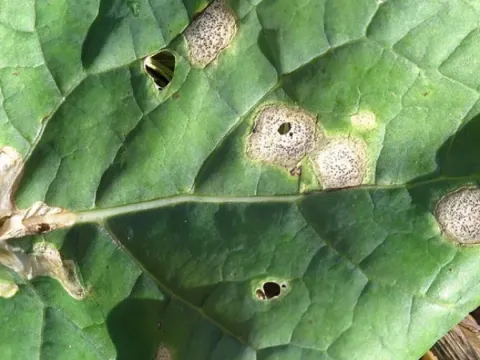
Symptoms often start as small, round, light-grey to brown spots on leaves, which may contain tiny black dots, known as pycnidia, scattered across the lesion surface.
The most severe damage occurs at the base of the stem, where a dark, depressed canker develops, gradually girdling the root collar and weakening the plant structure.
Internal tissue infection manifests as a dry rot of the stem cortex and pith, which disrupts nutrient and water transport from the roots to the upper plant parts.
During the flowering stage, infected plants may show symptoms of premature ripening, wilting, or distinct discolouration of the stem and leaves compared to healthy crops.
In advanced stages, the internal stem tissues turn dark and brittle, which significantly reduces the structural integrity of the plant, often leading to lodging.
The development of phoma stem canker is favored by moderate temperatures (typically between 15°C and 25°C) and high humidity or frequent rainfall events.
Infection is highly dependent on the presence of leaf moisture, as spores require wet conditions to germinate and successfully penetrate the plant tissue.
High levels of residual crop debris from previous years facilitate the build-up of the fungal population, especially in minimum or no-till farming systems.
Dense crop canopies and poor air circulation within the field provide a conducive microclimate that promotes the rapid spread of the disease among adjacent plants.
Environmental stress, such as autumn drought followed by mild, wet winters, can influence the timing of ascospore release and the severity of subsequent field infections.
The disease causes significant economic impact by reducing seed yield, oil content, and the overall quality of the harvest, making it a major constraint in oilseed production.
Severe stem girdling can lead to total crop failure in heavily infested fields, as the plants wither and die before achieving physiological maturity.
Lodging caused by structural stem decay makes mechanical harvesting difficult, leading to substantial grain loss during the cutting and threshing process.
Secondary infections and weak growth caused by the pathogen make plants more susceptible to further damage from pests, viruses, and adverse weather conditions.
The cost of intensive fungicide regimes required to manage the disease adds significant pressure to production economics, reducing the profitability of oilseed rape cultivation.
Integrated management begins with a robust crop rotation strategy, ensuring a break of at least 3 years between successive brassica crops to allow for the decay of infected stubble.
Mechanical destruction of crop residues through deep plowing or shredding is a crucial step to limit the production of spores during the spring season.
The use of certified, fungicide-treated seeds provides essential protection during the early stages of growth, which is critical for establishing a vigorous, uniform crop stand.
Foliar fungicide application is recommended based on field scouting and economic threshold levels, particularly when symptoms appear in the early vegetative and stem elongation phases.
- Growing resistant or tolerant crop varieties.
- Effective weed control of wild mustards and other brassica weeds.
- Maintaining optimal planting density to improve air circulation.
- Balanced nutrient management to promote plant health and robustness.