
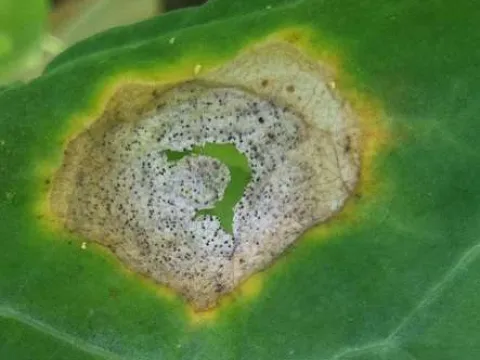
Phoma stem canker
Plenodomus biglobosus
The causative agent of this disease is the fungus Plenodomus biglobosus, which is a significant pathogen affecting Brassica napus (oilseed rape) worldwide.
What the section contains
Phoma stem canker
It is classified as a fungal pathogen that targets all aerial parts of the plant, including stems, leaves, and pods, causing necrosis and systemic decay.
The life cycle of the pathogen is complex, involving both asexual pycnidia and sexual pseudothecia, which allow it to persist on crop debris for several seasons.
Infection primarily begins with airborne ascospores released from infected stubble, which then land on leaves and move down to the stem base.
The fungus is highly adaptable and can survive in various environmental conditions, making it one of the most persistent diseases in commercial rapeseed farming.
Early symptoms appear as light-grey to pale-brown lesions on cotyledons and leaves, typically circular or oval in shape with a dark, necrotic margin.
A diagnostic feature of Phoma is the presence of minute black dots within the lesions, known as pycnidia, which produce masses of spores under humid conditions.
In the later stages of development, the disease progresses to the stem base, where it forms a characteristic Phoma canker, appearing as a greyish-brown dry rot.
As the canker develops, it restricts the flow of water and nutrients, eventually causing the stem to crack, weaken, and become susceptible to lodging.
Symptoms on pods and stems during the maturation phase include elongated dark spots, which can lead to premature pod shatter and grain loss before harvest.
The development of Phoma is strongly favored by mild temperatures between 15°C and 22°C and frequent periods of high humidity or rainfall.
Spore dispersal is most intense during autumn months for winter crops, as moisture facilitates the release and transport of spores from infected crop residues.
High plant density in fields limits air circulation, creating a favorable microclimate for the rapid spread of the fungus throughout the canopy.
Pest damage, particularly from stem-boring insects, can create entry points for the pathogen, accelerating the infection process within the plant vascular system.
Fields with recent histories of rapeseed cultivation often harbor high inoculum levels in the soil, which increases the likelihood of severe early-season outbreaks.
Phoma stem canker is globally recognized as a major cause of yield loss in oilseed rape, often resulting in significant economic impact if not managed.
Severe stem cankers can effectively girdle the plant, leading to total yield loss through stunting, premature ripening, or death of the entire plant.
Lodging caused by the structural compromise of the stem makes mechanical harvesting inefficient, leading to high field losses during the combine process.
The disease reduces seed oil content and overall seed quality, which limits the market value of the harvest and negatively affects seed germination rates.
Systemic infection lowers the plant's overall vigor, making it less resilient to winter frost and other environmental stressors that typically affect winter oilseed rape.
The most effective management strategy involves the use of fungicide-treated seeds, which provide initial protection against early-stage infections.
Crop rotation remains a fundamental practice, with at least a three to four-year gap between rapeseed crops to ensure the natural decay of infected crop residues.
Implementing deep tillage or stubble management practices helps bury infested debris, significantly reducing the primary source of airborne spores.
Applying fungicides during the rosette stage and early flowering is critical in high-risk areas to prevent the disease from spreading to the stem base.
- Selection of resistant or tolerant rapeseed hybrids.
- Effective control of brassicaceous weeds.
- Monitoring weather patterns to time fungicide applications.