
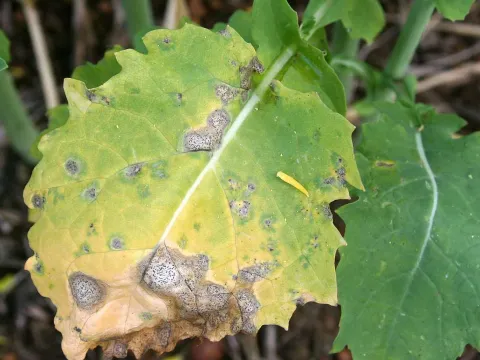
Phoma stem canker
Plenodomus
The causal agent of Phoma stem canker is a fungus belonging to the genus Plenodomus (formerly classified as Phoma lingam). This pathogen is a significant threat to various agricultural crops, particularly those in the Brassicaceae family.
What the section contains
Phoma stem canker
The fungus persists in soil and on infected crop debris, which acts as a primary reservoir for the disease. It can survive for several years by forming pycnidia, specialized fruiting bodies that protect the spores during adverse environmental conditions.
The life cycle involves the production of conidia, which are disseminated by wind and rain splash. These spores infect healthy plant tissues, leading to the spread of the disease throughout the growing season.
Infection often occurs through natural openings or wounds created by pests or agricultural machinery. Once inside, the fungus colonizes the vascular system, systematically weakening the host plant's structural integrity.
The pathogen is highly adaptable and can survive in diverse climatic conditions, making it a persistent problem in regions with intensive cultivation of susceptible crops like oilseed rape.
Symptoms of Phoma infection initially appear as pale, greyish spots on the leaves and cotyledons, typically surrounded by a dark brown or black margin.
As the disease progresses, small black dots, known as pycnidia, develop within the center of the lesions. These are diagnostic structures where the fungal spores are produced.
One of the most destructive phases of the disease is the development of cankers at the base of the stem or the root collar. These necrotic lesions cause the stem to weaken, crack, and eventually break.
Root systems may also become severely damaged, exhibiting rot and discoloration. This impairs the plant's ability to absorb water and nutrients, leading to stunted growth and premature ripening.
- Lesions with visible black pycnidia.
- Stem cracking and premature lodging.
- Grey discoloration on lower leaves.
- Reduced plant vigor and poor seed fill.
The development of Phoma stem canker is highly favored by moderate temperatures, typically between 15°C and 25°C, combined with high humidity levels.
Frequent rainfall and persistent morning dews facilitate the release and germination of spores, enabling the fungus to infect plant tissues efficiently.
Poor crop rotation practices, where host crops are grown in the same field too frequently, lead to an accumulation of fungal inoculum in the soil.
High plant density increases canopy humidity and prevents rapid drying of the lower foliage, creating a microclimate conducive to rapid fungal growth.
Any physical stress or injury to the plant, whether caused by insect herbivory or cultural practices, significantly increases the likelihood and severity of infection.
Phoma stem canker is a highly destructive disease, capable of causing substantial yield losses, sometimes reaching 50% in severe outbreaks.
The disease directly affects seed quality, leading to reduced oil content in oilseed rape and poorer seed viability for future sowing.
Structural damage to the stem causes plants to lodge (collapse), which significantly hampers harvesting operations and results in large amounts of crop loss on the ground.
Infected fields serve as a long-term source of inoculum, increasing the risk to neighboring crops and future seasons if not managed properly.
Secondary infections often colonize the weakened tissue, accelerating the decline and death of the plant before physiological maturity.
Effective management begins with the use of high-quality, fungicide-treated seeds to minimize the risk of early-season infection from seed-borne inoculum.
Implementing a strict crop rotation cycle of at least 3-4 years is essential to reduce the concentration of spores and fungal debris in the soil.
Deep plowing of crop residues is a recommended cultural practice to bury infected tissues, accelerating their decomposition and reducing the survival rate of the fungus.
During the growing season, regular scouting is crucial to detect early symptoms, allowing for timely application of systemic fungicides to control the spread.
Integrated pest management strategies should be employed to control insects that cause wounds, thereby closing the primary entry routes for the fungal pathogen.