
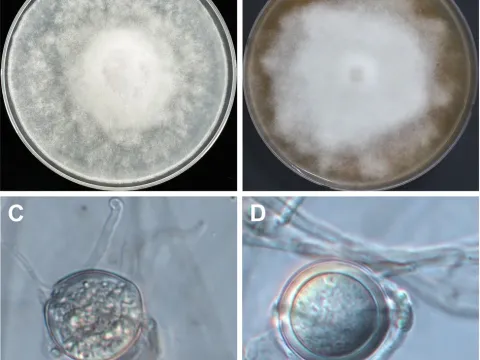
Phytopythium helicoides
Phytopythium helicoides
Phytopythium helicoides is a destructive soil-borne pathogen classified as an oomycete. Previously identified within the Pythium genus, recent molecular studies have reclassified it into the Phytopythium genus, which shares biological traits with both Pythium and Phytophthora.
What the section contains
Phytopythium helicoides
The organism has a complex life cycle, producing motile zoospores that navigate through wet soil environments. It also creates long-lasting oospores, which allow the pathogen to persist in the soil for several years even in harsh conditions.
It acts as a facultative parasite, primarily targeting the root systems of various plant species. It can survive as a saprotroph, feeding on decaying organic matter, which makes it a persistent challenge in agricultural systems.
Infection primarily spreads through contaminated soil, irrigation water, and infected agricultural equipment. Zoospores are highly mobile in water, enabling them to move rapidly towards host roots and initiate infection.
The biological activity of this pathogen is highly dependent on soil water content, making crops more vulnerable during periods of waterlogging or poor soil aeration.
The initial symptoms are often subtle, manifesting as stunted growth and chlorosis (yellowing) of the leaves. Infected plants may exhibit wilting during the hottest parts of the day, even when soil moisture levels are adequate.
Root examinations typically reveal browning and softening of the root tissues. The cortex of the root often becomes mushy and detaches easily from the central vascular cylinder when pulled.
Affected roots turn dark brown or even black. The necrosis starts in the fine root hairs and rapidly progresses to the primary root system, ultimately leading to total plant failure.
In seedlings, this pathogen is a major cause of "damping-off," characterized by a constricted, water-soaked appearance at the stem base, which causes the plant to topple and die.
While a faint mycelial growth might appear in high humidity, diagnosis often requires laboratory analysis to distinguish it from other root rot pathogens due to the non-specific nature of the symptoms.
Excessive soil moisture is the primary driver for Phytopythium helicoides development. Waterlogged soil provides the necessary aquatic medium for zoospores to swim and locate their host.
The pathogen thrives in moderate temperatures but remains active across a broad temperature range, allowing it to affect crops throughout the entire growing season.
Compacted soil and poor drainage are significant risk factors. Reduced oxygen levels in the root zone weaken the plant's defense mechanisms, facilitating the colonization by the oomycete.
High nitrogen levels can lead to excessive foliage growth relative to root development, potentially creating a susceptible physiological state that encourages infection.
Nurseries and greenhouse environments are particularly susceptible because frequent irrigation and high plant density can lead to rapid spread of the pathogen through water recycling systems.
The primary damage caused by this pathogen is the degradation of the root system, which disrupts the uptake of water and essential nutrients, leading to physiological drought.
In early growth stages, heavy infestations can result in significant crop loss, requiring farmers to replant, which increases operational costs and reduces profit margins.
For perennial crops, the disease causes chronic decline, leading to reduced yield quality and quantity, and eventually the death of the plants.
Phytopythium helicoides has a wide host range, infecting everything from vegetable crops like tomatoes and cucumbers to various ornamental flowers and nursery plants.
Because the oospores are long-lived, fields and greenhouses contaminated with this pathogen require long-term management strategies to render them safe for susceptible crops again.
Managing water is the most critical control measure. Ensure excellent drainage and avoid overwatering to prevent the creation of anaerobic soil conditions.
Sanitation is essential; clean and disinfect tools, pots, and surfaces regularly. Only use clean, pathogen-free growing media and certified seedlings to prevent initial contamination.
Biocontrol agents, such as Trichoderma species and Bacillus subtilis, have shown effectiveness in suppressing Phytopythium populations and enhancing root health.
- Practice crop rotation with non-host species.
- Use well-aerated, high-quality substrates.
- Apply systemic fungicides as a preventative or early treatment.
- Use heat or chemical sterilization for greenhouse soil/media.
Maintaining balanced plant nutrition, especially with adequate phosphorus and potassium, improves root strength and helps plants withstand mild pathogen pressure.