
Phytophthora root rot of alfalfa
Phytophthora medicaginis
The disease is caused by the oomycete Phytophthora medicaginis. This soil-borne pathogen survives in the form of oospores within plant debris and soil particles for extended periods, waiting for suitable environmental conditions.
What the section contains
Phytophthora root rot of alfalfa
The life cycle of the pathogen is highly dependent on free water. Motile zoospores are produced, which swim through the soil water film to infect the roots of susceptible alfalfa plants.
While alfalfa is the primary host, this species can affect other legume species. It specifically targets the root system, causing severe vascular tissue dysfunction and eventual decay of the taproot.
The pathogen is highly adaptable and can survive in diverse soil types. Its ability to persist makes it a persistent challenge for agricultural production in irrigated areas.
Understanding the biology of this pathogen is essential, as the infection often occurs below the soil surface, making visual identification difficult in the early stages.
Early symptoms include stunted growth and chlorotic foliage. The upper leaves may turn yellow or reddish, often mimicking symptoms of nitrogen or phosphorus deficiency in the crop.
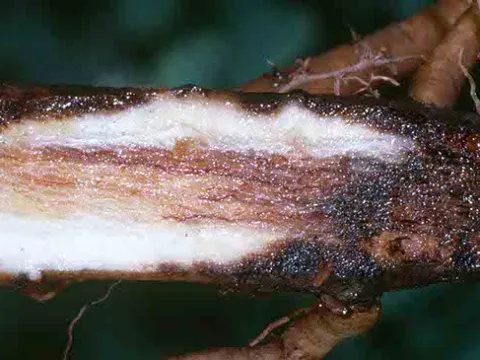
The root system shows characteristic necrotic lesions. The taproot often becomes soft and discolored with dark brown or black areas, eventually rotting away completely.
A distinctive feature is the presence of a sharp line of demarcation between the healthy tissue and the infected, decayed part of the root. This is best observed by cutting the root vertically.
Severe infection results in the loss of lateral roots and root hairs. This leads to reduced water uptake, causing plants to wilt during warm periods, even if the soil is sufficiently moist.
In advanced stages of the disease, the crown of the plant may die, and the entire root system may become detached, leading to the rapid collapse of the plant stand.
The disease thrives in wet, saturated soil conditions. Poorly drained fields or excessive irrigation are the primary triggers for pathogen spread and root infection.
Phytophthora medicaginis is most active when soil temperatures range between 15°C and 25°C. These conditions allow for rapid zoospore production and active infection of the roots.
Soil compaction significantly increases the risk of the disease by limiting oxygen availability, which stresses the plant and facilitates the development of oomycetes.
High rainfall events, particularly during the seedling establishment phase, can lead to severe losses. Excessive irrigation water that pools in the field provides a perfect environment for the pathogen.
Mechanical damage to roots caused by field operations can act as an entry point for the pathogen, accelerating the infection process in an already stressed crop.
The primary damage is a drastic reduction in stand density. This loss of plant population leads to lower biomass yields and potential economic failure of the forage production.
The nutritional quality of the hay is negatively impacted. Plants that are infected show reduced protein content and lower digestibility, affecting the overall value of the feed.
Infected stands are significantly more vulnerable to winter kill. The root damage weakens the plant’s winter hardiness, leading to stand thinning after the first cold season.
The accumulation of inoculum in the soil prevents the immediate replanting of alfalfa in the same field. This forces growers to extend rotation cycles, which can disrupt farm planning.
Overall economic losses include the costs associated with replanting, additional fertilizer needs, and the management of patchy, less productive fields.
The most effective strategy is the selection of well-drained, fertile soil for planting. Avoiding fields prone to waterlogging is the first line of defense against the pathogen.
Crop rotation is crucial to reduce the soil inoculum level. Legumes should not be replanted in the same field for at least 4-5 years to allow the oospores to die off naturally.
Utilizing resistant or tolerant alfalfa cultivars is essential for managing Phytophthora root rot. Modern breeding programs focus heavily on improving host resistance to this specific pathogen.
Improving soil structure and aeration through proper tillage and organic matter management helps create a more robust plant root system, capable of resisting mild infections.
- Ensure proper field leveling to prevent water pooling.
- Use seed treatments if recommended for high-risk areas.
- Monitor irrigation timing to prevent over-saturation.