
Water phytophthora
Phytophthora hydrogena
The causative agent of this disease is Phytophthora hydrogena, an oomycete species uniquely adapted to aquatic environments and saturated substrates.
What the section contains
Water phytophthora
Unlike terrestrial Phytophthora species, this pathogen utilizes the water medium as its primary habitat for development and host seeking.
The biological cycle relies on the production of motile zoospores that navigate through water to locate and penetrate the roots of vulnerable plants.
The pathogen is highly resilient and can persist in irrigation systems, storage reservoirs, and wet soil layers for extended periods.
Its enzymatic activity allows it to break down plant cell walls efficiently, ensuring rapid colonization of the host's root system even at lower temperatures.
The primary prerequisite for the development of the disease is prolonged soil saturation or direct contact between the root system and contaminated water sources.
Outbreaks are most frequently observed when water temperatures range between +10 and +18 degrees Celsius, often correlating with spring planting seasons.
Poor soil aeration and the presence of stagnant water areas significantly facilitate the germination and infection processes of the zoospores.
Using untreated water from natural ponds or streams for irrigation acts as the main transmission route for the pathogen across agricultural fields.
High-density planting configurations that restrict air circulation and moisture evaporation from the soil surface create an optimal environment for the disease.
The first clinical sign is sudden wilting of the plant canopy, which does not recover even with adequate watering, indicating root functional failure.
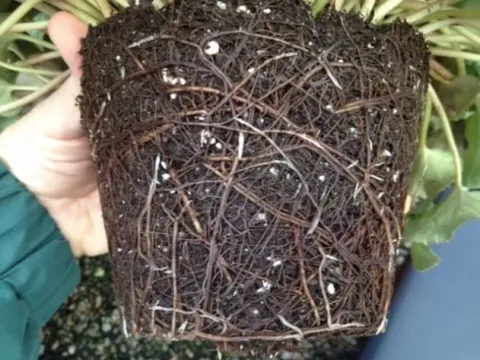
Examination of the roots reveals a distinct brownish or grayish discoloration, often accompanied by the total necrosis of fine root hairs.
Dark, water-soaked lesions typically develop at the root crown, eventually forming girdles that block the translocation of nutrients and water.
Under high humidity, a translucent or water-like mycelial growth may appear on the surface of the affected root collar area.
Progressive decay leads to the stunted growth, yellowing of leaves, and eventual plant collapse as the root system is completely compromised.
Water phytophthora is notoriously destructive, often leading to rapid total loss of seedlings and young plants in both greenhouse and open-field systems.
Once introduced into the soil, the pathogen becomes deeply entrenched, significantly limiting the rotation options for susceptible crops for several years.
The disease causes substantial financial losses by reducing crop yield, lowering quality standards, and necessitating expensive soil disinfection protocols.
Infection through irrigation water creates a systemic problem, where entire fields become compromised due to the contamination of the water supply chain.
The pathogen's ability to remain dormant in water sources makes it a recurring threat that requires constant vigilance and proactive management.
Effective management begins with rigorous water quality control, emphasizing the need for filtration and disinfection of irrigation water prior to application.
The installation of efficient drainage systems is essential to prevent water stagnation and ensure optimal soil aeration throughout the growing season.
Early diagnosis via field monitoring and rapid laboratory testing is crucial for isolating localized outbreaks and preventing spread to healthy crops.
Application of systemic fungicides, when indicated and permitted, can mitigate the spread of the pathogen within the soil and root zone.
Strategic crop rotation and the use of healthy, disease-free transplants form the foundation of a robust integrated pest management approach.