
Weeping milk cap
Lactaire volemus
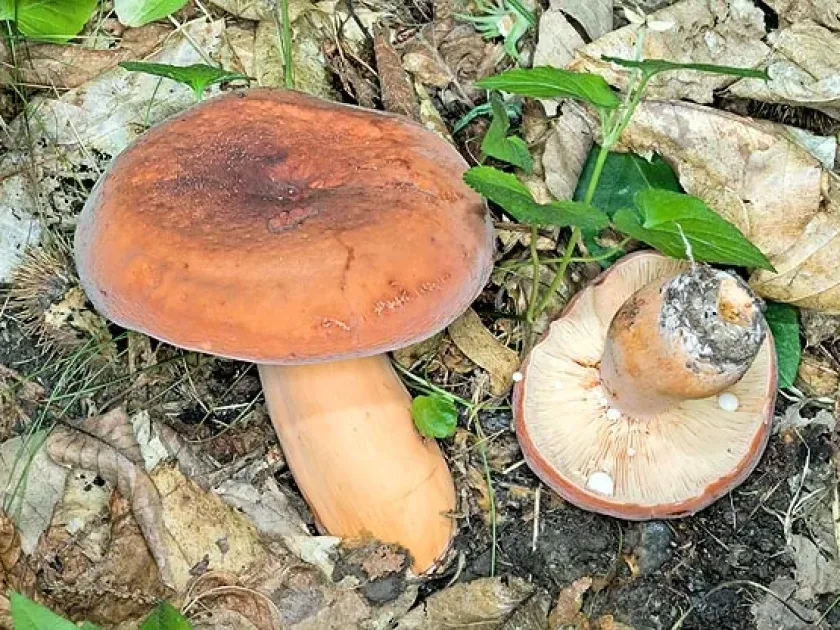
Description
Pathogen
The Weeping milk cap, scientifically known as Lactarius volemus, is a mushroom species that is not a plant pathogen. It does not cause diseases, infections, or necrosis in any agricultural or wild plant species.
Instead of being a parasite, this fungus establishes a mutualistic mycorrhizal relationship with the roots of various deciduous and coniferous trees. It enhances the plant's ability to absorb water and minerals.
The fungus is biologically classified as a saprotrophic-mycorrhizal organism. It survives by exchanging carbon compounds obtained from its host tree for soil nutrients, which is a key part of forest health.
There are no symptoms of disease associated with this organism. The presence of its fruit bodies in a forest indicates a healthy ecosystem where the symbiotic network between fungi and trees is intact.
This species is highly valued in mycology for its role in supporting the growth of host trees. It serves as a natural stabilizer of the root environment, preventing pathogens from colonizing the roots.
Conditions for development
Optimal conditions for growth include a moist, shaded forest environment with a rich layer of organic leaf litter. It thrives in soils with a slightly acidic pH level, which is typical for hardwood forests.
Humidity is the most critical factor for the formation of fruit bodies. During periods of high rainfall and stable temperatures, the fungus produces clusters of mushrooms above the ground.
The health of the host tree directly impacts the vitality of the fungus. A stable forest canopy prevents rapid evaporation of soil moisture, maintaining the environment required for the fungal mycelium.
Avoidance of synthetic fungicides is essential for maintaining the fungal population. These chemical agents can disrupt the mycorrhizal balance and kill the mycelial network responsible for the symbiosis.
The fungus requires moderate temperatures. It does not tolerate extreme heat or frost, which leads to the temporary cessation of its reproductive cycle and retreat of the mycelium into deeper soil layers.
Discussion
No discussions yet — be the first.