
Weeping Widow
Lacrymaria lacrymabunda
Description
Symptoms
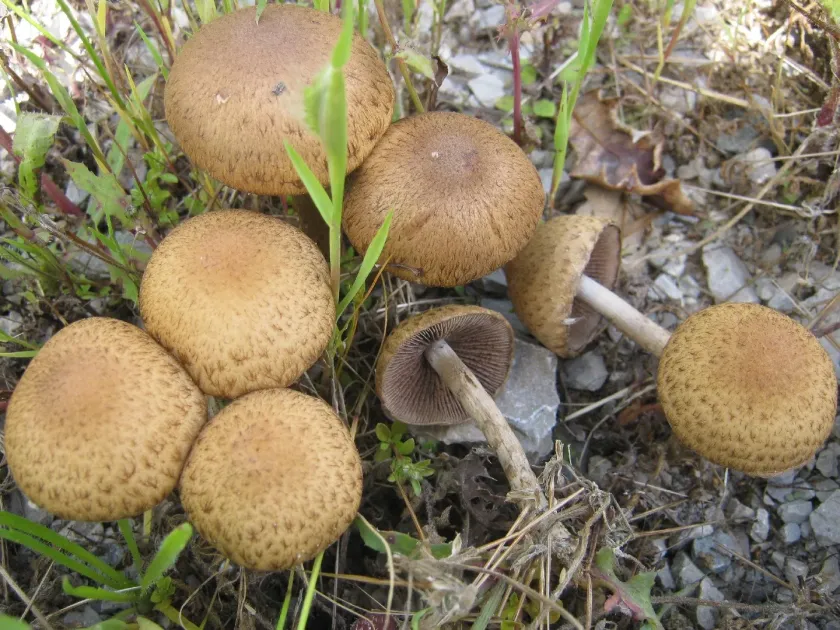
The Weeping Widow is a gilled mushroom characterized by its distinct habit of exuding moisture droplets on its gills during the juvenile stage.
Its cap ranges from 3 to 10 centimeters in diameter, starting as a bell shape and eventually expanding to a convex or flat appearance.
The surface is typically ochre to brown, covered in fine, fibrous scales that give it a velvety or matted texture to the touch.
The gills are crowded and attached to the stem, transitioning from pale colors in young specimens to dark brown or near-black upon maturation.
The spore print is a deep, rich chocolate-brown color, which serves as a definitive characteristic for identifying this specific species.
Pathogen
It is crucial to note that Lacrymaria lacrymabunda is not a plant pathogen and does not cause diseases in agricultural or garden crops.
This fungus is classified as a saprotroph, an organism that derives its energy from decomposing dead organic matter rather than living tissue.
In biological terms, it functions as a decomposer, playing a vital role in nutrient cycling by breaking down leaf litter, twigs, and wood debris.
Its mycelial network grows within the organic substrate in the soil, completely ignoring the root systems or vascular tissues of living plants.
As a non-parasitic fungus, it exists in harmony with its environment, contributing to soil health rather than acting as a pest to agriculture.
Conditions for development
The Weeping Widow prefers moist environments and is commonly found in gardens, lawns, parklands, and along woodland paths or edges.
It typically appears from early summer through late autumn, with fruiting body development peaking following periods of heavy or consistent rainfall.
High moisture levels in the soil, combined with an abundance of decaying organic material, provide the optimal environment for its proliferation.
Moderate temperatures allow this species to thrive, as it requires stable conditions to maintain its mycelial growth and fruiting cycle.
It often grows in small clusters or scattered groups, colonizing patches of soil rich in nutrients and decomposing vegetable matter.
Why it matters
From an agronomic perspective, the Weeping Widow is entirely harmless to crops, ornamental plants, and vegetable gardens.
Because it lacks the ability to infect living plants, there is no risk of yield reduction, structural damage, or physiological stress caused by this fungus.
In residential landscaping, some owners may consider them undesirable due to their sudden appearance on manicured lawns during wet weather.
No scientific evidence suggests that this mushroom competes for resources with crops, as it strictly specializes in dead organic matter.
The species is considered ecologically neutral to agriculture, making it a harmless component of the garden's natural microbial and fungal ecosystem.
Protection
No chemical or specialized control measures are necessary for the Weeping Widow, as it does not constitute a threat to agricultural productivity.
If mushroom presence is undesirable, simple lawn maintenance such as improving drainage and removing excessive organic debris can naturally deter them.
Maintaining a dry, well-aerated soil surface makes the habitat significantly less favorable for mushroom fruiting body development.
Manual removal of the fruiting bodies remains the most practical approach if the mushroom’s presence interferes with the visual appeal of a lawn.
Fungicide application is not recommended, as it is ineffective against saprotrophs and may disrupt the beneficial balance of soil microbial life.
Discussion
No discussions yet — be the first.